
A new dog may be friendly, while your resident cat sees a fast-moving stranger in familiar territory. Even a calm first meeting can create stress if the cat has nowhere to retreat or the dog has too much freedom too soon. The goal is not to make them interact immediately. It is to build enough safety and predictability that both animals can choose calm behavior.
Download the Mylo app to track every step of introducing a dog to a cat with breed-specific, expert-backed guidance.
Introducing a dog to a cat works best when you separate them at first. Exchange scents, prepare cat-only escape spaces, and move through brief, supervised meetings at the cat's pace.
Expect the process to take days or weeks rather than one afternoon. The right pace depends on each pet's personality, history, confidence, and response to the other animal. Starting slowly also gives you time to notice warning signs and adjust before tension becomes a habit. Here is why that gradual approach matters, and how to set the household up for a safer first step.
Why Introducing a Dog to a Cat Needs a Slow Start
A gradual introduction gives both animals time to feel safe, learn what to expect, and build trust without rehearsing fear or chasing.
Bringing a dog and cat into the same home can be exciting, but the first days may also feel unsettling for both pets. A cat may be leaving familiar territory, while a dog may be trying to understand a new animal, scent, and set of household boundaries. Moving too quickly can turn normal uncertainty into a lasting association between the other pet and stress.
That is why the goal is not an instant friendship. The goal is calm, predictable coexistence. The Cornell University College of Veterinary Medicine advises owners not to force interactions, since pressure can increase fear and stress. A cat that is cornered, carried toward a dog, or prevented from retreating may learn that the dog is dangerous. Stress-driven behaviors can surface in surprising ways, including cat spraying, so watch for changes beyond hiding. A dog that is repeatedly allowed to rush or chase may learn that pursuing the cat is rewarding.
Early separation creates room for everyone to decompress. The Animal Humane Society recommends keeping pets separate for at least the first three to four days, though that is a starting point rather than a deadline. Some pairs need much longer before sharing space comfortably. During that time, each animal can maintain familiar routines while gradually adjusting to sounds and smells from the other side of a barrier.
Your pets' personalities and histories matter, too. A confident, socially experienced dog may respond differently from one with a strong chase response or little experience around cats. A cat who has lived peacefully with dogs may still need time if the new dog is energetic. While a previously frightened cat may need an especially quiet adjustment period. Texas A&M Veterinary Medicine recommends considering the individual personality and history of both the resident pets and the newcomer before moving ahead.
Going slowly protects more than physical safety. It lowers stress, preserves each pet's sense of control, and makes calm behavior easier to repeat. If either animal shows persistent fear, intense excitement, or difficulty settling, pause the introduction and consider guidance from your veterinarian or a qualified behavior professional. A slower plan is not a failed plan. It is often the clearest path toward trust.
Set Up a Cat-Safe Zone Before Day One
Before the dog arrives, give your cat a room that belongs entirely to them. This private base makes it possible to eat, sleep, use the litter box, and retreat without navigating a curious newcomer.  For more basics on caring for a resident cat, make sure the room supports the routine your cat already knows.
Choose a quiet room
Select a bedroom, office, or similarly calm room with a door that closes securely. Set up food, fresh water, a litter box, a bed, and toys offered only to the cat. Texas A&M's veterinary guidance recommends an isolated safe zone with these essentials so the cat can adjust without competition or pressure. Keep food and water away from the litter box, and make every resource easy to reach.
Use brand-new bedding, toys, and other belongings when possible. Items carrying another animal's scent can feel threatening during the first adjustment period, so avoid the dog's hand-me-downs. The room should feel predictable before the dog has access to the rest of the home.
Add vertical space and hiding spots
A cat-safe zone needs more than floor space. Add a sturdy cat tree, shelf, or other high perch where your cat can watch from above. Cats often feel more secure when they can observe their surroundings from an elevated position, and a high resting place can provide distance from the dog. Make sure the perch is stable and cannot be reached by the dog.
Offer at least one covered hiding place, warmth, and soft bedding. Hiding is not misbehavior; it is an escape when the environment feels overwhelming. Leave enough open space for your cat to move between resting, feeding, and litter areas without being cornered. Texas A&M recommends stocking a safe zone with hiding places, heights, toys, and warm items.
Plan litter access throughout the home as well. If tension develops, provide multiple easily accessible litter boxes in separate areas rather than placing every box in one location. Cornell advises separate litter-box areas during stressful introductions, so your cat never has to pass the dog to meet a basic need. If litter habits shift later, see our guide to why a cat stops using the litter box.
Texas A&M veterinary guidance and Cornell's pet introduction advice support these resource and retreat principles.
Start With Scent Swapping, Not Face-to-Face Meetings
Before the dog and cat see each other, let them learn that the other animal's smell is safe. Smell carries important information for both species, including who has been in a space and whether that presence feels familiar. A visual meeting can be intense and difficult to pause, while a scent exchange lets each pet investigate at a distance and retreat when needed.
Begin by swapping items that carry each pet's everyday scent. Place the dog's bedding, towel, or favorite toy near the cat's safe area, and offer a cat-scented blanket or toy in the dog's usual space. A cat's bedding can also be placed near the dog's hangout, so the smell becomes part of the normal household environment rather than a sudden surprise. Texas A&M's guidance recommends using items such as a favorite toy, towel, or bed before the animals meet directly. Read the Texas A&M introduction guidance.
Pair the scent with something each pet already enjoys. Feed the dog and cat on opposite sides of a closed door, starting far enough away that both can eat comfortably. Over several meals, move the bowls closer only if both animals remain relaxed. The closed door provides a boundary while the smell of the other pet becomes associated with food, not pressure. If either animal stops eating, hides, growls, or becomes unusually tense, increase the distance and slow down. For more context, review these signs of anxiety in dogs.
Repeat the exchange until both pets can investigate the other's scent without persistent stress. Relaxed behavior might include normal eating, curiosity, resting, or calmly moving away. Do not rush because a pet sniffs an item once. The goal is steady comfort around the smell, not a single successful inspection. The Animal Humane Society recommends feeding pets on opposite sides of a closed door as part of a gradual introduction.
Move to a supervised face-to-face meeting only when both animals are consistently relaxed around each other's belongings. If the cat continues hiding or the dog remains fixated on the scent, keep the separation in place and give them more time. A slower start is easier to manage than repairing a frightening first encounter.
The First Face-to-Face Introduction, Step by Step
Once both pets can relax around the other animal's scent, you can plan a carefully supervised meeting. Choose a quiet room, keep an escape route available for the cat, and have treats ready before bringing them together. This is a controlled introduction, not a test of whether they will instantly become friends.
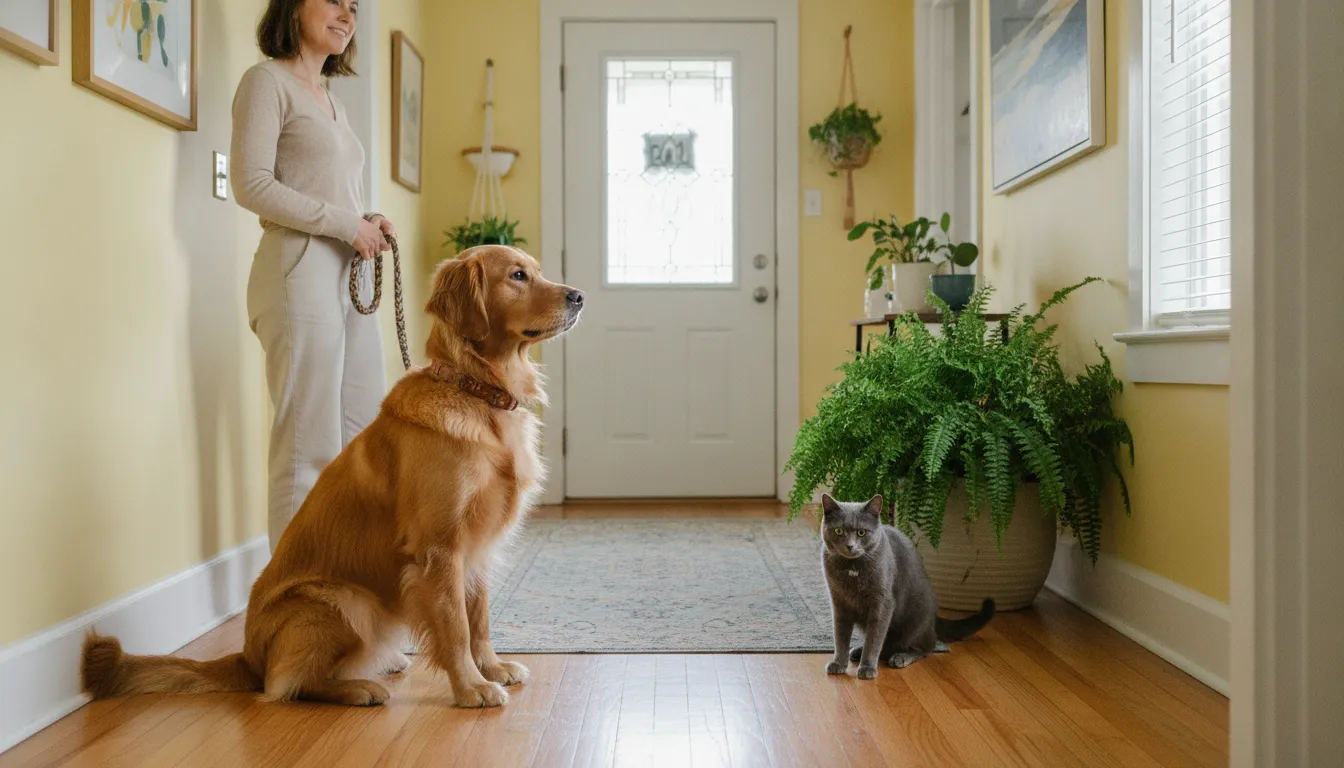
Keep the dog on a leash
Refresh the dog's basic obedience training before this stage. The commands sit, stay, and leave it should be reliable enough to help you interrupt excitement without shouting or grabbing. The Animal Humane Society recommends teaching basic commands before introductions.
Let the cat set the pace
Do not carry the cat toward the dog or place the cat where escape is blocked. The cat may enter and leave the room freely if the space is secure. Or remain in a carrier with the door positioned so you can never trap the cat against the dog. A baby gate can add a useful layer of separation, allowing the animals to see one another without immediate access.
- Prepare the dog first. Place the dog on a leash indoors, or use a crate if that is the calmer option. Keep the leash loose enough to avoid adding tension, while holding it securely so the dog cannot lunge or chase.
- Invite, rather than force, contact. Let the cat decide whether to approach, observe from a distance, or retreat. If the cat hides or will not come closer, end the attempt and try again later. Cornell's veterinary experts advise keeping the dog restrained and allowing the cat to approach on the cat's own terms. Read Cornell's introduction guidance.
- Reward calm behavior. Offer small treats and quiet praise when the dog sits politely, looks away, or remains relaxed. Never reward chasing, barking, lunging, or intense fixation. If the dog becomes too excited, increase the distance or return to a barrier and let everyone settle.
- Keep the first meeting short. Stop while both pets are still coping well, rather than waiting for a warning sign. Brief daily meetings build familiarity gradually. Repeat the same calm setup and lengthen sessions only when the animals consistently remain relaxed.
- Maintain management between meetings. Keep using the leash, crate, closed doors, or baby gates whenever you cannot actively supervise. Do not assume one peaceful meeting means the pets are ready to share space freely. Continue separation and supervision until their behavior is reliably calm over time.
A slow pace protects trust. If either animal shows persistent fear or the dog repeatedly tries to chase, pause the introductions and ask a qualified trainer or veterinarian for individualized guidance.
How Long Does It Take a Dog and Cat to Get Used to Each Other?
There is no universal deadline for a dog and cat to become comfortable together. Some pairs settle into a routine within a few weeks, while others need a much longer period of gradual, supervised contact. The safest measure of progress is not the calendar. It is whether both animals can eat, rest, move around, and respond calmly in the other's presence.
When a new dog joins a home with a cat, plan to manage their interactions for several weeks or longer. Keep them separated for the first three to four days, then increase contact only as both pets show relaxed behavior.
The first few days: separate and decompress
Start with separate areas for about three to four days. This gives the cat time to keep its normal routine and lets the dog adjust to unfamiliar sights and smells without creating constant pressure. During this stage, continue scent exchanges and brief exposure through a closed door or gate rather than moving straight to a face-to-face meeting.
After that initial period, progress in small steps. The dog may need to remain on a leash or in a crate during early meetings, and that management can continue for weeks or even months. The timeline depends on the animals' behavior, not on a fixed schedule. If the dog fixates, lunges, chases, or cannot disengage, return to an easier stage and seek guidance from a qualified trainer.
Why the 3-3-3 rule can help set expectations
The 3-3-3 rule describes a rough adjustment pattern: three days to decompress, three weeks to learn the routine, and three months to begin bonding. It is a helpful framework, not a promise that every pet follows those exact milestones. The ASPCApro guide to the 3-3-3 adjustment period emphasizes that animals need time to settle into a new environment.
Watch the cat's signals, not just the date
Cats often show stress through hiding, avoiding shared spaces, eating less, or changing normal litter-box habits. See our guide to why a cat stops eating for related warning signs. A cat that continues hiding needs more time before interactions become longer or less controlled. Move forward when both pets can remain relaxed, accept treats, and disengage from each other. The Animal Humane Society's introduction guidance recommends managing interactions for several weeks or longer, with supervision continuing until calm behavior is consistent.
Prey Drive and Body Language: When to Slow Down or Separate
Body language can tell you when a meeting is moving too quickly, often before either pet makes contact. Watch the dog for intense staring, stiffening, whining, or fixation. These behaviors can signal prey drive rather than friendly curiosity, so pause and create more distance instead of asking the cat to tolerate them. If your dog also shows nervous signs in other settings, review these signs of anxiety in dogs. The Animal Humane Society recommends watching for these warning signs throughout the introduction.
Signs of prey drive in dogs
Terriers and sighthounds may need a longer, more cautious introduction because some individuals have a stronger instinct to chase moving animals. Breed is only one factor, and a dog's actual behavior matters most. Keep the dog leashed, use a gate or another barrier, and reward calm attention before the dog gets close enough to chase. Never rely on a single quiet session as proof that the pets are ready for more freedom.
| Dog signal | Cat signal | What it means / what to do |
| Stiff staring | Ears flattened or hiding | Both pets may feel unsafe. Increase distance, end the interaction, and return to separate spaces until they are relaxed. |
| Whining and fixating | Hissing | The dog may be over-aroused and the cat is setting a boundary. Do not punish either pet. Calmly separate them and try an easier step later. |
| Relaxed sniffing | Relaxed grooming or approach | These are more encouraging signs. Keep the session brief, supervise closely, and finish while both pets remain calm. |
Never trap a cat in a room, carrier, or corner with no escape route. The cat should always have access to a safe retreat or elevated space, as Cornell's pet experts advise. End the session if either pet becomes increasingly tense, vocal, fixated, or attempts to flee. Separate them without grabbing or cornering the cat, allow everyone to settle, and repeat a shorter session later. If the dog cannot disengage from the cat or the cat remains persistently distressed, ask a qualified behavior professional or your veterinarian for guidance before progressing.
Common Introducing Mistakes and Better Alternatives
Even careful pet owners can move faster than their animals are ready for. The safest approach is to treat each interaction as information: if either pet becomes fearful, overexcited, or unable to disengage, pause and return to an easier step.
Mistake: forcing contact instead of allowing choice
Holding a cat near a dog, or carrying the cat into the dog's space, can make fear worse. A cat should never be trapped where there is no escape if the dog becomes excited. Instead, give the cat routes to retreat, keep the dog calm and controlled, and let the cat decide whether to approach. Cornell's veterinary experts specifically caution against forcing interaction because it can frighten the kitten. Their guidance supports quiet, voluntary introductions rather than a rushed greeting.
Mistake: leaving them alone too soon
A quiet first meeting does not prove the pets are ready for unsupervised time. Excitement can return when you leave the room, and a single chase may damage the cat's sense of safety. Keep the dog leashed or crated indoors and supervise every shared period until their compatibility is genuinely reliable. That may take weeks or months, not just a few successful sessions. When you cannot watch them, use separate rooms or a secure barrier.
Mistake: giving the dog free run before calm behavior is reliable
Allowing the dog to roam freely too early removes your ability to prevent chasing. Build freedom gradually, after the dog can respond consistently to cues such as sit, stay, and leave it. Reward calm behavior instead of relying on punishment. The leash is a management tool, not a sign that the introduction has failed.
Mistake: changing the cat's routine or using old belongings
Moving meals, litter access, resting places, or playtime while adding a dog creates another layer of uncertainty. Keep the resident cat's routine as consistent as possible, and monitor stress or health changes with a pet symptom checker when useful. Also avoid hand-me-down beds, blankets, or toys that carry another animal's strong scent. Texas A&M advises providing new belongings during the adjustment period, so the cat has familiar resources that feel like their own.
Ready to build a peaceful multi-pet home? Get the Mylo app for practical, step-by-step help with dog and cat introductions.
Frequently Asked Questions
How long does it take for a dog to get used to a cat?
There is no universal timeline. Keep the pets separated for at least the first 3 to 4 days, then progress through scent work and brief, supervised meetings. Many households need several weeks of careful management, and some need longer. Move forward only when both animals remain calm, not simply because a set number of days has passed. Animal Humane Society guidance recommends preparing for several weeks or more.
How long will it take for a cat to get used to a new dog?
A cat may need days, weeks, or longer to feel secure around a new dog. Keep a quiet safe zone available with food, water, litter, hiding places, and elevated spaces. Repeated hiding or extreme fear means the cat needs more time and a slower plan. Let the cat choose whether to approach, and ask your veterinarian or a qualified behavior professional for help if stress persists.
How do you introduce a scared cat to a dog?
Start with complete separation and scent swapping rather than a face-to-face meeting. Feed the pets on opposite sides of a closed door, then use a baby gate or another barrier when both are relaxed. During the first meeting, keep the dog restrained and quiet, provide the cat with an escape route, and end the session before either animal becomes overwhelmed. Never force contact.
What should you not do when introducing a dog to a cat?
Do not hold the cat in place, allow chasing, punish fear, or leave the animals together unsupervised too soon. The dog should remain leashed or crated indoors during the early management period, which can last weeks or months depending on temperament. Reward calm behavior, separate the pets at the first sign of escalating excitement, and give the cat access to a safe retreat.
Ready to Start Your Multi-Pet Introduction?
A calm introduction takes preparation, patience, and guidance that fits your pets' needs. For breed- and age-specific support with bringing a new dog into a cat household, download the Mylo app for practical help with introductions and daily pet care. Get started with tools and guidance you can return to as both pets adjust.