
Seeing your dog favor one leg while walking is a clear sign of physical pain. You may ask why is my dog limping when you see this change in how they move. Finding the issue early helps prevent a minor problem from becoming a long-term health risk.
PetMD, a limp is chronic if it lasts for two weeks or more, so finding the cause helps you decide on care. You should check for signs like swelling, heat, or if your dog cannot put any weight on the leg while they walk. Early care is the best way to keep your dog happy, so you should watch how they move closely as they get well.
Why is my dog limping is often a sign of pain avoidance from a minor cut or a serious joint injury. Limping is how a dog avoids pain by shifting weight, whether it happens fast from a thorn or slowly from joint issues like arthritis. According to
Join the Mylo waitlist today to get matched insights from owners with the same breed and age.
use a dog symptom checker to see what worked for other owners. The best way to begin is by checking for obvious problems at home, so to find the source, you should start with a paw check. Here is how.
Ready to compare your dog's symptoms with real outcomes from similar pets? It is hard to know what is wrong without a close look, but you can
Why Is My Dog Limping: Start With a Paw Check
When your dog suddenly limps, the cause is often hiding in their paw. A small thorn, a cut between the toes, or a broken nail can cause intense pain that makes your dog favor one leg. Checking the paw pads, nails, and skin between the toes should be your first step before assuming a more serious injury. Most simple paw problems are easy to spot and quick to fix with basic home care.
When you ask, "why is my dog limping," the answer often sits right under their feet. A dog's paw pads are tough, but they face sharp objects every day. A small thorn or a minor cut can cause a sudden limp that looks scary but is simple to fix. Before you assume the worst, take a calm and steady look at each paw to rule out these basic injuries.
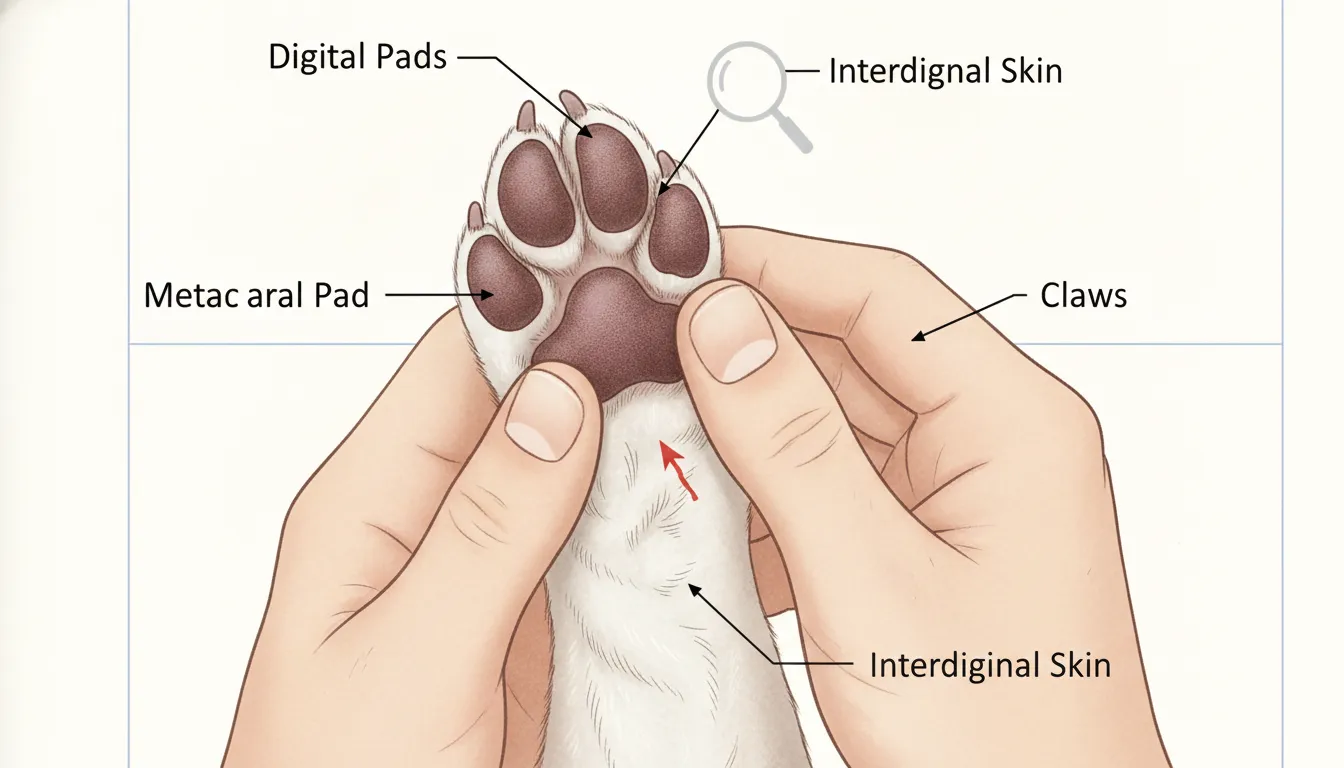
Always check between your dog's paw pads and toes first when you notice a sudden limp. Minor cuts or foreign objects are common and easy to remove.
Inspect the paw pads
thorns or shallow cuts that might be tucked into the creases of the pads. If your dog has been walking on hot pavement or ice, check for signs of burns or salt irritation. These minor paw injuries are very common in active dogs and often cause them to favor one leg suddenly.
Start by checking the bottom of the foot for visible damage. Look for small
Search for foreign objects
physical examination is a key first step to find why your dog is in pain. Also, look for any swelling or red spots that might hint at an insect sting or a spider bite.
Examining the paw pads for these foreign objects can help you rule out simple causes quickly. A thorough
Sometimes the cause is hidden between the toes. Carefully part the fur and check the webbing for splinters, burrs, or small pebbles.
Check the nails and skin
call the vet right away.
nail bed injuries like a torn or broken nail that catches on the carpet or grass. Gently press on each toe to see if your dog reacts. If you see a deep wound or heavy bleeding, you should stop your check and
A broken nail is a frequent reason for a sudden limp. Inspect each nail bed for cracks or bleeding. Some dogs limp due to
- Find a quiet spot with good light where your dog feels safe and relaxed.
- Have a second person help hold your dog still if they are in pain or anxious.
- Gently lift the limping leg and hold the paw firmly but softly in your hand.
- Run your thumb over each pad to feel for bumps, heat, or sharp edges.
- Check between every toe and look at each nail from the base to the tip.
- Use a damp cloth to wipe away mud or dirt so you can see the skin clearly.
- Note any swelling or weird smells that could point to an infection or a sting.
What Causes Soft Tissue Injuries in Dogs?
Soft tissue injuries like strains and sprains are common causes of temporary limping in active dogs. These happen when a dog plays too hard, jumps off furniture, or lands awkwardly during exercise. Most minor soft tissue injuries improve with rest within a few days, but persistent limping or signs of pain need a veterinary evaluation to rule out ligament damage.
strains or sprains, are common causes of temporary limping in active dogs. These injuries happen when a dog plays too hard, jumps off high furniture, or lands in an awkward way. While some cases get better with a few days of quiet time, others may need a vet to check for deeper damage to the muscles or ligaments.
Soft tissue injuries, such as
Common causes of leg strains
Overexertion during intense activity is a frequent trigger for acute limping in many dogs. A sudden dash across the yard or a long game of fetch can stretch muscles beyond their normal limit. You may notice your dog yelp or suddenly pull up a leg during play. This type of injury often leads to swelling or heat in the leg as the body tries to heal itself.
Signs of intermittent limping
dog symptom checker to help decide when to call the vet. Watching these patterns helps you give your vet clear facts for a better checkup.
Limping may be intermittent, appearing only after exercise or when rising from rest. You might see your dog struggle to stand up after a nap, but then start to walk better once they move around a bit. If you are not sure if the injury is serious, you can use a
When to rest and when to call
ligament injuries need a vet to find the exact cause of pain. If your dog still limps after two days of rest, or if they seem in a lot of pain, a vet visit is needed. Small issues that do not heal can lead to long-term joint damage if left alone.
Most minor strains improve fast if you limit your dog's activity for a few days. But
What Orthopedic Conditions Cause Limping?
Orthopedic conditions like ACL tears, hip dysplasia, luxating patella, and osteoarthritis are common long-term causes of limping in dogs. A chronic limp that lasts two weeks or more often points to structural issues in the bones or joints. Early diagnosis helps prevent further joint damage and keeps your dog mobile longer with proper treatment and management.
joint discomfort and mobility issues that make it hard for your pet to move.
two weeks or more. These cases often stem from structural changes in the bones or joints. Finding the root cause early can help you stop more joint damage from happening. You should also watch for signs of chronic inflammation, like
Orthopedic issues are a lead cause of long-term mobility changes in dogs. While some limps clear up fast, a chronic limp is one that lasts for
Acute vs chronic onset
Limping can start all at once or grow worse over time. Acute limping often shows up as a sudden inability to bear weight on a leg. Chronic cases may involve shifting lameness or a gait that looks stiff after your dog wakes up. Over time, you may even see a limb look thinner. This happens when muscle loss occurs due to long-term pain. Owners should track these patterns to help their vet find the right fix.
Common joint and bone issues
cranial cruciate ligament rupture is one of the most common hind limb injuries in active dogs. This often causes a sudden, painful limp that needs professional care. Younger dogs are more likely to have bone growth issues, while older dogs tend to face wear and tear from age.
Different breeds and ages face unique risks. Large dogs often deal with hip issues, while small breeds may skip or hop due to knee cap problems. A ConditionOnset TypeCommon SignsBreed RiskACL/CCL TearSuddenHolds hind leg up or barely touches toe to ground.Active medium to large breeds.Hip DysplasiaGradualStiff gait, bunny-hopping, or trouble rising.Large and giant breeds.Luxating PatellaIntermittentSkips or hops for a few steps then walks normally.Small and toy breeds.OsteoarthritisChronicWorse after rest, slow to move, less active.Senior dogs of all sizes.
When to seek care
If your dog is limping for more than a few days, a vet needs to check their range of motion. Early care can help manage pain and keep your dog active for years. Bony issues rarely resolve on their own and often need imaging to diagnose fully. By noting if the limp is in a front or hind limb, you give your vet a head start on the diagnostic process.
Front Limb vs. Hind Limb: What the Location Tells You
Whether your dog is limping on a front leg or a back leg points to different possible causes. Front leg limps often come from paw injuries, shoulder strains, or elbow dysplasia. Back leg limps are more commonly linked to ACL tears, hip dysplasia, or kneecap issues. Telling your vet which leg is affected and how the limp looks helps them diagnose the problem faster.
why is my dog limping, first find out which leg has the problem. Experts often group limps into two types based on where they occur. A limp in the front leg is a thoracic limp. A back leg issue is a pelvic limp. This is vital because each area has its own common risks and injuries.
When you ask
Clues in the front legs
broken or torn nails. These are a simple but painful reason for a sudden limp.
Front leg limps often stem from the paws or lower joints. Check the pads for small cuts or thorns that cause pain. If the paw looks clear, the issue may be higher up. Shoulder strains and elbow dysplasia are common in the front limbs of growing dogs. You can also look for
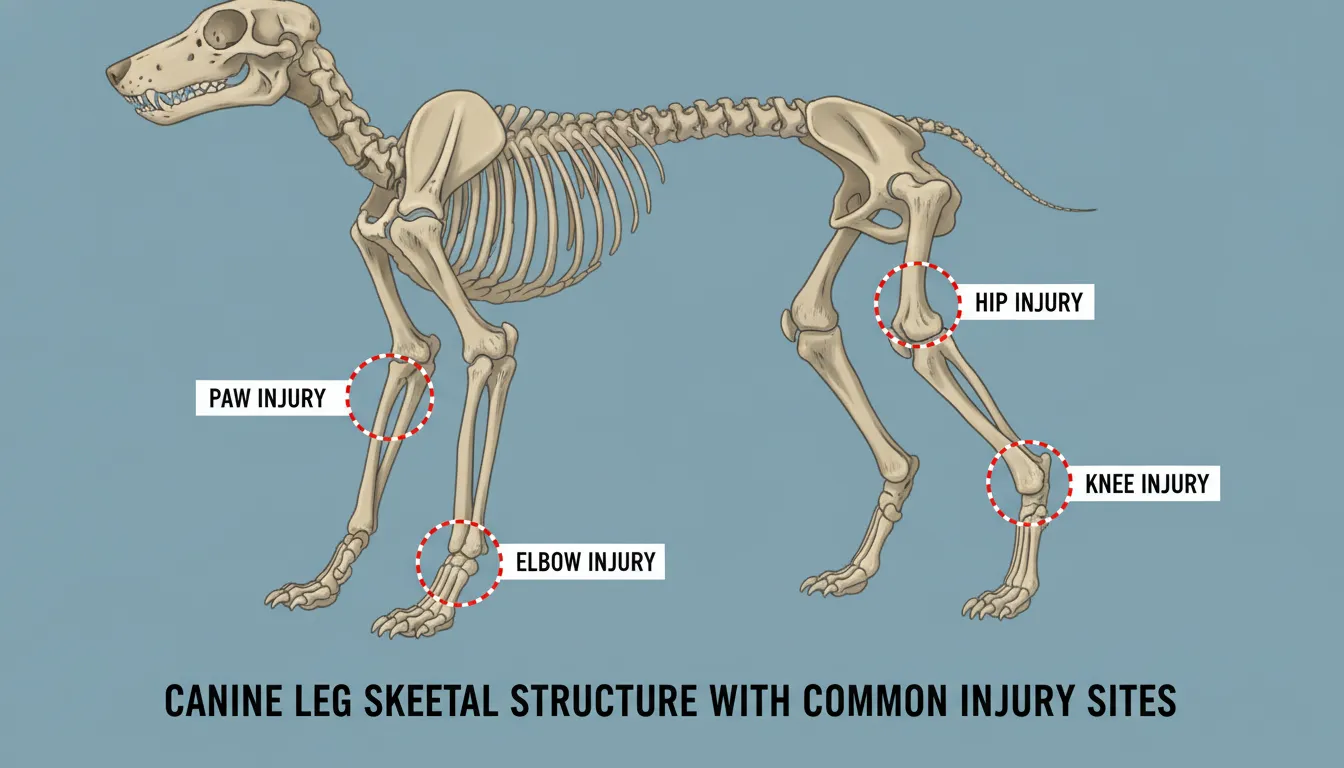
Front leg limps typically involve paw or elbow issues, while back leg limps often point to hip or knee problems like ACL tears or hip dysplasia.
Clues in the back legs
hind limb issues need a vet to perform a full exam to find the exact cause of pain.
cranial cruciate ligament rupture. This is like an ACL tear in humans. Hip dysplasia and kneecap issues also target the back legs. These
Back leg lameness in adult dogs often links to joint diseases or ligament tears. One common injury is a
What to tell your vet
systemic issue. Capturing these small details now can lead to a faster plan to help your pet.
Be ready to give your vet clear details about the limp. Note if your dog favors one side or if they struggle to stand after a rest. Mention if the limp stays the same or shifts between different legs. This helps your vet decide if the problem is a local injury or a
When Should Limping Be Considered an Emergency?
Limping becomes an emergency when your dog cannot put any weight on the leg, if the limb looks bent or swollen, or if the limp comes with fever, vomiting, or extreme tiredness. A sudden inability to bear weight often signals a broken bone or a complete ligament tear. Other red flags include heat in the joint, open wounds, or if the limping gets worse instead of better over 24 hours.
acute injury that needs a vet. This often happens with severe issues like a torn ligament or a bone break. You should also watch for a limp that gets worse over time, as this can be a sign of a deep, progressive health problem.
Most dogs will have a minor limp at some point. But some signs tell you that the injury is not just a simple strain. If your dog is suddenly holding up a leg and cannot put any weight on it, they have an
Signs of a body wide illness
when to call the vet guide to help you decide if their symptoms are urgent. A vet needs to check these cases to find the source of the pain and rule out serious infections.
Sometimes a limp is not just about the leg. If your dog is limping and also stops eating or acts very tired, the cause could be a body wide illness. These signs suggest the problem is affecting their whole body instead of just one joint. You can use a
Long term joint health
long term joint damage if it is left alone. Professional care is the best way to stop small injuries from becoming chronic pain. A physical exam by a pro is a key step to find why your dog is limping and how to keep them mobile.
Even a mild limp can be a concern if it does not go away. A limp that lasts for days can lead to
What to Do (and Not Do) While You Wait
Quick steps at home
If you see your dog limping, you must act fast to stop the injury from getting worse. You should start a strict rest plan right away. This means no running, no jumping, and no stairs until a vet can see your pet. Even if the limp seems to go away after a nap, it does not mean the cause is fixed. Proper rest is the best first step to help your dog heal and stay safe.
- Stop all exercise. Keep your dog in a crate or a small room so they do not run, jump, or play.
- Check the joints. If your dog is not in pain, you can gently move their leg to check for a stiff spot or a low range of motion.
- Start a log. Write down when the limp happens, how long it lasts, and if it gets worse after a short walk.
- Watch for changes. Look for swelling, heat, or a limb that looks thin, which can show a loss of muscle.
- Check the leg type. Note if the limp is in a front leg or a back leg, as this helps the vet find the cause.
Big mistakes to avoid
Never give your dog human pain pills like ibuprofen or acetaminophen. These drugs are toxic to pets and can cause very bad health issues like liver or kidney failure. Even a small dose can be deadly. It is also a mistake to skip the vet just because the limp is mild. Small limps that last for a long time can lead to deep joint damage. You must get them checked by a pro early on.
Getting ready for the vet
scans like X-rays to look for bone or joint issues. These tools are often needed to find ligament tears or joint diseases that need expert care to fix.
when to call the vet to find the right cause for why your dog is limping. During the visit, the vet may use
Your vet will need a clear list of what you saw at home to make a plan. A symptom diary helps you know
You can also use Mylo to see real-world stories from other pet owners with similar breeds and symptoms. If your dog is a large breed, they may have different common causes for a limp than a small dog would. Checking these stories helps you know what to expect and what to ask during your next vet visit.
Frequently Asked Questions
Why is my dog limping but acting normal?
A dog might limp but act normal if they have a high pain limit or a small injury. When they play, high energy can hide pain, making the dog seem fine. However, a limp is always a sign that your pet is avoiding weight on a sore limb. You should check the paw for thorns and watch the gait closely. If the limp stays, it could be a sign of a joint issue.
Will a dog limp heal on its own?
Mylo, if a dog stops limping after rest, it does not mean the cause is gone. You should limit their play and watch for the limp to return. If the problem stays for two weeks or more, it is chronic and needs expert help.
A mild limp from a small strain might go away with rest, but you should not think your dog is fine just because the limping stops. According to
What are common causes for sudden back leg limping in dogs?
National Institutes of Health, a cranial cruciate ligament rupture is a common cause of hind limb lameness. Other issues like hip dysplasia or luxating patellas can also cause sudden pain. A vet may need to take X-rays to check the bones and joints for damage. Large breeds are often at a higher risk for these injuries.
Sudden back leg limping is often caused by a ligament tear or a joint problem. According to the
When should I be worried about my dog limping?
PetMD, a limp that lasts for two weeks or more is chronic. These signs mean your pet needs to see a vet right away to find the cause and start treatment.
You should worry if your dog cannot put any weight on the leg or if the limb looks bent. Other red flags are sudden swelling, heat, or if the dog is very tired and stops eating. According to
Join the Mylo waitlist today to see real outcomes from pet owners with the same breed and symptoms.
Ready to stop guessing about your dog's limp?