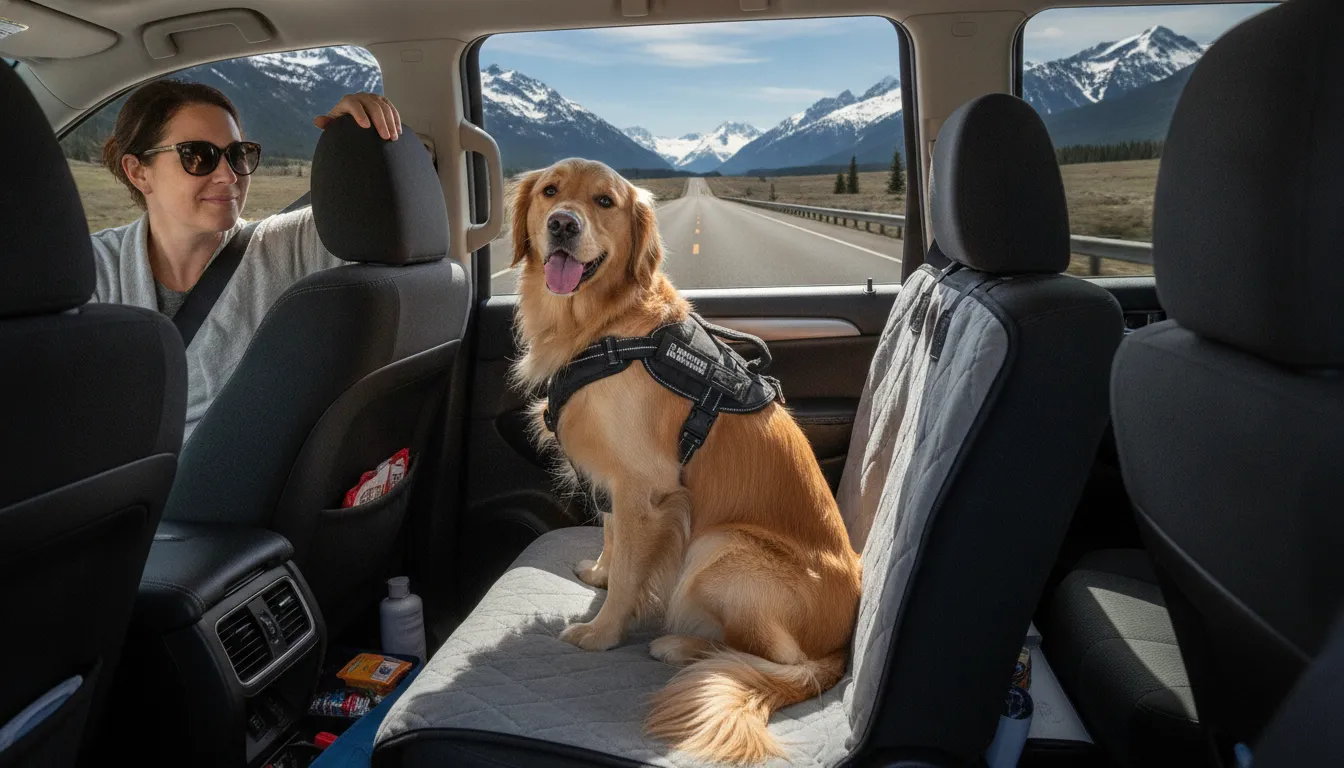
A smooth trip with your dog starts before the engine turns over. A new route, unfamiliar sounds, motion sickness, or a long stretch away from home can turn an exciting outing into a stressful experience for both of you. The good news is that thoughtful preparation can make travel safer and more predictable.
Traveling with your dog is easiest when you combine a secure car setup, gradual practice, comfort strategies, and a plan for health records, breaks, and emergencies.
Start by considering how your dog responds to the car. Whining, drooling, or vomiting may signal anxiety or motion sickness, not stubbornness. Short, positive practice rides can help build confidence over time, while a veterinary checkup is sensible before a longer journey. Once you know what your dog needs, the first priority is making every mile physically safe.
Ready to make travel easier with the Mylo app?
Car Safety: Securing Your Dog in the Car on Every Trip
A safe car ride starts before you pull out of the driveway. A loose dog can distract the driver, interfere with steering or braking, and be thrown forward in a sudden stop. The American Veterinary Medical Association recommends using a proper restraint to help protect both the dog and everyone in the vehicle.
Choose a restraint that fits the trip and your dog
Use a crash-tested harness designed for vehicle travel, a properly sized crate, or a secure pet barrier. A car-specific harness should attach to the seatbelt as directed by the manufacturer. Do not clip a seatbelt tether to a regular walking collar, and do not assume any carrier or harness is safe simply because it is marketed for pets. Check the fit before each trip so your dog cannot back out, twist free, or become tangled.
A crate can provide a familiar, contained space, but it must be secured so it cannot slide or tip during braking. A barrier may work for some vehicles and larger dogs, but it should separate your dog from the driver without creating an escape route. The right option depends on your dog's size, body shape, temperament, and comfort. Introduce the restraint gradually with treats and calm practice rides instead of making a long journey its first use. The AKC recommends step-by-step desensitization and positive associations when teaching a dog to ride calmly: car training guidance from the AKC.
Keep the cabin controlled, cool, and free of hazards
Never let your dog ride loose or hang their head out of the window. Flying debris can injure the eyes, nose, and mouth, while sudden stops and turns can cause serious injury. Keep the interior clear of small objects your dog could swallow if they become restless, including wrappers, loose toys, medication, and dropped food. Offer only travel-safe items that cannot break apart or become a choking hazard.
Never leave your dog unattended in a parked car. Temperatures inside can reach dangerous levels quickly, even when the weather outside feels relatively cool. During travel, keep the car comfortably cool and provide fresh air without compromising the restraint or allowing an escape. Temperature control is especially important for dogs with heavy coats, short noses, older dogs, puppies, or health conditions. Plan stops so a responsible adult stays with your dog, or choose locations where your dog can safely accompany you.
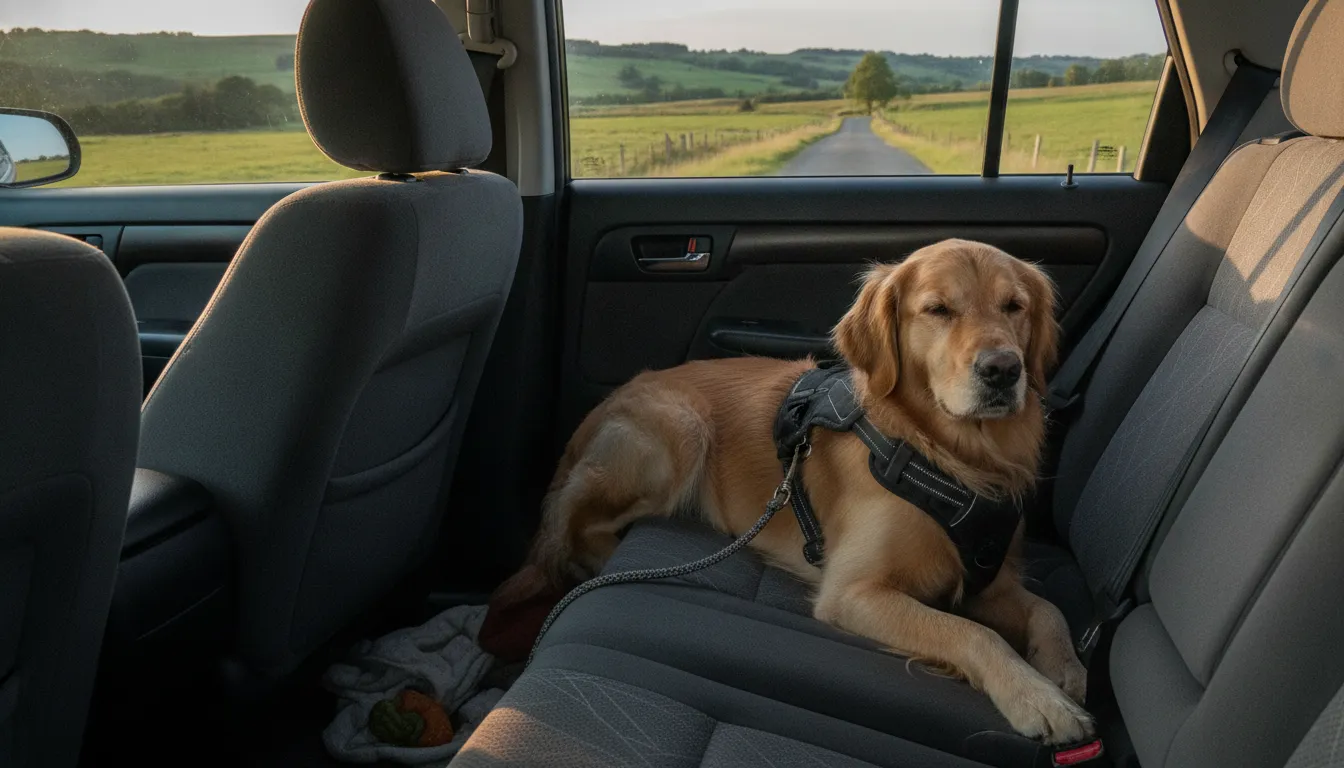
Why Dogs Get Anxious on the Road and How to Calm Them
Car anxiety can look different from dog to dog. Whining, drooling, and vomiting may signal fear, motion sickness, or both. Puppies are especially prone to motion sickness, and many improve as they mature, but repeated distress deserves a thoughtful plan rather than forcing a long ride. A calm routine can make managing dog anxiety while traveling easier for you and your dog.
Use gradual conditioning to build a better car association
Start while the car is parked. Let your dog investigate the vehicle at their own pace, then reward relaxed behavior with small treats, a favorite toy, or praise. This step-by-step approach, known as desensitization and counter-conditioning, helps replace an anxious response with a more positive expectation. Keep sessions brief and stop before your dog becomes overwhelmed.
When your dog is comfortable sitting in the car, begin with a trip to the end of the driveway and back. Build driving time in small increments rather than jumping straight to a long journey. Each ride should end while your dog is still coping well. Choosing an enjoyable destination, such as a nearby park or a walk in the woods, can also help the car predict something rewarding instead of something frightening.
Exercise can lower your dog's stress before departure. A walk or play session about 20 minutes before the trip may help them settle. If possible, ask a helper to sit beside your dog in the back seat and offer rewards during the ride. Keep your dog secured in an appropriate crate or car harness while practicing, so the safety routine becomes familiar too.
Try practical calming aids, and involve your veterinarian when needed
Keep the car cool and provide fresh air by lowering the windows safely. A pheromone spray may help some dogs relax. These products mimic the odor of a nursing mother dog and are available as sprays, collars, or diffusers. Introduce any aid during a calm practice session so you can see how your dog responds before a major trip.
Do not assume every episode is behavioral. If vomiting, drooling, or panic continues despite gradual practice, contact your veterinarian. They can help distinguish motion sickness from anxiety and discuss appropriate motion-sickness or anti-anxiety medication. Never give a human medication unless your veterinarian specifically directs you to do so. With patience, positive reinforcement, and an individualized plan, many dogs can learn that the road is a safe place to be.
Trip Planning for Traveling with Your Dog: Health Certificates and Paperwork
A little paperwork can prevent a stressful turn at the airport, border, or hotel desk. Before a long trip, schedule a veterinary checkup to confirm that your dog is healthy enough for the journey. This visit is a chance to review age, vaccines, parasite prevention, medications, and any condition that could make travel harder. If your dog is young, the American Kennel Club advises that they should be at least 8 weeks old and weaned before traveling.
Build a timeline before you book
Ask your veterinarian and transportation provider exactly which documents you need, because timing varies by destination and carrier. Health certificates are often good for about 30 days, but some airlines require one dated within 10 days of travel. The AKC also notes that certification of health must be provided no more than 10 days before travel. Confirm the rule directly with your airline, since an otherwise valid certificate may not meet its narrower window. PetMD's travel guidance offers additional background on certificate timing.
Interstate and international trips can require preparation six months or more in advance, according to the American Veterinary Medical Association. For international travel, check the destination's rules well ahead of departure. Quarantine periods, vaccination requirements, import permits, and proof of vaccination may all affect your schedule. The AVMA recommends checking requirements for the destination rather than assuming that your current records will be accepted.
Before leaving, update the registration details connected to your dog's microchip and place a current ID tag on the collar. Pack printed or accessible digital copies of veterinary records, medication instructions, vaccination information, and emergency contacts. Keep the originals and backups where you can reach them quickly, not buried in checked luggage. If your dog develops an unfamiliar symptom during the trip, you can monitor your dog's health on the go while deciding whether to contact a veterinarian.
Finally, protect the familiar parts of your dog's day. Keep feeding times as consistent as possible, and bring familiar food, bedding, or a favorite toy. Predictable routines can help your dog feel more secure when the surroundings, schedule, and people around them change.
Car, Plane, or Pet-Friendly Stay: Choosing What Works for You Both
The best travel mode depends on your dog's health, temperament, size, and how much control you need over the journey. A road trip may offer flexibility, while a nearby pet-friendly stay can provide a genuine change of scenery without the demands of a long transit day. If you are weighing symptoms, anxiety, or motion sickness before booking, the Mylo blog offers additional planning guidance.
| Option | Best for | Key safety need | Cost and time | Stress and paperwork |
|---|---|---|---|---|
| Car road trip | Dogs who tolerate the car and families wanting control over stops | Use a crate or car-specific harness, and plan breaks every 2 to 3 hours for water, stretching, and bathroom needs. | Often the most flexible option, but longer drives take more time and require fuel, lodging, and planned stops. | Usually less paperwork. Stress can rise with motion sickness, unfamiliar routes, or long hours in the car. |
| Air travel, in-cabin | Small dogs who meet the airline's carrier and cabin requirements | Confirm airline rules, carrier dimensions, and your dog's ability to remain calm in a confined space. | Can shorten the travel time, but fares, carrier fees, and airport logistics add cost and complexity. | Airlines may require a health certificate within 10 days. Dogs must be at least 8 weeks old and weaned. |
| Air travel, cargo | Dogs who cannot travel in the cabin when air travel is necessary | Check the airline's restrictions and weather forecast. Cargo transport is prohibited when temperatures are below 45°F or above 85°F for more than 4 hours. | Potentially faster over long distances, but fees, transfers, and airport procedures vary by airline. | Often the most stressful option for sensitive dogs. Health certificates and airline-specific paperwork may apply. |
| Pet-friendly stay or nearby trip | Dogs who do better with shorter journeys and familiar routines | Verify that the lodging truly accepts dogs, secure the room, and bring familiar food, bedding, and identification. | May reduce transit time and travel costs, though pet fees and local lodging rates vary. | Often a gentler choice for anxious dogs. Paperwork is usually simpler, but property rules still need review. |
For air travel, confirm requirements directly with the airline and your veterinarian well before departure. For driving, choose the option that lets you respond to your dog's needs rather than forcing a fixed schedule. A shorter pet-friendly trip can be more rewarding than a demanding itinerary, especially when your dog is prone to anxiety or motion sickness.
Your Dog Travel-Day Checklist for a Smooth, Calm Trip
A predictable routine can make travel easier for both you and your dog. Use this checklist before pulling out of the driveway, then adjust it for your dog's age, health, breed, and comfort level.
- Finish the health check and pack paperwork. Schedule a veterinary checkup before a long trip, especially if your dog has a chronic condition, is elderly, or has struggled with travel before. Pack veterinary records, medication instructions, vaccination documentation, and emergency contact information in an easy-to-reach place. If you are crossing state or international borders, confirm requirements early because certificates and other documents can have specific timing rules. Review the AVMA's pet travel guidance for preparation details.
- Exercise, then time food and water thoughtfully. Give your dog about 20 minutes of exercise before departure to help lower stress. A short sniff walk or gentle play session may be more useful than intense exercise. To reduce the chance of motion sickness, limit food and water for a few hours before the trip. Following your veterinarian's advice for puppies, diabetic dogs, and pets with other medical needs. The AKC recommends exercise and pre-trip meal planning as part of car-trip preparation.
- Secure your dog and pack familiar comforts. Use a crash-tested harness attached to the vehicle's seatbelt or a properly secured travel crate. Never allow your dog to ride loose. Add a familiar blanket or favorite toy, and keep a portable water bowl and bottled water within reach for the next break. Remove small objects from the car that could become tempting to chew or swallow.
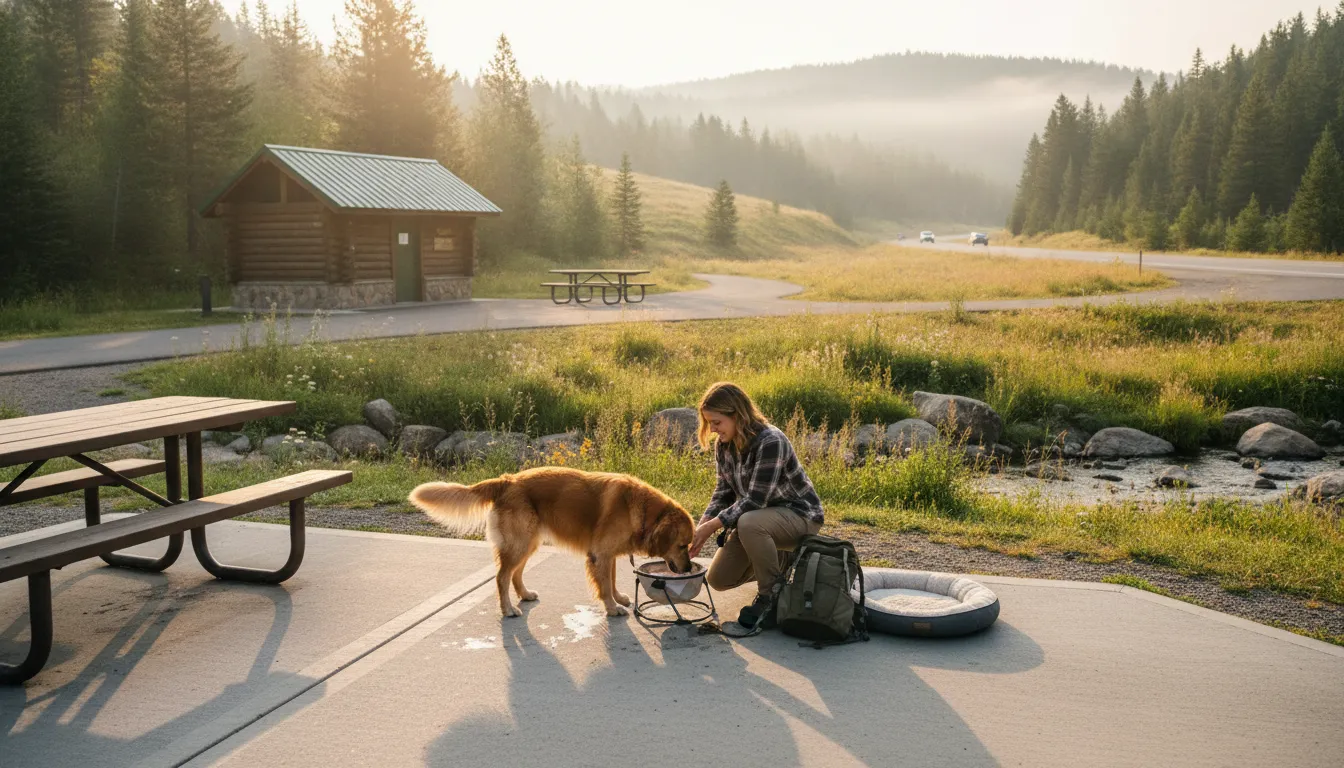
- Schedule a break every 2 to 3 hours. Plan safe stops where your dog can stretch, relieve themselves, and drink water. Keep the leash attached before opening the car door, and check the surroundings before letting your dog out. A planned break is safer and calmer than waiting until your dog is already restless.
- Keep the car cool and maintain identification. Use air conditioning or fresh air to keep the interior comfortable, but never leave your dog unattended in a parked car. Before departure, confirm that the ID tag has current contact details and that the microchip registration is updated. This adds an important layer of protection if your dog slips away during a stop. PetMD also recommends current identification during travel.
- Recreate familiar routines at your destination. Once you arrive, offer meals at your dog's usual times and keep the feeding routine as consistent as practical. Set up the familiar blanket or toy before exploring, and give your dog time to settle. Familiar structure can help the new place feel less overwhelming.
Get started with Mylo and plan your next trip with confidence.
Frequently Asked Questions
How can I tell whether my dog has motion sickness or travel anxiety?
Drooling, whining, trembling, or vomiting can point to motion sickness, fear, or both. Keep the car cool, offer fresh air, and note when symptoms begin. Puppies are more likely to experience motion sickness, and many improve as they mature. If symptoms continue, ask your veterinarian whether medication or another treatment is appropriate. The American Kennel Club discusses common signs and veterinary options.
How long does a dog health certificate last for travel?
Requirements depend on your destination and transportation method. Health certificates are often valid for about 30 days, but some airlines require one issued within 10 days of travel. Confirm the current rules with your airline, destination authority, and veterinarian before booking, because international trips may also require additional documentation or advance planning. PetMD summarizes common certificate timing.
What is the safest way to fly with my dog?
Start by checking your airline's pet policy and your destination's entry requirements. Ask your veterinarian whether your dog is healthy enough to fly, and avoid making assumptions about cargo or cabin eligibility. For air travel, the USDA's Animal and Plant Health Inspection Service is an important source for current requirements. Build in extra time for documents, identification, and a calm handoff.
How do I calm an anxious dog during a car ride?
Use gradual practice rather than starting with a long drive. Begin with the parked car, then take short trips and reward calm behavior with praise, treats, or a favorite toy. Secure your dog in a crate or car-specific harness, and keep a familiar blanket nearby. For persistent anxiety, consult your veterinarian and consider tracking which strategies help your dog most.
Ready to Make Travel Easier for Your Dog?
A little preparation can help you keep your dog's health details organized before departure and stay attentive to changes during the trip. Use the Mylo app to plan and track your dog's health while traveling. Get started with Mylo when you are ready to make your next journey more manageable.