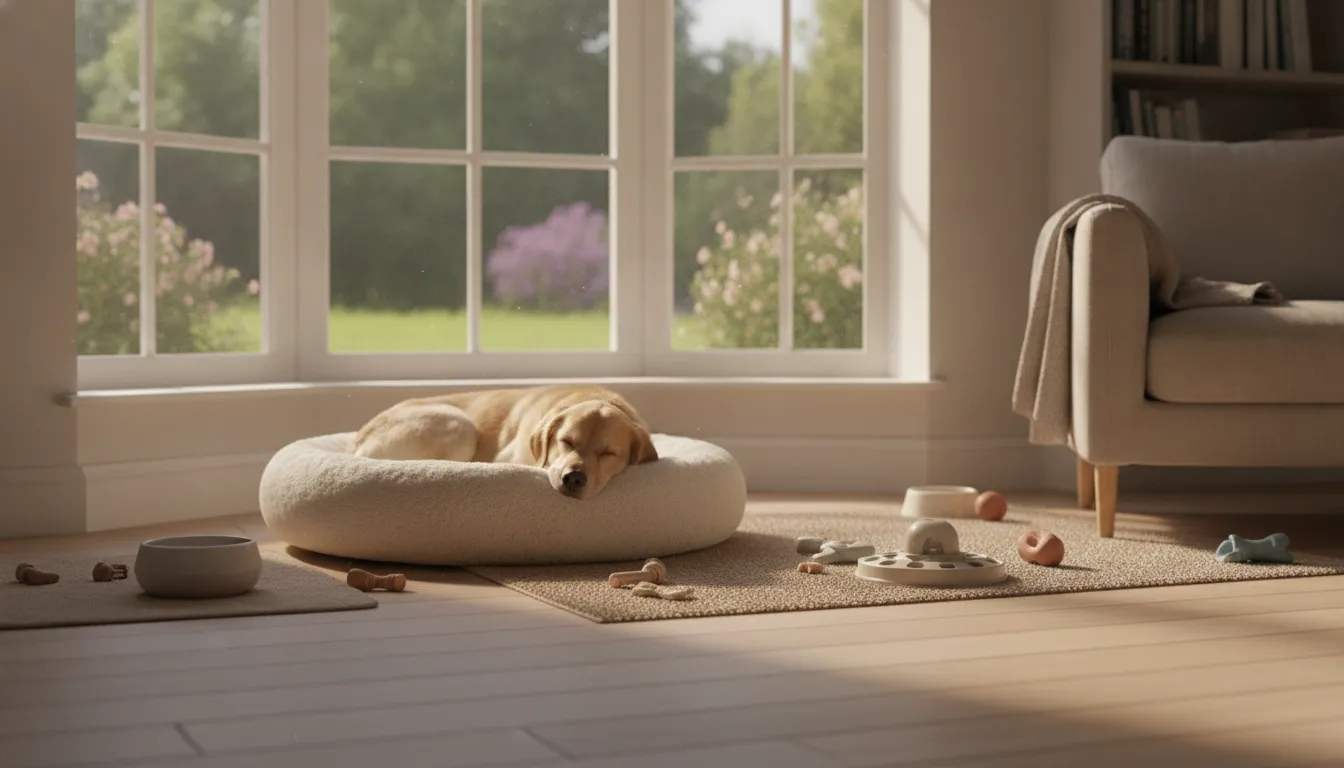
Leaving your dog home alone can turn an ordinary errand into barking, scratching, accidents, or a worried camera check every few minutes. The difficult part is knowing whether these behaviors reflect distress about separation, boredom, a routine change, or another problem that looks similar.
Separation anxiety in dogs is distress linked to being apart from an attachment figure. Owners often notice vocalizing, destruction, or house soiling within minutes of leaving, but some dogs show few obvious clues. The most helpful response is usually a gradual, consistent plan built around manageable departures, enrichment, and observation, with professional guidance when safety is at risk.
That approach starts with understanding what is happening emotionally, not treating every mess or bark as misbehavior. A simple record of departure cues, timing, and behavior can reveal useful patterns and help you choose next steps without overwhelming your dog. First, it helps to define the problem clearly and separate normal alone-time struggles from a more persistent distress response.
Recognize the early signs of separation anxiety in dogs and start a plan your pet can handle.
What Is Separation Anxiety in Dogs?
Separation anxiety in dogs is a pattern of intense distress that occurs when a dog is separated from the people they rely on. Dogs affected by it are often unusually attached or dependent on family members. Their anxiety can become overwhelming when a person leaves, even if the absence is brief or the dog is otherwise comfortable at home. This is more than a dog being excited to see you again. It is a fear response that can make ordinary departures difficult for both the pet and the household.
Dogs are social animals, so some discomfort around separation is understandable. Research on attachment and separation notes that many social species, including dogs, show distress responses when separated from important attachment figures. You can read the related research in PubMed. This context matters because it helps explain why a dog may react strongly to a change that seems routine to a person. The behavior is not necessarily stubbornness, spite, or an attempt to punish you for leaving.
The key difference is the intensity and pattern of the response. A dog with separation-related distress may struggle specifically when a family member leaves or when the dog expects to be left alone. The reaction may begin around departure cues, such as picking up keys or putting on shoes, and continue during the absence. Some dogs vocalize, pace, scratch at doors, chew objects, or have accidents. Others show quieter signs that are easy to miss, such as refusing food, trembling, hiding, or remaining fixed near an exit. The behavior and its timing provide useful clues, but one sign alone does not establish a diagnosis.
It is also important not to label every problem that happens while you are away as separation anxiety. Boredom, incomplete house training, noise sensitivity, confinement distress, and other behavior concerns can look similar. A research review emphasizes that separating anxiety from other problems with similar presentations is essential before choosing a treatment plan. If you are tracking your dog's behavior, note what happens before you leave, how soon the behavior starts, and whether it occurs when someone is home. A short video, when safe to obtain, can add helpful context for a qualified professional.
Understanding the pattern is the first step toward a calmer plan. The goal is not to blame your dog or force them to tolerate fear. It is to identify what they are experiencing and respond with gradual, supportive strategies that fit their individual needs.
Common Signs Your Dog Has Separation Anxiety
The clearest clue is often the timing. Dogs experiencing separation-related distress may begin reacting before or soon after a guardian leaves. Commonly within a few minutes and sometimes within a window of a few to 30 minutes. The behavior is not simply a dog being difficult. It can reflect genuine distress when a social animal is separated from an attachment figure.
Some dogs bark, whine, howl, or make other vocalizations after the door closes. Others scratch at doors, chew furniture, damage window coverings, or try to escape. House soiling can also occur, even in a dog that is reliably trained when people are home. These behaviors may happen during departures, while the dog is alone, or as the owner prepares to leave.
- Barking, whining, howling, or repeated vocalization soon after you leave.
- Scratching, chewing, digging, or destruction focused near doors and windows.
- Escape attempts or damage that appears only during alone time.
- Urination or defecation in the home despite otherwise consistent house training.
- Pacing, restlessness, drooling, panting, trembling, or frantic activity around departures.
- Clingy behavior before you leave or an unusually intense reunion when you return.
A quiet dog is not necessarily a comfortable dog. RSPCA guidance cites research suggesting that eight out of ten dogs find it difficult to cope when left alone, while half may show no obvious outward signs. Some dogs freeze, withdraw, or remain still rather than bark or destroy things. A camera recording can reveal pacing, repeated position changes, or other subtle patterns that are easy to miss if you only inspect the room afterward.
Look for a consistent pattern rather than relying on one isolated incident. Note what happens before departure, how quickly the behavior starts, what your dog does while alone, and how they act when you return. A torn item could reflect boredom or access to a tempting object, while destruction that starts shortly after departure and centers on exit points may suggest separation-related distress. Similar signs can also have other behavioral or health-related explanations, so avoid treating a symptom list as a diagnosis. If you see severe destruction, escape injuries, or signs your dog may be harming themselves, contact a veterinary professional. For a deeper overview, review these signs of anxiety in dogs alongside your own observations.
Separation Anxiety vs. Normal Puppy Misbehavior
Look for the pattern, not just the mess
A chewed shoe or a noisy puppy can be frustrating, but the behavior alone does not prove separation anxiety. The most useful question is what happens around your departure. Separation-related distress is tied to being apart from an attachment figure and often begins shortly after the person leaves. A puppy who chews because an object is available, or barks because attention is rewarding, may have a training or enrichment need instead.
Timing, context, and the full pattern matter more than one isolated incident. If possible, record what your dog does after you leave, including when the behavior starts and whether it stops when you return. This can reveal signals that are easy to miss, especially because some dogs show subtle distress rather than dramatic destruction.
How separation-related distress differs from common puppy behavior.
What to compare. |
Possible separation anxiety. |
Boredom or a learned bad habit. |
|---|---|---|
Connection to your absence |
Behavior appears when you prepare to leave, soon after you leave, or while your dog is alone. |
Behavior can happen while people are home or when an appealing object is available. |
Early signals |
Trembling, pacing, persistent vocalizing, panting, or frantic attempts to follow or escape may begin within minutes. |
Brief barking, play, exploring, or chewing may reflect normal puppy energy and curiosity. |
Destruction |
Damage may cluster near doors, windows, crates, or other places associated with your departure, and can look frantic. |
Chewing shoes, furniture, or other objects may be opportunistic and unrelated to whether you left. |
Attention and learning |
Reassurance or your return may interrupt the behavior, but the distress pattern returns during future absences. |
Barking may stop when attention is withheld or appropriate behavior is rewarded, with training improving the pattern. |
These categories can overlap. A puppy may be under-stimulated and also worried about being alone, so avoid treating the table as a diagnosis. A review indexed in PubMed emphasizes that separating anxiety from other behavior problems with similar presenting complaints is essential before choosing a treatment plan.
If your dog is trembling, pacing, vocalizing continuously, injuring themselves, or causing severe destruction during absences, involve a veterinary professional. For milder cases, start by documenting the pattern and addressing the underlying need rather than punishing the behavior. Punishment can add stress without explaining what your dog is experiencing.
What Causes Separation Anxiety in Dogs?
Separation anxiety in dogs often develops from a combination of temperament, attachment, experience, and change. Dogs are social animals, and some become especially dependent on one or more family members. When that attachment figure leaves, being alone can trigger genuine distress rather than ordinary frustration or disobedience. Veterinary guidance describes affected dogs as overly attached or dependent on family members. While research recognizes separation-related distress as a response seen in social species when they are separated from attachment figures. Learn more about the role of attachment in separation anxiety.
Over-attachment can become more noticeable when a dog has few opportunities to relax independently. A dog that follows a person from room to room, struggles when a door closes, or relies on constant contact may find departures especially difficult. This does not mean affection caused the problem, and it does not mean you need to withdraw from your dog. It suggests that independence skills may need to be built gradually, alongside a predictable routine.
Life changes can trigger a sudden reaction
A dog may begin showing separation-related behavior after a sudden schedule change. Returning to work after spending more time at home, changing shifts, or altering the timing of walks and meals can make departures feel unfamiliar. Moving to a new home can have a similar effect because the dog loses familiar sights, sounds, and smells at the same time that the household routine changes.
A change in household members may also matter. The loss of a person, a new partner or baby, a roommate moving out. Or a change in which family member provides daily care can alter a dog's sense of security. These events do not automatically cause separation anxiety, but they can expose or intensify an existing vulnerability. Sudden onset deserves careful observation rather than assumptions about stubbornness or revenge.
Early experiences may influence resilience
Early-life socialization and training can help puppies learn that new people, environments, routines, and short periods of alone time are safe. Proper puppy socialization and independence practice may help prevent separation anxiety from developing, according to veterinary behavior guidance. The goal is not to leave a puppy distressed for long periods. It is to introduce manageable experiences and reward calm coping.
Finally, similar behaviors can have different causes. Barking, destruction, or house soiling may reflect boredom, fear, incomplete training, or another behavior problem. Accurate diagnosis requires ruling out those possibilities before choosing a treatment plan. If the pattern is unclear, record what happens before, during, and after departures and discuss it with a qualified veterinary professional.
How to Treat Separation Anxiety in Dogs, Step by Step
Helping a dog cope with alone time is usually a gradual behavior plan, not a quick correction. The goal is to keep your dog below the point where panic begins, then build confidence through calm, repeatable experiences. Lifestyle management matters just as much as the training itself. Adjust the routine, reduce unnecessary absences while you practice, and track what your dog can handle rather than guessing.
Use a camera or audio monitor when possible. Separation-related distress can begin within a few minutes of departure, and some dogs show subtle signs that are easy to miss. If your dog is severely destructive or becomes injured while alone, stop the home program and seek professional veterinary care. Mylo does not replace a veterinarian, and safety comes first.
- Identify the starting point. Observe your dog during ordinary departures and note the first sign of tension, such as pacing, whining, scratching, or rushing to the door. Your starting absence should be shorter than that trigger point. If your dog becomes distressed when you pick up your keys, practice handling the keys without leaving until that cue becomes unremarkable.
- Pair departure cues with good experiences. This is counter-conditioning: present a previously worrying cue alongside something your dog enjoys, such as a food puzzle or a safe, long-lasting enrichment activity. Give it while you remain home at first. The purpose is not to distract a panicked dog, but to help change the emotional meaning of predictable cues. Remove the item when the practice ends so it stays associated with calm training time.
- Practice very short absences. Step outside for a few seconds, return before distress starts, and wait for a calm moment before repeating. Keep your exits and returns low-key. Increase duration in small increments only when your dog remains relaxed across several repetitions. If barking, frantic movement, or other distress appears, shorten the next attempt. Progress is not linear, so an easier session is a useful adjustment, not a failure.
- Build duration slowly and vary the routine. Once brief departures are easy, alternate shorter and longer absences instead of increasing time every single attempt. Add realistic steps gradually, such as walking to the car or closing the door behind you. Avoid making a large jump from seconds to a full errand. During this phase, arrange help, bring your dog along when practical, or modify schedules to prevent repeated panic that can undermine training.
- Support the plan with daily structure. Provide appropriate exercise, quiet rest, enrichment, and predictable transitions. Practice independence while you are home by rewarding your dog for settling on a bed or spending time in another comfortable area. Keep a simple log of departure length, body language, and recovery time. That record can show patterns and give your veterinarian or qualified behavior professional useful information if progress stalls.
Effective desensitization is deliberately uneventful. The right pace is the one your dog can repeat without fear, even if it feels slower than expected. When the plan becomes difficult to manage, professional guidance can help distinguish separation anxiety from other behavior concerns and refine the next safe step.
Explore step-by-step training and enrichment strategies that helped other pet owners.
Enrichment, Routine, and Prevention
Daily structure can make time alone feel more predictable. It cannot guarantee that a dog will never become distressed, but it gives you practical ways to support calmer departures and notice which changes help. Think of the routine as a series of small signals your dog can learn to understand, rather than a test your dog must pass.
Start with consistency around departures. Keep shoes, keys, and goodbyes low-key instead of turning them into an emotional event. A calm hello when you return can help keep arrivals from becoming the only highly stimulating part of the day. If your schedule changes, adjust alone time gradually when possible. Short, successful absences are more useful than suddenly expecting a dog to cope with a long day alone.
Before leaving, offer an activity that is safe, familiar, and genuinely engaging for your dog. Food puzzles, stuffed toys, sniffing games, and a small scatter of kibble can provide an appropriate outlet for natural behaviors. Rotate options so they stay interesting, but do not introduce a complicated new toy for the first time during a long absence. Supervise new items first and remove anything your dog might break or swallow.
Exercise can also support the routine, especially when it matches your dog's age, health, and temperament. A walk that includes time to sniff may be more settling than a rushed trip around the block. Follow exercise with a quiet transition, water, and a few minutes of rest before you leave. The aim is not to exhaust your dog into silence. It is to meet physical and mental needs while building a repeatable pattern.
Building independence starts while you are still at home. Reward your dog for resting on a mat, spending time with a toy, or relaxing in another room. Move away for brief periods, return before distress escalates, and increase distance or duration in small increments. Avoid making constant attention the only route to comfort. These habits are especially useful during puppyhood. Proper socialization and training may help prevent separation anxiety from developing, according to guidance from VCA.
If distress appears suddenly, review recent changes such as a new schedule, move, illness, or loss of a companion. Community-verified strategies can offer practical ideas for sudden separation anxiety in dogs, but each pet's response is different. Track departures, activities, and behaviors in simple notes so you can compare what worked for pets like yours without treating an owner experience as a diagnosis.
When to Seek Professional Help for Separation Anxiety in Dogs
Some cases can improve with a thoughtful routine and gradual behavior work. Others need professional guidance early, especially when your dog's safety, health, or quality of life is at risk. If your dog is breaking through doors, windows, crates, or barriers, swallowing damaged materials. Injuring their teeth or paws, or hurting themselves while trying to escape, contact a veterinarian promptly. Severe destructive behavior or injury related to anxiety should always be directed to professional veterinary care. Mylo does not replace your vet.
Warning signs that should not wait
Make a veterinary appointment if the behavior is intense, escalating, or accompanied by physical changes. Examples include repeated self-injury, damaged nails or teeth, bleeding, vomiting, diarrhea, refusal to eat, or unusually prolonged distress after you return. A vet can assess injuries and help determine whether a health problem is contributing to the change. Sudden behavior changes deserve particular attention rather than being assumed to be separation anxiety.
Professional help is also appropriate when your dog's distress prevents you from leaving the house, disrupts neighbors, or makes ordinary care difficult. Persistent barking, destructive escape attempts, or house soiling soon after departure can have several possible explanations. Accurate diagnosis requires separating separation anxiety from other behavior problems that can look similar, so an appropriate plan can be chosen. Research on canine separation anxiety emphasizes the importance of making that distinction before starting treatment.
Choosing the right support
Start with your veterinarian when there are injuries, physical symptoms, sudden onset, or uncertainty about what is happening. For behavior-focused support, ask about a certified behavior consultant or a veterinary behavior professional with experience in separation-related problems. Look for someone who observes the full pattern, asks about what happens before and after departures, and explains the plan in clear, manageable steps. Be cautious of anyone promising a guaranteed fix or recommending punishment for anxious behavior. Fear and panic are not the same as deliberate disobedience.
Bring useful observations to the appointment, such as a departure video, a timeline of when vocalizing or destruction begins, and details about your dog's daily routine. These records can make patterns easier to evaluate. Keep the focus on behavioral strategies and safety; medication and alternatives are covered separately in Mylo's related content. While you arrange professional care, avoid rehearsing departures that repeatedly push your dog into panic when a safer option is available. A calm, qualified assessment can replace guesswork with a plan tailored to your dog.
Ready to build a calmer alone-time routine for your dog? Start with Mylo today.
Frequently Asked Questions
What are the common symptoms of separation anxiety in dogs?
Watch for barking, whining, destruction, pacing, escape attempts, or house soiling that appears soon after you leave. The RSPCA notes that distress may begin within a few minutes to 30 minutes, and some dogs show no obvious signs at all. A camera can help you see what happens when you are away. RSPCA guidance
How can I treat separation anxiety in dogs?
Start with management that prevents panic, then practice very short absences and increase them gradually while your dog stays calm. Pair departures with enrichment, keep routines predictable, and consider guidance from a qualified behavior professional. Progress is usually built through consistent desensitization, not one dramatic training session.
What causes sudden separation anxiety in dogs?
A change in schedule, household, home, caregiver, or daily routine can coincide with new distress. However, similar behaviors can have other causes, so do not assume separation anxiety from one incident. If the change is sudden or intense, ask your veterinarian to help rule out health or behavior concerns.
Are there effective home remedies for separation anxiety in dogs?
Helpful at-home steps include exercise suited to your dog, food-based enrichment, calm departure cues, and gradual alone-time practice. Avoid punishment after barking or damage, because it can increase fear. If your dog is injuring themselves or causing severe destruction, contact a veterinary professional for safety-focused support.
What training methods work best for separation anxiety in dogs?
Desensitization and counter-conditioning are commonly used: begin below your dog's distress threshold, reward relaxed behavior, and extend absences in small increments. If your dog panics, shorten the next repetition. Keep a simple log so you can identify patterns and adjust the pace rather than guessing.
Ready to Find Strategies That Fit Your Dog?
Separation anxiety can feel overwhelming, especially when advice seems to conflict. Exploring real owner experiences may help you compare practical routines, enrichment ideas, and gradual-training approaches for your dog's situation. Explore Mylo's community-verified pet health content to see what strategies worked for pets like yours, then choose the next small step that feels manageable.