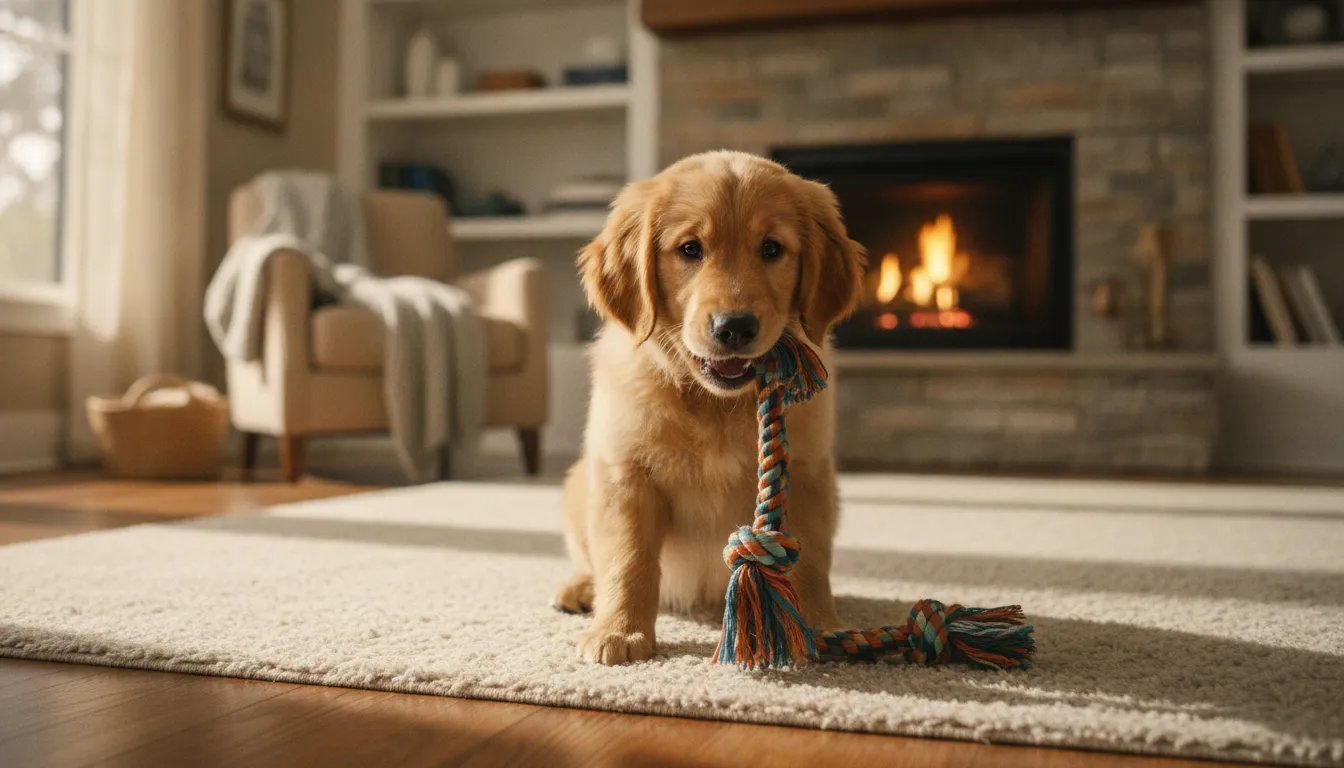
Bringing a new puppy home should be filled with soft cuddles and tail wags. Instead, you might find those razor-sharp, needle-like puppy teeth sinking into your hands, ankles, and clothes, leaving you frustrated and overwhelmed. Rest assured, this painful mouthing is not a sign of a bad dog. It is a completely normal part of how a young puppy learns about the world.
Contact us to join the Mylo waitlist and discover training advice matched to your puppy's breed and age.
Puppy biting is a normal developmental behavior driven by teething pain and your puppy's instinct to explore their environment. You can manage the habit by redirecting your puppy to safe chew toys and using consistent positive reinforcement. Most healthy pups outgrow this intense phase by six months of age.
Understanding this temporary phase is the first step toward raising a calm, well-behaved adult dog. The causes of puppy biting, the training techniques that work, and the warning signs that need a vet visit are all covered below.
Why Do Puppies Bite?
Puppy biting can be a stressful phase for new owners, but it is a normal part of development. Young dogs use their mouths to learn about the world and to interact with people and objects around them. When you understand the main reasons behind this behavior, you can guide your pet toward calm, appropriate play and prevent bad habits from forming.
Puppies bite for three main reasons: they explore the world through their mouths, their gums hurt during teething, and mouthing is how they communicated with littermates. Early training and socialization using positive reinforcement prevent these habits from becoming problems later in life.
Exploring the world by mouth
Puppies do not have hands to grab things. They use their mouths to check out new toys, items, and people. The ASPCA explains that mouthing is normal exploration that helps young dogs learn about their environment. Your moving fingers and toes look like fun playthings they want to catch, which is why gentle redirection is so important from day one.
Sore gums and teething
Puppies lose their baby teeth between 12 and 16 weeks of age. This teething phase makes their gums sore, so they chew on things to feel better. During this peak teething window, you might see a big increase in puppy biting. A PubMed study on early behavior strategies confirms that socialization and redirecting to appropriate objects effectively prevents future biting issues. Offering cold chews or frozen washcloths can bring your teething puppy significant relief.
Littermate play and communication
Puppies learn how to play by nipping each other in the litter. If a puppy bites too hard, the other pup yelps and stops playing. VCA animal hospitals note that puppy mouthing is a tool for play and communication. When you bring your pup home, you must teach them that human skin is more sensitive than a sibling's fur. Learn more about how to train a puppy using these gentle, effective methods.
Puppy Biting by Age: What Is Normal at Each Stage
Puppy biting is a normal phase that usually lasts three to six months, but each age has a different normal. Knowing what to expect at each stage helps you guide your pet with patience and confidence rather than frustration and worry.
Eight to ten weeks: litter play
At eight to ten weeks old, puppies learn bite inhibition from their siblings. If a puppy bites too hard, the other pup yelps and stops the game. When they leave the litter, you must take over this training. A veterinary behavior study shows that early training and socialization are the most vital tools for preventing future bite problems and ensuring your puppy grows into a friendly, well-adjusted adult dog.
Twelve to sixteen weeks: peak teething
This stage is the most intense biting phase you will experience. Adult teeth push through sore gums, creating a powerful urge to chew on anything available. During this time, your puppy might target your hands, shoes, furniture legs, and even baseboards. Offer cold, safe chews or frozen stuffed toys to soothe their gums. Always praise your puppy when they choose the right items to chew on instead of your belongings.
Four to six months: transition to adult teeth
By four to six months, most adult teeth are fully in place and the intense biting should begin to fade. If you have been consistent with training, your dog will understand that teeth do not belong on human skin. Use steady, calm methods at each stage to manage common puppy behavior challenges as your pet grows. Some dogs learn faster than others, so patience during this transition period is key.
Normal Puppy Mouthing vs. Problematic Biting
It can be hard to tell if your puppy's biting is safe play or a sign of a real behavior problem. Watching their body language closely is the most reliable way to tell the difference. Every new owner should learn these signals.
Signs of playful mouthing
Normal mouthing involves a loose, bouncy body posture and a soft jaw. Puppies often do a play bow with their front chest on the ground before pouncing. If you stop moving and become boring by crossing your arms and looking away, they will usually stop because they want to keep the game going. The ASPCA confirms that mouthing is normal exploration that helps young dogs learn important social boundaries.
Red flags that need attention
Problematic biting involves a stiff, frozen body, a hard stare, and bites that regularly draw blood. VCA notes that the intensity of mouthing helps you see if your puppy is overexcited, stressed, or genuinely angry. A puppy that growls or snaps near food or toys may be resource guarding, which needs professional help to address before it escalates.
Normal Puppy Mouthing |
Problematic Biting |
|---|---|
Loose, bouncy body posture |
Stiff, frozen body with tense muscles |
Soft mouth that rarely breaks skin |
Hard bites that draw blood regularly |
Stops when you go still or boring |
Continues or escalates when ignored |
Play bow before or during mouthing |
Growling, snarling, or snapping |
Decreases with age and training |
Increases in frequency or intensity over time |
Image: A fluffy puppy playfully chewing on a rope toy on a living room floor
Check our guide to puppy communication and crying to learn how young dogs show their feelings during stressful moments. Never hit or yell at your dog for biting. A study on reinforcement-based treatments confirms that positive methods are the safest and most effective way to change biting habits. Browsing our puppy training library can help you discover methods that work for your specific breed.
How to Stop Puppy Biting: Redirection and Bite Inhibition
Every puppy must learn how to control the pressure of their jaw. This skill is called bite inhibition. In the litter, puppies learn it when playmates yelp and stop the game. At home, you must continue this lesson using calm, consistent methods. Follow these five steps to stop puppy biting the right way.
Yelp or mark. When your puppy bites, let out a high-pitched yelp or say "oops" firmly. This sound mimics the noise a littermate would make to signal that the bite hurt.
Remove attention. Stop playing immediately. Stand up, turn away, and cross your arms. Do not make eye contact for 10 to 15 seconds. Banfield Pet Hospital recommends ignoring your puppy's nipping to teach them that biting ends the fun.
Redirect. Offer a safe chew toy instead of your skin. Keep a toy nearby so you can swap it in quickly the moment they start to mouth.
Use time-outs. If your puppy keeps nipping persistently, place them in a safe space like a crate or gated room for one to two minutes to let them settle down.
Resume calmly. Let your pup out and restart play with slow, gentle movements. Reward soft mouthing with continued play and praise.
Do not repeat these steps more than three times in 15 minutes or your puppy may become overtired and upset. A tired puppy is far less likely to nip, so provide daily walks, interactive play sessions, and puzzle feeders to channel their energy productively.
Common Puppy Biting Training Mistakes to Avoid
Using hands and feet as toys
When you wave your fingers in a puppy's face or let them chase your toes, you are teaching them that biting skin is acceptable play. Always keep a chew toy between your skin and the puppy's mouth. This simple swap teaches them what items are allowed to be chewed and what is off-limits.
Relying on physical correction
Yelling, slapping, or performing alpha rolls does not teach your dog what to do instead of biting. Physical punishment increases fear and anxiety, which often leads to genuine aggression as the puppy grows. A comprehensive review on reinforcement-based treatments confirms that rewarding calm, desired behaviors is consistently more effective than punishing unwanted actions. Reward what you want to see more of, and your puppy will learn faster.
Inconsistency across family members
Every person who plays with the puppy must use the same training rules. If one person allows mouthing while another corrects it, the puppy becomes confused and learns much more slowly. Consistency is also key when managing common puppy behavior challenges like nighttime barking and crying. When the whole family acts as a team, your puppy learns boundaries much faster.
Image: A small puppy sleeping peacefully curled up on a soft blanket after active playtime
When to Worry: Red Flags That Need a Vet Visit
Most puppy biting is a normal part of growth. But sometimes biting goes beyond typical exploration and signals a deeper issue. Watch for these red flags and act promptly if you see them.
Sudden aggression in a puppy that was previously gentle and friendly
Biting accompanied by growling, snarling, or snapping
A stiff body posture, hard stare, or tense tail during mouthing
Resource guarding around food bowls, toys, or sleeping spots
Biting that regularly draws blood or escalates in frequency and intensity over time
If you notice any of these warning signs, have a veterinarian examine your puppy to rule out underlying health problems. Sometimes excessive biting is caused by hidden pain from ear infections, dental issues, or injuries. The Mylo app can help you compare experiences from other owners, but it does not replace professional veterinary advice or emergency medical care.
How Mylo Helps You Understand Your Puppy's Behavior
Dealing with puppy biting is tough, but you do not have to figure it out alone. Generic online tips often do not fit your specific dog's breed or temperament. The Mylo pet health app pairs your puppy's breed, age, and situation with real outcomes from owners of similar dogs. This helps you find tips and techniques that actually worked for dogs like yours, not one-size-fits-all advice that may not apply. Explore our full blog library for more breed-specific guidance on raising a happy, well-behaved puppy through every stage of development. Find out how to stop puppy biting with techniques that real owners have tested with dogs sharing your puppy's breed and temperament.
Frequently Asked Questions
When do puppies stop biting?
Most puppies stop biting around six months of age, once their adult teeth have fully come in. The intensity typically peaks around 12 to 16 weeks during the teething phase, then gradually decreases with consistent training and redirection.
Is it normal for a puppy to bite aggressively?
True aggression in puppies under six months of age is rare. What looks like aggression is usually over-arousal, extreme fear, or a lack of bite inhibition. If your puppy shows a stiff body, growling, or hard biting that draws blood, consult a veterinarian or certified professional trainer.
How do I teach my puppy bite inhibition?
Teach bite inhibition by yelping when your puppy bites too hard, then removing your attention for 10 to 15 seconds. Redirect them to an appropriate chew toy and praise them enthusiastically for using it. Consistency across all family members is essential for lasting results.
Should I punish my puppy for biting?
No. Physical punishment increases fear and anxiety, which can lead to genuine aggression later in life. Positive reinforcement, redirection, and brief calm-down time-outs are far more effective methods for stopping puppy biting without damaging the bond between you and your pet.
What should I do if my puppy's biting draws blood?
If your puppy bites hard enough to draw blood regularly, have a veterinarian examine them to rule out hidden pain or medical conditions. Consult a certified trainer or veterinary behaviorist for a professional assessment and a personalized training plan tailored to your puppy's specific needs.
Ready to Raise a Happy, Well-Behaved Puppy?
Puppy biting is a normal, temporary phase that every new owner navigates. With the right techniques, patience, and consistency, your young pup will learn to use a soft mouth and grow into a calm, well-behaved adult dog. You do not have to figure it out alone.