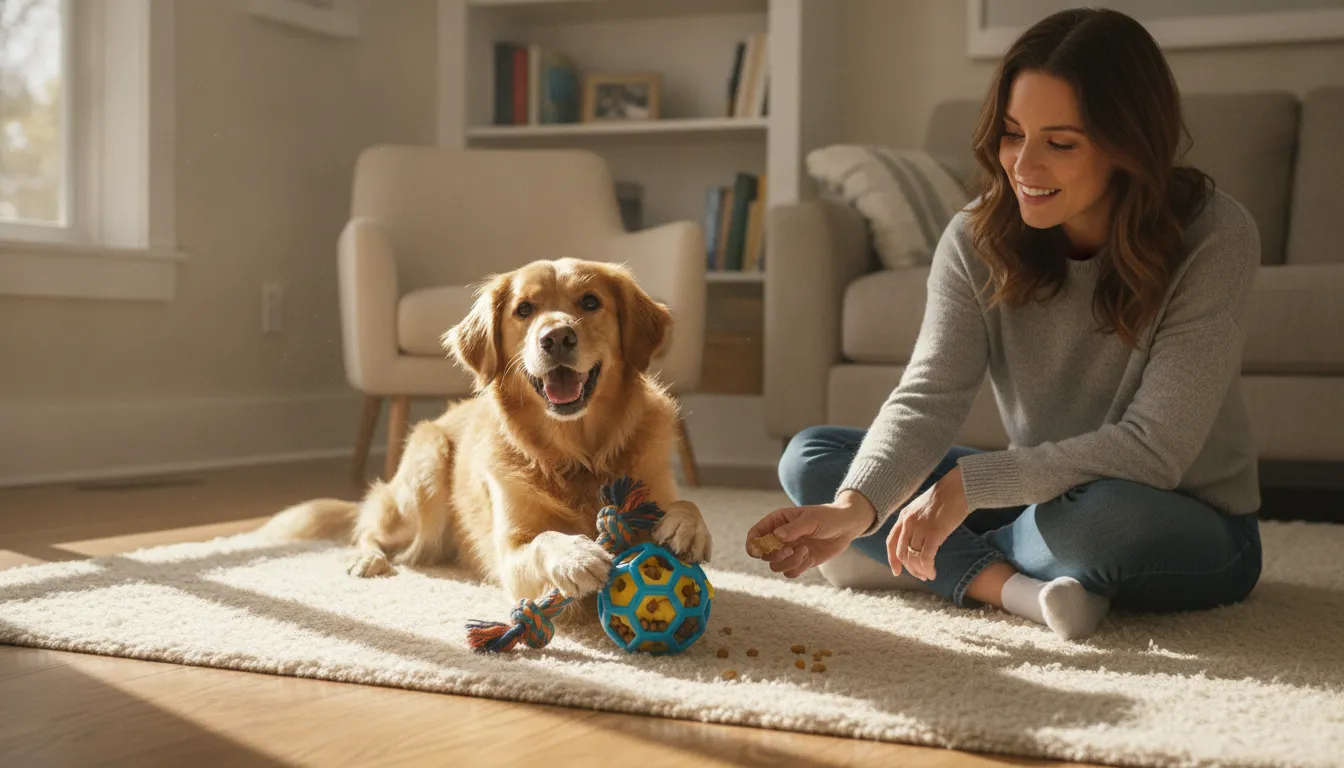
A bored dog does not always need a bigger toy bin. Often, the better solution is an activity that fits how your dog naturally plays, explores, and rests. A teething puppy may need a different outlet from a senior dog who prefers gentle sniffing. A determined chewer needs closer attention to durability and size.
Join the Mylo waitlist for early access to personalized pet advice.
The best playful dog toys for boredom match your dog's size, age, chewing style, supervision needs, and your budget. Start with an activity your dog can complete safely. Watch how your dog responds and adjust the challenge. Do not expect one toy to work for every dog.
Enrichment can include food puzzles, scent games, short training sessions, and simple interactive play. The goal is useful engagement, not nonstop entertainment. With that in mind, here is how to narrow your choices and create an enriching routine, including outcome-matched pet advice when you want ideas tailored to your dog.
How to Choose Playful Dog Toys for Boredom
The best choice depends less on a universal "best toy" and more on how your dog uses it. Start with four questions. Can your dog safely handle the toy's size? What does their life stage call for? Do they lick, sniff, chase, carry, or chew? How much problem-solving can they manage before frustration takes over?
Chewing is natural for dogs. Puppies often chew while exploring and teething, while adult dogs may chew to pass time when bored or restless. Appropriate enrichment can give those behaviors a useful outlet, but the toy still needs to fit the individual dog.
| What to assess | Look for | Adjust when you notice |
| Size and build | A toy large enough that your dog cannot accidentally swallow it, with no easily removable pieces. | Your dog can fit the entire toy in their mouth, carry it too easily, or pull off small parts. |
| Age and life stage | Gentler oral outlets for puppies, regular intellectual exercise for adults, and puzzles your senior dog can approach comfortably. | Your dog loses interest, struggles to use the toy, or shows discomfort while playing. |
| Chewing style | Match durability and size to your dog's actual habits, not their breed label alone. | The toy becomes excessively worn, fractures, or produces pieces that could be swallowed. |
| Puzzle difficulty | A food or foraging toy with a challenge your dog can solve, introduced with supervision. | Your dog gives up, becomes frantic, or does not understand how to engage. Make it easier or interact with the toy. |
For dogs who enjoy searching, foraging toys can add mental and physical exercise by simulating hunting and food seeking. They can invite sniffing, seeking, licking, chewing, and manipulating rather than relying on one type of play. Begin with an easy challenge, then increase difficulty only when your dog is succeeding comfortably. VCA Hospitals recommends choosing an appropriate difficulty and supervising at first to ensure safe engagement: review its enrichment and activity-toy guidance.
Inspect every toy as your dog uses it. The ASPCA advises choosing a size consistent with your dog's size and chewing habits, then discarding durable chews before wear creates sections that can break off. A toy that worked last month may no longer be suitable after your dog's chewing style or condition changes.
Finally, treat your dog's response as useful information. If a toy is ignored, try moving it or demonstrating how food comes out. If it creates frantic chewing, guarding, or repeated attempts to destroy it, choose a different format and supervise more closely. The goal is not the most complicated toy. It is a safe, engaging match for this dog, today.
Which Enrichment Toys Match Your Dog's Life Stage?
The best activity is not always the newest or most complicated one. A puppy learning how the world works needs a different play experience from a senior dog who tires more easily. Start with your dog's current abilities, interests, and chewing habits, then adjust as those needs change.
Puppies: simple outlets for exploring
Puppies commonly investigate their surroundings with their mouths, especially while exploring and teething. A suitable chew or food-filled toy can give that oral behavior a safer direction. But choose a size that cannot be swallowed and watch how your puppy uses it. Begin with easy puzzles that reveal a small reward quickly. If the task is too difficult, your puppy may lose interest or chew the toy instead of solving it.
Toys are only one option. Scatter a portion of your puppy's regular meal for supervised sniffing, practice a short name game, or reward a calm sit with a small food portion. These activities build engagement without requiring a long play session. The ASPCA notes that chew toys can also reward desired responses during training, so play and learning can work together.
Adult dogs: rotate the challenge
Adult dogs may chew as a pleasurable way to pass time when they are bored or restless. Rotate between a durable chew, a beginner or intermediate food puzzle, and a toy that invites movement. Foraging activities can simulate hunting and food seeking while encouraging sniffing, seeking, licking, chewing, or manipulating. Veterinary behavior guidance from VCA Hospitals explains how enrichment and activity toys support those natural behaviors.
Use part of your dog's regular meal in a food toy rather than automatically adding extra treats. Introduce new puzzles when you can supervise, and make the first attempts easy enough to produce success. If your dog ignores the toy, move it yourself or demonstrate how it works. A short training routine, scent search around the home, or a game of fetch can provide variety on days when a toy does not fit the mood.
Senior dogs: lower pressure, meaningful engagement
Senior dogs may still enjoy puzzles and enrichment, but their preferred pace can change. Offer stable, easy-to-access toys with a low difficulty level, and favor sniffing, licking, gentle food searches, or brief training games over demanding physical play. Keep sessions short and let your dog decide whether to continue. VCA reports that regular puzzle-solving and enriching activities may support cognitive health in senior dogs, but enrichment is not a medical guarantee.
Across every life stage, observe the response. Choose toys that match your dog's size and chewing style, supervise new activities, and replace anything that becomes damaged. The most useful approach is a flexible rotation that follows your dog's real behavior, not a universal list of playful dog toys for boredom.
What Can Keep a Dog Entertained for Hours?
The most engaging setup is usually not one magical toy. It is a small rotation of activities that asks your dog to sniff, search, move, think, and interact in different ways. Put away a few familiar options and bring them back on different days. That simple change can make an old toy feel more interesting without turning playtime into a constant stream of new purchases.
Build a rotation around how your dog plays
Start with a food puzzle or foraging toy that matches your dog's current skill level. Foraging toys can provide mental and physical exercise by simulating hunting and food seeking, while encouraging behaviors such as sniffing, chasing, manipulating, licking, and chewing. VCA explains how enrichment and activity toys support these natural behaviors.
Use part of your dog's regular meal in a food-filled toy rather than automatically adding extra treats. If your dog ignores the toy, make the first step easier. Move it yourself, let your dog see the food emerge, or offer a simpler version before increasing the challenge. The goal is thoughtful engagement, not frustration.
Mix movement with thinking
Sniffing games can be as easy as scattering a portion of kibble across a safe area for your dog to find. A supervised game of chase with an appropriate toy can add movement. While short training sessions turn sitting, targeting, finding, or bringing an item back into a problem-solving activity. Rotate the type of effort: a dog who has worked through a puzzle may next benefit from searching, gentle play, or practicing a few familiar cues.
Novelty can come from the way you present an activity, not only from buying something new. Change the location, hide a toy under an easy-to-move object, or let your dog investigate a safe new texture. Watch your dog's response and adjust the difficulty. A toy that is too easy may lose interest quickly, while one that is too difficult can lead to giving up.
Keep realistic expectations
Even the best playful dog toys for boredom do not replace exercise, social interaction, or observation. Dogs still need age-appropriate movement and time with their people. Supervise new food puzzles and toys at first, choose a size your dog cannot swallow, and remove anything that cracks or breaks into pieces. If your dog suddenly stops engaging, seems distressed, guards a novel food toy. Or shows signs of injury or illness, stop the activity and contact your veterinarian when appropriate.
How to Make Dog Enrichment Work on Any Budget
Effective enrichment does not depend on having a full basket of specialty products. Start with what your dog already enjoys, then make the activity just challenging enough to hold attention. A food puzzle can be filled with part of your dog's regular meal instead of extra treats. Helping turn mealtime into an opportunity to sniff, seek, lick, or manipulate. VCA Hospitals notes that regular meal portions can be used in food-filled toys. So measure the day's food first and use that portion rather than adding calories on top of the normal diet.
Make the first attempt easy. If your dog ignores the toy, move it yourself or let a few pieces of food become visible so the connection is clear. If the task is finished instantly, increase the challenge gradually. Frustration is not the goal. The best enrichment is something your individual dog can understand and enjoy.
Use simple games with safe household routines
You can create a useful sniffing game without building a toy or giving your dog an object to shred. Ask your dog to wait in another room, place a few pieces of their meal in easy-to-reach spots on the floor, and release them to find the food. Keep the search area clear of cords, cleaners, medications, small objects, and anything your dog might swallow. For a dog who prefers people over puzzles, practice short rounds of name recognition, hand targeting, sit, or finding you as you move between rooms. Reward the response with food from the regular meal.
Rotate the activity rather than presenting every option at once. A familiar food toy can feel new when used after a sniffing game, followed by a brief training session or a calm play break. Foraging activities provide mental and physical exercise by simulating food seeking, and they can encourage natural behaviors such as sniffing, chasing, seeking, and manipulating. The activity does not need to be complicated to be worthwhile.
Spend on fit and durability when they matter
If you do buy one of the many playful dog toys for boredom, prioritize a suitable size and safe construction. Match its durability to your dog's actual chewing style. Novelty matters less than whether the toy can withstand normal use without breaking into pieces. A toy that is too small or quickly becomes damaged is a poor value, even if your dog initially loves it. Supervise new enrichment, inspect it regularly, and remove it when worn.
Mylo's personalization angle is simple. What works for a young, gentle chewer may not fit a larger, persistent chewer. Tracking outcomes from pets with similar size, age, and habits can help you spend less time guessing and more time choosing activities that fit your dog.
How to Use Toys Safely and Know When to Stop
Good enrichment should feel engaging, not stressful. Start by matching the toy to your dog's size and chewing style. A toy should not fit entirely inside the mouth, and it should not include ribbons, plastic eyes, or other removable pieces that could be swallowed. For food puzzles, choose a durable design that will not fracture into small pieces. VCA Hospitals recommends selecting a size-appropriate toy that cannot be accidentally swallowed and checking that it will hold up to your dog's play style.
Supervise the first several sessions, even if the toy is marketed as durable. Watch how your dog uses it. A gentle nudger, a persistent chewer, and a dog who immediately tears through rubber or fabric need different options. Begin with a manageable difficulty level, and help your dog engage if the toy seems confusing. You can move it slightly or show how food comes out, rather than letting frustration build. These introduction and supervision steps are consistent with VCA's enrichment guidance.
Inspect toys before and after play
Make a quick inspection part of your routine. Look for cracks, thin areas, loose seams, exposed stuffing, sharp edges, and pieces that are beginning to separate. Remove and discard a chew before wear creates a section that can break off. Some dogs can destroy even sturdy-looking toys quickly, so the right replacement schedule depends on the individual dog, not the label on the package. Toys that are too hard may also damage teeth, while a worn toy can create a swallowing hazard.
Use extra care with rawhide and edible compressed chews. The ASPCA advises limiting rawhide consumption and discouraging large pieces because they can create choking or gastrointestinal obstruction risks. Smaller dogs may be more vulnerable to obstruction, and highly determined chewers may consume chunks faster than expected. Never assume a small chew is safer: an inappropriately small piece can be swallowed whole.
Manage food toys around people and pets
Food-filled toys can bring out guarding, especially when the toy is new. Give the toy in a quiet area and avoid taking it away while your dog is eating. In a multi-pet home, separate pets with a door, gate, pen, or crate so each dog can enjoy the activity without competition. Use part of the regular meal in a food toy when appropriate, and account for it in the day's total food rather than adding unlimited treats.
Stop the activity and contact a veterinarian promptly if your dog may have swallowed a toy fragment. Is choking, has trouble breathing, shows signs of injury or significant pain, or develops a sudden behavior change. Do not try to diagnose the cause from toy behavior alone. When in doubt, put the toy away, save any broken pieces, and ask your veterinary team what to do next.
See what worked for pets like yours and join the Mylo waitlist for early access.
Frequently Asked Questions About Dog Toys and Boredom
What are some good toys for dogs to relieve boredom?
Food-filled toys, foraging toys, simple puzzle toys, scent games, and interactive play can all help relieve boredom. Choose based on your dog's size, age, chewing style, and ability to solve the activity safely. Start with an easy challenge, supervise new toys, and adjust if your dog becomes frustrated or ignores the toy. A rotation of activities can be more useful than buying one complicated product.
What is the best toy for bored dogs?
There is no single best toy for every dog. The right option is one your dog can use safely and enjoys without becoming frantic, guarding the toy, or destroying it quickly. A gentle senior may prefer a simple sniffing or licking activity, while a persistent chewer may need a larger, durable option that fits their habits. Observe the response and use it to guide your next choice.
What can keep a dog entertained for hours?
A rotation of sniffing, food-search, training, movement, and calm chewing activities can create longer-lasting engagement. Use part of your dog's regular meal in an appropriate food toy, then switch to a supervised search or short training game. Do not expect a toy to replace exercise, social interaction, or time with you. If your dog suddenly stops engaging or seems distressed, pause and consider whether a veterinary concern could be involved.
What is 15 minutes of mental stimulation for dogs?
Fifteen minutes might be a short scent search, an easy food puzzle, or several brief training rounds with rest between them. The activity should match your dog's age and ability. Let your dog work at a comfortable pace, and stop before frustration or fatigue. Mental stimulation is not measured only by the clock. Your dog's body language and willingness to participate matter more than reaching a fixed duration.
Find Enrichment Ideas That Fit Your Dog
Your dog's response is valuable information. Notice whether they choose sniffing, food puzzles, movement, training, or a calm chew, then adjust the activity as their age, energy, and habits change. If you want help finding experiences that fit a similar pet, Mylo is built around real owner outcomes matched by breed, age, and situation.
Join the Mylo waitlist for early access to outcome-matched pet advice.