A sudden change in your pet's behavior can turn a quiet evening into a tense decision. The right tool can help you act with more clarity, not more guesswork.
Join the free Mylo waitlist to compare real outcomes from pets like yours.
A pet symptom checker turns the signs you notice into next-step guidance on whether to monitor at home, book a veterinary visit, or seek urgent care. These online tools compare owner-entered symptoms with health information and offer triage advice, but they cannot diagnose your dog or cat or replace emergency veterinary care. Published research says animal symptom checkers remain under-studied, so treat their answers as decision support and call a veterinarian when symptoms seem severe or worsen quickly. Mylo adds outcome-matched, real-world precedent from owners of similar-breed, similar-age pets, helping you compare situation-specific results while keeping professional veterinary care at the center.
That raises the key question: What is a pet symptom checker? To judge any tool safely, start with its purpose, limits, and the kind of evidence behind its guidance. Then you can decide whether its next step fits your pet's situation; here's how.

What is a pet symptom checker?
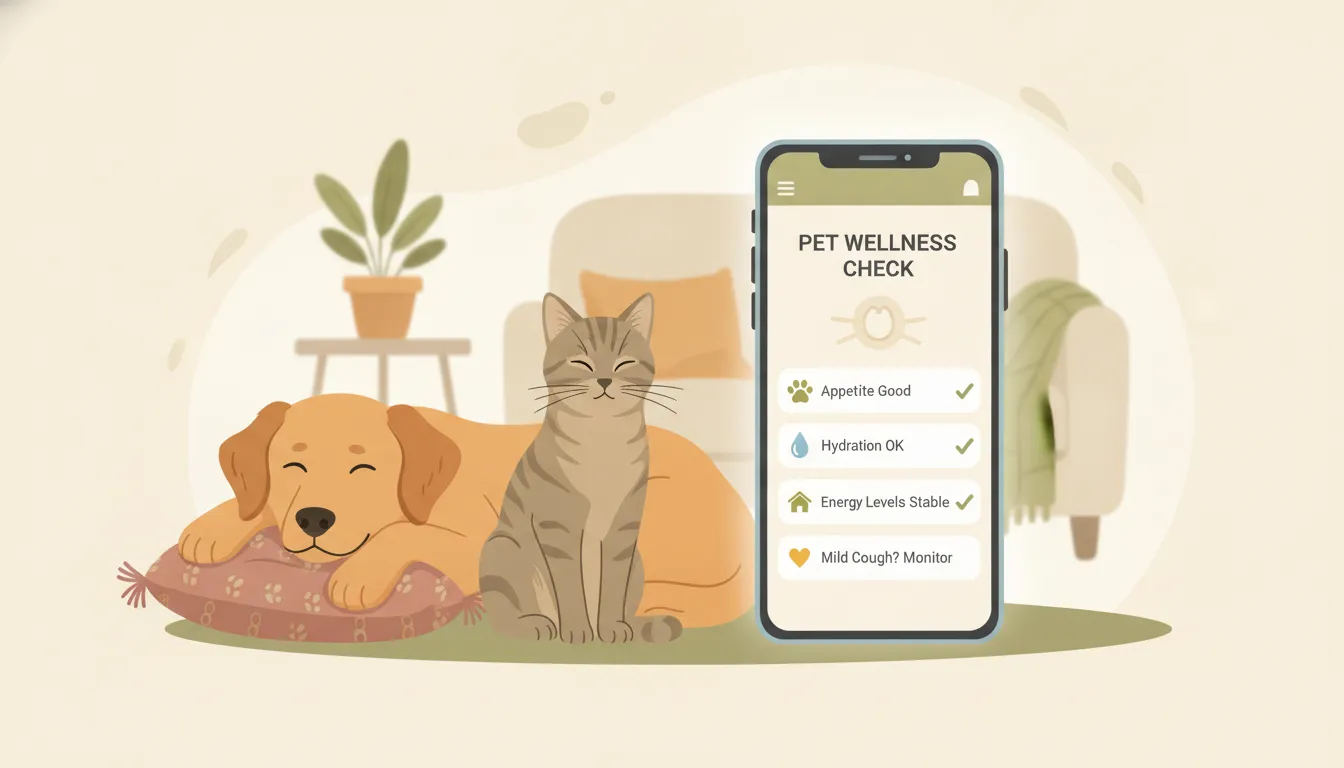
A pet symptom checker is an online tool that helps turn scattered observations into a clear summary of your pet's health concern. You enter symptoms, basic pet details, and any recent changes. The tool then sorts that information and suggests how quickly you may need to act.
Research on animal symptom checkers describes them as tools that provide health information after a user enters one or more symptoms. Some also offer triage advice, which helps the user judge how soon to seek care. They are a starting point for making sense of what you see.
What the checker organizes
A useful pet symptom checker asks for more than a single sign. A dog that skips breakfast once presents a different situation from one that refuses food and keeps vomiting. Details help place each symptom in context, even when the tool cannot explain its cause.
- The signs you notice and when they began.
- How often they happen and whether they are getting worse.
- Your pet's species, breed, age, and health history.
- Recent changes in food, activity, medicine, or surroundings.
The result may help you sort the situation into broad next steps. These could include watching for changes, calling your regular vet, or seeking urgent care. It can also give you a tidy summary to share when you speak with a veterinary team.
Guidance, not a diagnosis
A pet symptom checker cannot examine your pet, run tests, or confirm why a symptom is happening. Different health problems can look alike at home. For that reason, its output should be treated as guidance rather than a diagnosis or treatment plan.
Do not wait on a digital tool when your pet appears to be in immediate danger. Trouble breathing, collapse, heavy bleeding, or a known toxin exposure calls for prompt professional help. A checker is most useful when you need to organize uncertain signs and choose a sensible next action.
Mylo's outcome-matched approach
Many checkers compare entered symptoms with a general list of possible problems. Mylo adds a different kind of context: precedent from real owners who faced similar situations. It matches shared outcomes using details such as breed, age, symptoms, and circumstances.
This approach shows what other owners tried, what happened next, and which actions they found helpful. It does not turn another pet's outcome into a diagnosis for yours. Instead, it gives you a more relevant view of possible next steps while keeping veterinary care central to urgent decisions.
When should you use one for a dog or cat?
A pet symptom checker is most useful when your dog or cat has mild, unclear, or early changes and you need help deciding what to observe, document, or escalate.
Mild or unclear changes
A pet symptom checker is most useful when a dog or cat has a mild, unclear, or new change. Perhaps your dog skips breakfast but still wants a walk. Maybe your cat is grooming more than usual yet acts normal otherwise. The tool can help you sort what you notice and decide what to watch next.
Use it as a starting point, not a diagnosis. Symptom checkers provide health information after you enter one or more signs. Some also suggest how soon to seek care, according to published research on animal symptom checkers. Their output depends on the details you enter, so careful notes matter.
Before using a checker, write down when the change began and whether it is getting better or worse. Note eating, drinking, bathroom habits, energy, sleep, and any recent change in food or routine. Photos or short videos can also help you show a veterinarian what happened.
Context from pets like yours
A checker can help when broad search results do not match your pet's situation. Age, breed, health history, and the mix of signs may change which questions are worth asking. For an older pet or one with an ongoing condition, even a small change may deserve a quicker vet call.
Outcome-based tools add another useful layer. Instead of showing only a broad list of possible causes, Mylo's pet symptom checker filters shared experiences by breed, age, and situation. Those experiences can help you compare patterns and prepare questions. They still cannot confirm what is causing your pet's signs.
Look for patterns, not promises. A similar pet's experience may suggest what details to track or what questions to raise. It should never be used to copy a treatment plan. Your pet may have a different cause, medical history, or response.
Monitoring and preparing for a vet call
Use a checker while monitoring a non-emergency change or preparing to call your vet. It can turn a vague concern into a clear summary. You can tell the clinic what changed, when it began, what else you observed, and whether the change is stable or worsening.
- Track the sign, its frequency, and any clear triggers.
- Record changes in appetite, water intake, energy, and bathroom habits.
- List medicines, supplements, recent foods, and possible exposures.
- Ask the clinic how soon your pet should be seen.
Severe, sudden, or fast-worsening signs should bypass online tools. Contact a veterinarian or emergency clinic instead of waiting for a checker result. The same applies when you feel your pet may be in immediate danger. A digital tool can support triage, but it cannot examine your pet or provide emergency care.
Emergency symptoms that should go straight to a vet
If your pet has a red flag below, contact an emergency veterinary clinic now. Do not wait for a pet symptom checker result or try to diagnose the cause at home. Online tools can offer triage guidance, but research on animal symptom checkers remains limited.
Signs that need immediate care
When breathing, blood flow, brain function, or urine flow may be at risk, fast care matters. Call the clinic while you prepare to leave, so its team can guide safe transport. Go straight to a vet for any of these signs:
- Trouble breathing, blue or pale gums, choking, collapse, fainting, or a pet that cannot stand.
- A seizure that does not stop, repeated seizures, or failure to regain normal awareness afterward.
- Severe bleeding that does not slow with gentle pressure, or blood in vomit, stool, or urine.
- Known or suspected poisoning, including medicine, chemicals, toxic foods, or plants.
- Repeated vomiting or retching, especially with weakness, swelling, or an inability to keep water down.
- Straining without passing urine, a firm or bloated abdomen, or signs of severe pain.
- Major trauma, such as being hit by a car, a serious fall, bite wounds, or burns.
What to do on the way
Keep your pet quiet, warm, and away from stairs or other hazards. Move an injured pet with care, since pain can cause even a calm animal to bite. Use a carrier, sturdy box, or flat board if that helps limit movement.
Do not give food, water, human medicine, or home remedies unless the clinic directs you. For suspected poisoning, bring the package or take a clear photo of the label. Do not make your pet vomit unless a veterinarian tells you to do so.
Tell the clinic when the symptoms began and whether they are getting worse. Share any known injury, toxin exposure, health condition, or medicine your pet takes. This brief call can help the team prepare before you arrive.
Pets that need extra caution
Use a lower threshold for very young, senior, pregnant, or medically fragile pets. Existing heart, lung, kidney, or nerve conditions can make a new symptom more urgent. A sudden change from your pet's normal behavior, including lethargy or not eating, also deserves prompt attention.
If you are unsure, call a veterinary clinic and describe exactly what you see. Clear details about breathing, movement, eating, drinking, urination, and awareness help staff judge urgency. Stay calm and follow their transport advice.
For non-emergency concerns, Mylo's pet symptom checker can help organize what you noticed before you seek care. It uses details such as breed, age, and situation to show relevant owner outcomes. It does not replace emergency care or a veterinarian's diagnosis.
How Mylo is different from generic symptom lists
A generic pet symptom checker usually matches the signs you enter with possible conditions. Some tools also suggest how soon to seek care. That can help you sort basic next steps, but it may not reflect your pet's full situation.
Five sources of pet health guidance
Each type of tool answers a different question. Generic lists show what a symptom might mean, while AI chat can explain broad health topics. Forums share personal stories, and vet telehealth gives direct access to a professional.
Research describes symptom checkers as tools that provide possible conditions after users enter symptoms. Some also give advice about how urgently to seek care. Yet published research on animal symptom checkers remains limited, so their output should be treated as guidance rather than a diagnosis.
Outcomes from pets like yours
Mylo is not trained on generic internet content. It organizes what real owners tried, rated, and shared. It then filters those outcomes by breed, age, symptoms, and situation, helping you compare experiences from pets more like yours.
This structure adds context that an open forum often lacks. Instead of reading scattered replies, you can see whether an approach helped owners facing a similar case. Mylo presents precedent from the community, not a prediction that a certain treatment will work for your pet.
The filters also make broad advice easier to assess. An experience involving a young dog may not fit a senior cat with similar signs. Seeing the surrounding details helps you decide which owner outcomes are relevant and which are not.
A complement to veterinary care
No digital tool can examine your pet, run tests, or make a clinical diagnosis. Mylo can help organize questions and show real owner outcomes before you speak with a vet. It is not a replacement for routine, urgent, or emergency veterinary care.
Use any pet symptom checker as one source of context. If signs are severe, sudden, getting worse, or causing concern, contact a veterinarian promptly. Vet telehealth or an in-person visit is the right path when your pet needs professional assessment or treatment.
How to use symptom information without spiraling
When your pet seems unwell, the goal is not to solve every possibility at once. Instead, collect useful details, check for danger, and choose the safest next action.
Research describes symptom checkers as tools that return health information and may suggest how urgently someone should seek care. They do not confirm a diagnosis.
A steady first pass
Pause before opening several search results. Use one clear process, and keep your notes where you can share them with a veterinarian.
- Note the exact symptom. Describe only what you can see, hear, smell, or measure. Avoid guessing at the cause.
- Check duration and severity. Record when the symptom began, whether it is getting worse, and how often it happens. Note any change in normal activity.
- Add useful context. Include your pet's age, breed, health history, recent food, medicine, and any unusual event. These details can change which information is relevant.
- Look for emergency warning signs. If your pet appears in immediate danger, stop searching and contact emergency veterinary care. Do not wait for a checker result.
- Compare relevant precedent. Look for outcomes from pets with a similar breed, age, symptom, and situation. The is built to filter shared advice using that context.
- Choose an action lane. Based on severity and risk, decide whether to monitor, call your vet, or seek emergency care. Set a firm time to reassess.
Precedent without false certainty
Similar cases can help you form better questions. They can also show which details mattered to other owners. Still, another pet's outcome cannot tell you exactly what is happening with yours.
Use precedent to organize your next step, not to justify a treatment or rule out danger. Animal symptom checkers have received little peer-reviewed study, so keep their limits in mind.
A calm choice between care options
Cost anxiety is real, and it can make every choice feel heavier. Use financial concerns as a reason to ask clear questions, not as a reason to dismiss signs of danger.
Monitoring fits a mild, stable symptom when no emergency signs are present. Call your veterinarian when the symptom persists, worsens, or leaves you unsure about the safe next step.
Choose emergency care when your pet seems in immediate danger. Bring your notes, including timing, changes, and relevant context, so the veterinary team can assess the situation faster.
Get early access to Mylo and see what worked for pets like yours.
What details make a pet symptom checker more useful?
A pet symptom checker becomes more useful when it considers species, breed, age, symptom timing, severity, health history, and what changed around the same time.
A pet symptom checker can only respond to the picture you describe. Clear, specific inputs help it compare the concern with more relevant cases. Researchers define symptom checkers as tools that provide health information after users enter one or more symptoms.
Your pet's basic profile
Start with species, breed, age, sex, and current weight. These details give the checker a useful baseline before it reviews the symptom itself. A five-month-old kitten and a senior cat may need different context, even when both have stopped eating.
Be as exact as you can, but do not guess. If you do not know the breed or weight, say that. On Mylo, breed, age, and situation help match your concern with outcomes shared by owners of similar pets.
Changes and timing
Describe the main symptom in plain terms, then note when it began. Include whether it appeared at once, grew worse, or comes and goes. Timing helps separate a brief change from a pattern that has lasted for days.
- Note appetite and water intake, including what changed and when.
- Describe bathroom changes, such as frequency, straining, stool texture, or urine color.
- Compare current energy with your pet's usual play, walks, sleep, and social habits.
- List current medications, supplements, and any recent dose changes.
Use observations rather than broad labels. Instead of writing "acting strange," explain that your dog skipped breakfast, hid under a table, and refused an evening walk. That record also gives a veterinarian clearer context if professional care is needed.
Recent exposures and visual clues
Think through what happened before the symptom began. Report new food, table scraps, plants, household products, medicine, or possible toxin exposure. Also mention travel, boarding, hot weather, a new pet, or changes in the home.
Photos or short videos can preserve details that are hard to describe. A clip may show the pace of a cough, limp, tremor, or unusual movement. A clear photo may record a skin change, swelling, stool, or vomit for later review.
Share only clear, relevant media, and note when it was taken. Do not delay urgent veterinary care while trying to gather every detail. Animal symptom checkers can offer veterinary triage advice, but peer-reviewed research on these tools remains limited.
Why real owner outcomes can add missing context
Search results often place broad advice, forum stories, and urgent warnings side by side. Each answer may describe a different pet or situation. That mix can make a simple question feel harder to sort out.
From isolated stories to useful patterns
A forum post usually shares one moment, but it may not explain what happened next. Structured owner outcomes add that missing follow-up. They can show which steps owners tried, what changed, and when they chose to contact a vet.
The value comes from comparing relevant details, not collecting the loudest opinions. A pet symptom checker can group outcomes from pets with a similar breed, age, symptom, or situation. That view helps owners spot patterns while keeping each pet's needs in mind.
Published research notes that little to no peer-reviewed research has examined animal symptom checkers. This research gap is a reason to treat any tool's output with care. Owner outcomes add context, but they do not prove a cause or provide a diagnosis.
Better questions for the vet
Seeing how similar cases unfolded can help an owner prepare for a vet visit. It may point to details worth tracking, such as timing, appetite, activity, or changes after a routine shift. Clear notes make it easier to explain the concern without relying on memory.
Outcome patterns can also reveal where experiences differ. One pet may improve while another with a similar sign needs care. That contrast can prompt more useful questions:
- Which details would change how urgent this seems?
- What changes should I track before the appointment?
- When should I stop monitoring and seek care?
- Could age, breed, or health history affect the next step?
Confidence without false certainty
Real owner outcomes can make the next conversation feel less uncertain. They offer examples of possible paths and help owners put their observations into words. They should not be used to label a condition or copy another pet's care plan.
The safest approach is to use patterns as a starting point. Compare relevant outcomes, note what matches, and note what does not. Then share those details with a vet, especially when symptoms are new, worsening, or causing concern.
Be one of the first to try Mylo for outcome-matched pet guidance.
Join the free Mylo waitlist before your next worried search.
Frequently Asked Questions
Is a free pet symptom checker reliable?
A free pet symptom checker can help organize observations and suggest how quickly to seek care. Its reliability depends on accurate inputs, the quality of its information, and its stated purpose. An academic review of animal symptom checkers found little to no peer-reviewed research focused specifically on these tools. Treat any result as guidance, not a diagnosis.
When should I use a dog or cat symptom checker?
Use a dog or cat symptom checker when you notice a new concern and need help deciding what to do next. It can help you prepare observations, compare possible next steps, and decide whether monitoring or veterinary attention may be appropriate. If your pet appears severely ill or you suspect an emergency, contact a veterinarian immediately instead of waiting for an online result.
Does a pet symptom checker replace a visit to the veterinarian?
No. A pet symptom checker provides information and triage guidance, but only a veterinarian can examine your pet, diagnose a condition, and recommend treatment. Use the checker to clarify your observations and decide how urgently to seek care. Do not let an online result delay professional help when symptoms worsen, persist, or make you concerned about your pet's safety.
Can I use a symptom checker for a senior dog or cat?
Yes, but a senior pet's age, existing conditions, medications, and health history can change what a symptom means. Choose a checker that considers those details rather than offering only general advice. Record any changes in appetite, movement, behavior, or symptoms, then share them with your veterinarian. Seek veterinary guidance promptly when a change is sudden, severe, or unusual for your pet.
How does outcome-matched guidance differ from an AI-based pet symptom checker?
An AI-based checker commonly compares entered symptoms with a database to suggest possible causes or urgency. Outcome-matched guidance instead shows what real owners tried and what happened for pets with similar breeds, ages, and situations. Mylo uses that kind of community precedent to add useful context. Neither approach replaces a veterinary diagnosis or emergency care.
Ready to make your pet's next step clearer?
Waiting without a clear plan can leave you repeating searches, comparing conflicting advice, and wondering whether your dog or cat needs help. Starting now helps you organize the details that matter, learn from similar pet owners, and prepare better questions for your veterinarian. You can move forward with more context while keeping urgent symptoms and emergency veterinary care firmly in focus.
Mylo is building a clearer way to see what real owners tried and what happened next for pets with similar situations. Request early access today and join the Mylo waitlist. Explore outcome-matched guidance as soon as it becomes available. Until then, keep your pet's recent symptoms, timing, and behavior changes together so you can act quickly when needed.