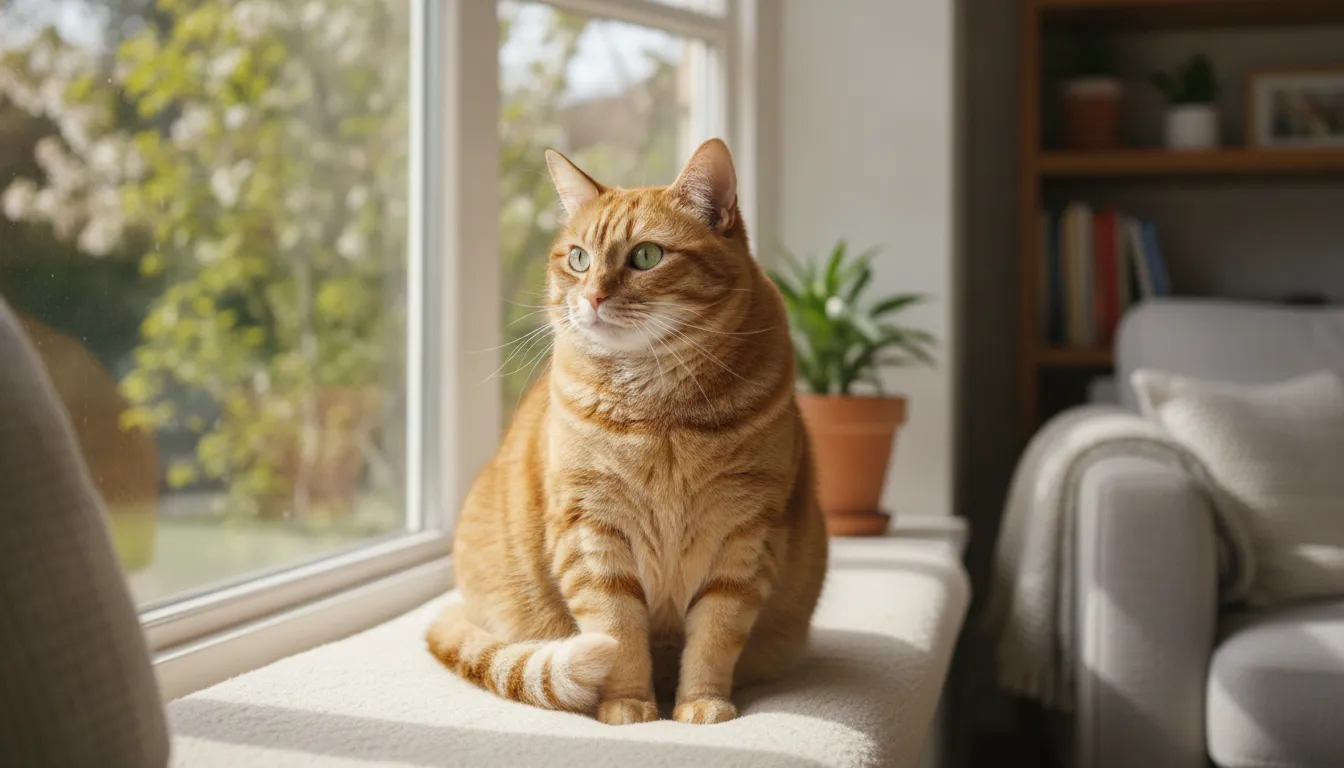
A cat's weight can change gradually, so a fuller body may be easy to dismiss as normal variation. Looking at body shape, not just the number on a scale, gives you a more useful starting point.
Cat weight management starts with checking body condition, then building a gradual plan with your veterinarian that combines measured food, safe activity, and regular progress checks.
Veterinarians commonly use a nine-point body condition score, with 4.5 to 5 considered ideal. At home, you can look for ribs that are easy to feel beneath a thin layer of fat. A visible waist from above, and a gentle abdominal tuck from the side. These checks are helpful, but they do not replace a professional assessment, especially if your cat has gained weight quickly or has other symptoms. Begin by learning what healthy proportions look and feel like, then use those observations to decide when a veterinary visit is warranted.
How to Tell If Your Cat Is Overweight
Start with your cat's waist and ribs rather than relying on a scale alone. A simple body condition check can show whether your cat carries a healthy amount of fat.
1. Feel the ribs
Run your fingertips gently along both sides of your cat's chest. You should feel each rib beneath a thin, even layer of fat, similar to the back of your hand.
If the ribs feel sharp, your cat may be too thin. If you need firm pressure to find them, extra fat may be covering them. Ribs that are impossible to feel can indicate severe obesity.
2. Check the side profile
Look at your cat from the side while they are standing naturally. A healthy cat usually has a slight upward tuck behind the rib cage, rather than a rounded or hanging abdomen.
A low, pendulous belly can reflect excess fat, although a loose primordial pouch is normal in many cats. Focus on the overall shape, not one feature.
3. Look from above
Stand over your cat and observe the body between the ribs and hips. You should see a gentle waist behind the rib cage. A straight-sided or noticeably rounded shape suggests your cat may be carrying extra weight.
These three checks, including the rib, profile, and overhead assessments, are commonly used as an at-home starting point. Cornell describes the same approach in its feline obesity guidance.
Understanding the body condition score
Veterinarians often use a nine-point body condition score, or BCS, to describe a cat's shape. Scores around 4.5 to 5 represent an ideal condition. Scores of 6.5 to 7 indicate overweight, while 8 or higher indicates severe overweight or obesity.
Weight categories can also be expressed as a percentage above ideal weight. PetMD describes 10% to 20% above ideal as overweight and more than 20% above ideal as obese. These ranges are helpful context, but an ideal weight varies by the individual cat.
For more guidance on maintaining a healthy weight for cats, compare your observations with advice tailored to your pet's age, breed, and health history.
Important: Home checks cannot diagnose obesity or explain changes in body shape. Ask your veterinarian to confirm your cat's body condition and ideal weight before changing their food or creating a weight-loss plan.
Why Cat Weight Management Matters for Your Cat's Health
Weight changes can be easy to miss in cats, especially when they happen gradually. Yet up to 50 percent of cats seen at veterinary clinics are considered overweight or obese, according to the Cornell Feline Health Center. That number is a reminder that excess weight is common, not a reason to blame yourself or your cat.
Extra body weight can affect more than appearance. It may increase the risk of osteoarthritis, diabetes mellitus, and cardiovascular problems. In osteoarthritis, excess weight can add stress to joints where protective cartilage is already wearing down. Obesity can also place additional demands on the heart and vascular system. Diabetes involves an inadequate response to insulin, which helps regulate blood sugar, and feline obesity is a recognized risk factor.
These risks can influence everyday comfort and behavior. Overweight cats may move less, play less, or avoid activities that once came naturally. Cornell notes that obesity can inhibit normal physical activity and compromise quality of life. Reduced activity can then make further weight gain easier, creating a cycle that is difficult to interrupt without thoughtful support.
The encouraging part is that feline obesity is a nutritional disorder, so weight is often manageable through diet and lifestyle changes. A veterinarian can help identify an appropriate goal, assess your cat's body condition, and create a plan that protects muscle and overall health. Small changes, such as measured meals, food-access adjustments, and more engaging play, can add up over time.
For practical guidance on nutrition-related changes and warning signs that deserve attention, explore this guide to cat weight management. Do not make major feeding changes or put a cat on a restrictive diet without veterinary guidance, since individual health needs vary.
How Much Should I Feed My Cat for Weight Loss?
There is no single calorie target that works for every overweight cat. Your veterinarian can calculate a daily amount using your cat's ideal weight, age, health, activity level, and current body condition. Use that target to measure every meal, rather than estimating portions from a bowl that stays full.
These food options can support different approaches to diet for healthy cat weight. The right choice depends on your cat's needs and your vet's plan.
Comparing cat foods for weight management
| Food type | Calories | Protein | Satiety | Vet recommendation |
|---|---|---|---|---|
| Dry food | Energy-dense; measure portions carefully | Varies by recipe; check the label | Usually less filling by volume | May fit a plan when portions are weighed |
| Wet food | Often less calorie-dense by volume | Varies; many recipes provide substantial protein | More moisture can help create a fuller portion | May be suitable, depending on health needs |
| Prescription diet | Formulated for controlled calorie intake | Designed to help preserve lean muscle | Can support fullness during calorie restriction | Use with veterinary guidance |
Measure meals instead of free-feeding
Transition from free-choice feeding to scheduled, measured meals. Divide the daily calorie allowance into consistent portions, and follow the package guidance only as a starting point. Food labels differ, so compare calories per can or cup rather than portion size alone.
A high-protein, lower-carbohydrate recipe may help support muscle while your cat loses body fat. But nutritional priorities can change with kidney disease, diabetes, urinary conditions, or other health concerns. Ask your vet before changing foods.
Account for treats and other food access
Treats count toward the daily calorie total. Set aside treats from the planned allowance, or use a small portion of the regular diet as rewards. In multi-cat homes, feed cats separately, close access to abandoned bowls, and prevent the cat on a weight plan from eating another pet's food.
Monitor weight and body condition with your veterinary team. If your cat stops eating, seems unwell, or loses weight unexpectedly, contact a vet promptly. This information is educational and does not replace individualized veterinary advice.
Creating a Safe Cat Weight Management Plan
A thoughtful plan turns a weight goal into manageable, measurable steps. Because cats can become ill when they lose weight too quickly, work with your veterinarian rather than making a sudden food change or strict calorie cut.
- Start with a veterinary consultation. Ask your veterinarian to assess your cat's current health, ideal weight, and body condition score (BCS) target. A BCS target is more useful than a scale number alone because healthy weight varies by body size, age, build, and other individual factors. The visit is also a chance to check for underlying health issues that could affect appetite, activity, or weight change.
- Set a safe weekly pace. Plan for a loss of about 1% to 2% of body weight per week. This gradual rate helps reduce the risk of hepatic lipidosis, also called fatty liver disease, which can occur when cats lose weight too quickly (PetMD). Your veterinarian can calculate a suitable daily calorie target based on your cat's ideal weight.
- Choose the right weight-control diet. Ask your veterinarian whether a diet formulated for weight control fits your cat's needs. Research describes restricted feeding of weight-control diets as one approach that can support weight loss and changes in body composition (research published in PMC). Measure each meal instead of free-feeding, and account for treats in the daily total. If your cat lives with other pets, prevent access to their food.
- Schedule weigh-ins and check-ups. Track weight at regular intervals using the schedule your veterinarian recommends. Regular weighing and veterinary check-ups help show whether the plan is working and whether feeding needs to change (PetMD). Keep a simple record of meals, treats, appetite, energy, and weight so you can spot meaningful changes.
- Adjust gradually and stay consistent. If progress is too slow, too fast, or stops, ask your veterinarian how to adjust portions or activity. Avoid compensating with abrupt changes. Consistency, ongoing monitoring, and addressing underlying health concerns are associated with better results in diet-based weight loss programs (PMC). The long-term goal is to reach an ideal weight, then maintain it with balanced nutrition and appropriate activity. For more personalized pet health information, visit Mylo.
This information is for education only and is not a substitute for veterinary diagnosis or treatment. Contact your veterinarian before starting a weight-loss plan for your cat.
Exercise and Enrichment for Cat Weight Loss
Movement can support a healthy weight, but an overweight cat may be less interested in moving. Obesity can inhibit normal physical activity, creating a cycle in which inactivity contributes to further weight gain. Breaking that cycle gently is more effective than expecting a sedentary cat to become highly active overnight. Cornell Feline Health Center explains how excess weight can reduce activity and quality of life.
Start with short, predictable play sessions
Aim for two short play sessions each day. Begin with a few minutes if your cat tires quickly, then gradually increase the time as comfort and interest improve. Incorporating play into a cat's daily routine increases calorie expenditure and can support healthy weight loss, according to PetMD.
Wand toys can encourage chasing, pouncing, and stretching while letting you control the pace. Move the toy in short bursts, pause to let your cat stalk it, and finish by allowing a successful catch. A laser pointer can mimic the movement of prey, but end the game by directing your cat toward a physical toy or small food reward. This gives the hunt a satisfying outcome.
Make meals mentally engaging
Puzzle feeders and food-dispensing toys turn mealtime into an opportunity for movement and problem-solving. Use part of your cat's measured daily food allowance rather than adding extra calories. Start with an easy puzzle so your cat learns how it works, then increase the challenge gradually.
You can also place small portions in several safe locations, provided your cat can access them comfortably and other pets cannot take the food. Monitor how much your cat actually eats, especially when changing from a bowl to a puzzle feeder.
Every cat has different abilities, health conditions, and preferences. If your cat is very sedentary, seems painful during play, or stops eating, ask a veterinarian for guidance before increasing activity or changing the feeding plan. Exercise should complement a measured nutrition plan, not replace professional advice.
Frequently Asked Questions
How can I tell whether my cat is overweight?
Feel gently along the ribs, view your cat from the side, and look down from above. You should be able to feel the ribs beneath a thin layer of fat and see a waist behind the rib cage. A veterinarian can confirm the assessment with a nine-point body condition score, where 4.5 to 5 is generally ideal and 6.5 to 7 indicates overweight status. Cornell Feline Health Center
How much should I feed my overweight cat?
There is no safe universal portion because calorie needs depend on your cat's ideal weight, age, activity, health, and current diet. Ask your veterinarian to calculate a daily calorie target, then measure scheduled meals instead of leaving food available all day. Count treats and food used for medication within the daily total.
How fast should a cat lose weight?
Weight loss should be gradual, usually about 1 to 2 percent of body weight per week. Faster loss can increase the risk of hepatic lipidosis, a serious fatty liver condition. Have your cat weighed regularly so your veterinarian can adjust portions and confirm that the plan remains safe. PetMD
What health problems can excess weight cause in cats?
Extra weight can contribute to osteoarthritis, diabetes mellitus, cardiovascular problems, reduced activity, and lower quality of life. It can also make movement less appealing, creating a cycle of inactivity and further weight gain. A veterinarian can help identify related conditions and build a nutrition and activity plan around your cat's needs.
Ready to find more cat health guidance?
Breed-specific information can help you make more informed choices as you support your cat's healthy routine. Visit Mylo's blog for more breed-specific cat health advice and practical tips for everyday care.