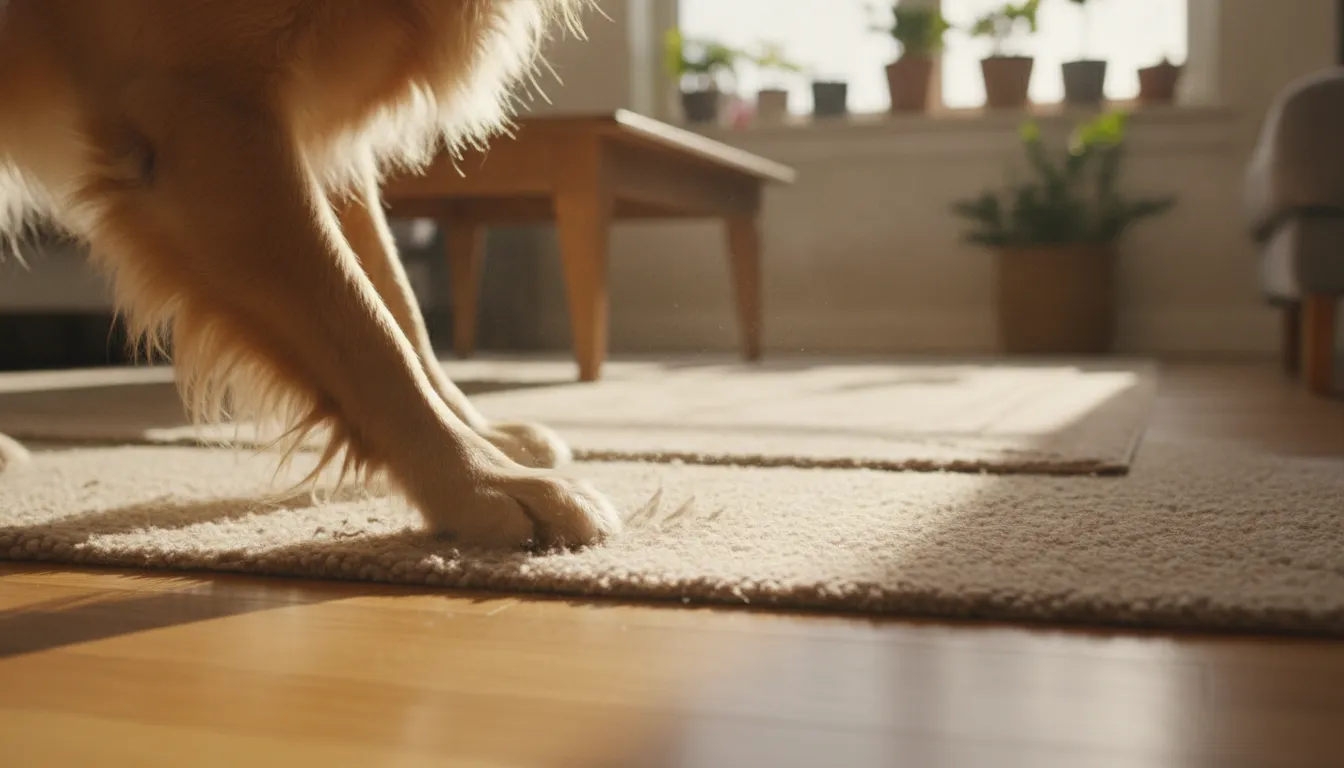
A ruined living room rug and a frantic pup are clear signs of a deeper canine need. Your dog is not trying to destroy your home, but is acting on wild urges or physical stress.
A dog scratching carpet is a very common habit that often stems from deep nesting urges, high energy, stress, or health issues like itchy skin and overgrown claws. In the wild, wild canines scratched the ground to clear away dry leaves and make a safe sleeping spot, a wild habit that pets still repeat on rugs. When dogs are bored or tense, they may also use carpet scratching to burn off steam, mark their home with paw scents, or file down their long claws. Finding the cause of this habit is easy once you watch when they scratch, which helps you give them better outlets like puzzle toys or special scratch mats.
As a loving pet parent, you want to know what is causing this frustrating and loud habit. To find the right way to help your dog, you can look at the main reasons in Why Do Dogs Scratch the Carpet? The path begins with
Why Do Dogs Scratch the Carpet?
Is your dog scratching carpet in your home? It can be hard to watch your rug get torn up by sharp nails. But this is a normal habit for dogs who are not trying to be bad. In most cases, your pet is just following a deep canine instinct.
Ancestral Roots and the Nesting Instinct
Your dog came from wild dogs that lived in the woods and plains. Before these wild canines slept, they had to make a safe and warm spot. They would scratch the dirt, leaves, or grass to clear away sharp rocks and thorns. This also let them find cool soil when it was hot, or warm dirt when it was cold.
Even though your dog now lives in a warm home, they still feel this old urge. When they scratch your carpet, they are trying to build a cozy nest. This nesting habit helps them shape the ground to fit their body before they lie down to rest. It also helps them feel safe and warm as they sleep.
Scent Marking and Paw Glands
Dogs have tiny scent glands in the pads of their paws. When your pet scratches the carpet, these glands release a unique smell. This scent tells other animals that the space is taken. It is a simple way for dogs to claim territory so they feel safe.
Exploring Texture and Finding Comfort
Dogs use their paws to learn about the world around them. Your dog might scratch the carpet just to feel the texture of the fabric. Sometimes, they do it because they can smell tiny bits of food that you cannot see. Scratching helps them dig up these hidden treats.
Dogs also scratch when they feel glad or happy. You might see your dog scratch the carpet right before a walk. They might also do it when you come home from work. This is a safe way for them to get rid of extra energy.
Boredom and Excess Energy
Dogs need both active play and mental games to stay happy. When dogs do not get enough exercise, they find other ways to spend their energy. A dog scratching carpet is often just bored. This behavior can quickly turn into a bad habit if you do not give them better choices.
The link between boredom and repetitive habits
High-energy breeds and mental stimulation
Young dogs and active breeds need a lot of exercise. Breeds like herding dogs or working dogs are bred to run and work. If they do not have a job, they will make one up, which often means tearing up your home. They might target your carpets, rugs, or doors to let out their pent-up power.
You can help your high-energy dog by adding mental stimulation to their day. Here are some simple ways to keep their minds active:
- Give them food puzzles during meals to make them work for their food.
- Teach them new tricks for ten minutes each day.
- Use interactive toys that ask them to solve a problem.
It is helpful to know the signs of a bored pet. If your dog is barking, pacing, or chewing on furniture, they are telling you they need more to do. Spotting these signs early lets you help your dog before your carpets suffer.
Anxiety and Stress as a Cause
Stress and anxiety are major reasons why a dog might start scratching at your floor. When dogs feel tense, they often use simple habits to soothe themselves. In some cases, a dog scratching carpet is trying to cope with bad stress. Finding the cause of this habit is the first step to helping your pet.
The role of separation anxiety
Routine and environmental changes
Dogs love routine because it makes their world feel safe. A sudden change can easily upset their peace of mind and cause stress. Moving to a new house, welcoming a new baby, or changing your work hours can throw them off. When their schedule changes, they may feel a loss of control and seek ways to comfort themselves. A dog scratching carpet after a big change is often reacting to this new stress in their home.
Even small changes like a new pet or loud noises can trigger this response. If a neighbor starts a loud build project, your dog may feel scared. The sudden sounds can make them want to dig or hide. Scratching the floor can be a way to build a safe space to block out the noise. When you notice these patterns, you can take steps to make them feel safe again.
Casual vs compulsive scratching
It is important to know if your dog is scratching for fun or due to deep stress. Casual scratching is brief and usually happens when a dog wants to get ready to sleep. Compulsive scratching is different because the dog cannot seem to stop the habit on their own. They may scratch the carpet until their paws get red or sore, even when you try to distract them. This level of focus suggests the behavior has become a serious issue that needs expert help.
Scent Marking and Sensory Exploration
Dogs do not just see the world; they smell it first. To your pup, a carpet is like a big book of smells that holds a map of who has walked by. When a dog scratches your floor, they are often trying to read this map.
The power of pedal scent glands
Dogs have small scent glands in their paws that release chemicals when they walk or run. These glands produce a unique smell that acts like a canine fingerprint. When your pet scratches the carpet, they rub these glands against the fabric to leave their own scent behind. This act of scent marking tells other dogs that the space belongs to them.
Finding hidden carpet smells
A dog has a sense of smell that is tens of thousands of times stronger than ours. They can easily find tiny food crumbs, grease spots, or old spills that you cannot see or smell. These old odors sink deep into the carpet fibers over time, so when your pet smells something tasty, they might try to dig it up. To us, it looks like a bad habit, but to them, it is a fun hunt.
- Dropped food crumbs that leave grease behind
- Dirt and grass tracked in from outdoors
- The smell of another pet who visited your home
When to See a Veterinarian
Sometimes, a dog scratching carpet is just a habit. But in many cases, this action points to a hidden health problem. If your dog scratches the carpet and also licks their paws or chews their skin, they may need medical help. It is vital to know when this common habit becomes a sign of distress.
Signs of skin allergies and fleas
Fleas are another major source of skin discomfort and cause intense itching. A dog scratching carpet might use the rough fibers to reach their belly or back. You can check for fleas by parting your dog fur to look for tiny bugs or black flea dirt. If you find fleas, you should ask your vet about safe flea control products.
Nail and joint issues
Sometimes, the issue is not skin deep. A dog scratching carpet might have overgrown nails that snag on the rug. Long nails cause pain when a dog walks, so they scratch to wear them down. If you hear clicking on hard floors, it is time for a trim.
Joint pain can also trigger this action. Older dogs with arthritis may scratch or dig to make a soft spot to lie down. This nesting habit helps soothe their sore joints. If your dog has joint pain, you may see other signs, such as:
- Stiffness when getting up from a rest
- A slow pace on daily walks
- Not wanting to climb stairs or jump on the couch
These signs need a vet care to manage pain and keep your dog active.
When to seek veterinary care
Keep in mind that self-treating at home can be risky. Creams made for humans are often toxic to pets. Always talk to a vet before you try any home care. They will ensure your dog gets the right care to stop the itch for good.
How to Redirect Carpet Scratching
You can help your pet by shifting their focus to better habits. When you see your dog scratching carpet, you must guide them to other choices. This prevents damage to your rugs and floors while keeping your dog happy. A steady routine will teach your dog where they can safely play and dig.
Five steps to redirect scratching
Stopping this habit takes a clear plan and daily care. Use these simple steps to help your dog learn new ways to spend their energy.
- Increase daily exercise. Walk your dog more often to tire them out, as tired dogs are much less likely to scratch at your carpet.
- Provide mental games. Use food puzzles and teach simple tricks to keep their mind busy so they do not dig out of boredom.
- Offer proper scratch pads. Buy heavy mats or cardboard scratch pads and place them over the spots your dog likes to target.
- Keep their nails short. Trim your dog nails or use a grinder weekly to reduce their urge to file claws on the floor.
- Use reward-based training. Give your dog treats when they use their new mats to build positive habits through constant praise.
How to choose the right scratching pad
You should place the new scratch pad right over the spot on the carpet your dog has been digging. Secure the pad so it does not slide when they use it. This setup protects your floor and guides your dog to the new surface. Over time, your dog will choose the pad instead of your floor.
It is helpful to reward your pet every time they touch the pad. You can place a few treats on the mat to get them to sniff it. Positive training builds a strong bond and helps your dog feel safe.
Frequently Asked Questions
How can I stop my dog from scratching the carpet at night?
To stop your dog from scratching the carpet before bed, give them a comfortable dog bed of their own. You can place it over their favorite scratching spot to block the carpet. If they still try to dig, use positive training to guide them to their bed and reward them. Some dogs also benefit from a crate or a warm blanket that they can safely nest in. If the behavior is due to stress, a soothing routine or white noise can help them relax.
Is it okay to punish a dog for scratching the carpet?
No, you should never punish your dog for scratching the carpet. Punishment will not stop the urge and can make your pet feel more anxious or stressed. This stress often leads to even more scratching as they try to soothe themselves. Instead, say a calm word to stop them and redirect their focus to a toy or a chew. Rewarding them with treats when they stop will teach them what to do instead.
Do scratch mats work to protect carpets from dogs?
Do anti-scratch sprays work for dogs on carpet?
You can use dog-safe deterrent sprays on your carpets to stop digging. These sprays often use natural scents like citrus or bitter apple that dogs do not like. Always test a small area of your floor first to ensure it does not stain. Keep in mind that sprays only block the behavior for a short time. You must still find out why your pet wants to scratch and give them better options.
Leaving your dog carpet scratching alone can lead to costly floor damage and a lot of growing stress for your home. Waiting too long to stop this habit makes it a deep routine that is much harder and more costly to fix. Taking quick action today protects your rugs and gives your dog a calm, safe space to rest without extra stress.