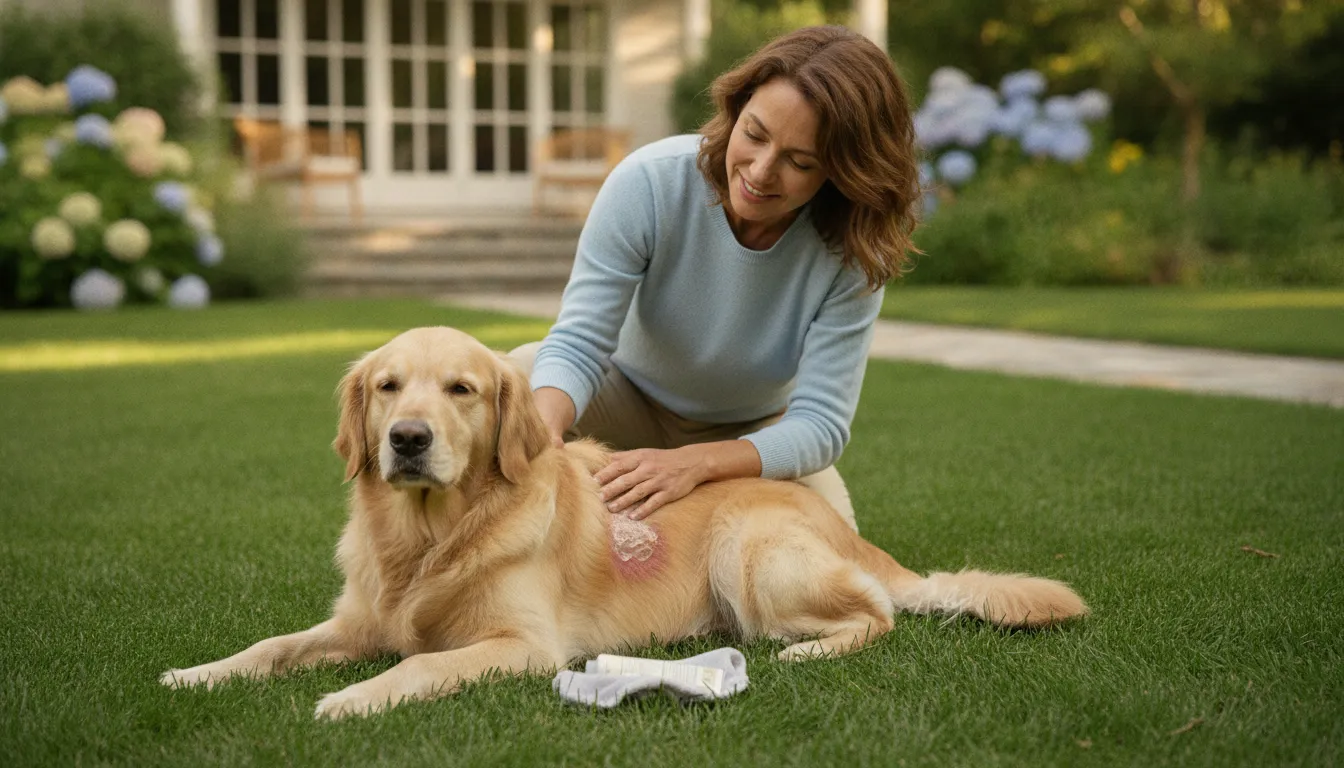
A small, damp patch can become a painful, raw sore on your dog's skin in just a few hours. These sudden lesions often start with something ordinary, such as a flea bite, trapped moisture, or an itch your dog cannot stop scratching.
Dog hot spots are areas of acute moist dermatitis, also called pyotraumatic dermatitis, where the itch-scratch-lick cycle breaks the skin and allows inflammation and infection to develop. Keep the area dry, prevent licking, and contact your veterinarian if it spreads, smells, oozes, causes severe pain, or does not improve within two to three days.
Understanding why these sores appear so quickly makes the next steps clearer. Here is what they look like, which triggers are most common, and how coat, moisture, allergies, and bacteria can combine to turn irritation into a fast-moving skin problem. Mylo's information is educational and does not replace professional veterinary advice.
What Are Dog Hot Spots and Why Do They Appear Overnight?
Dog hot spots are fast-forming skin lesions. Veterinarians call them acute moist dermatitis, or pyotraumatic dermatitis. They usually look like intensely red, inflamed patches that feel warm and may ooze fluid or pus. The area can be itchy, painful, or both. The name comes from the warmth created by inflammation, not from a separate type of burn or heat injury. Cornell Veterinary Medicine explains the condition and its typical appearance.
The sudden appearance is usually the result of a fast-moving itch-scratch-lick cycle. Something irritates the skin first, such as an allergy, insect bite, flea exposure, or another source of discomfort. Your dog scratches, chews, or licks the area. That breaks the skin and adds moisture. Bacteria already present on the skin can then cause a surface infection, which creates more itching. Your dog responds by scratching or licking again, and a small irritated patch can become a larger, weeping lesion within hours. If your dog has excessive scratching, look for the underlying trigger rather than treating the sore as an isolated problem.
Why moisture and matted fur matter
Moisture is a major part of the problem. Rain, swimming, bathing, and even dampness from licking can leave the coat wet against the skin. Matted fur holds that moisture in place and prevents air from reaching the area. The warm, damp environment can soften the skin and encourage irritation and bacterial growth. This is why a sore may seem to appear overnight after a day at the lake or after wet weather. Even though the initial irritation may have started earlier.
Which dogs are more likely to develop hot spots?
Dogs with long or thick coats are over-represented because their fur can hide irritation, hold moisture, and mat close to the skin. Golden Retrievers, Newfoundlands, German Shepherds, and Labradors are common examples. English Bulldogs and other dogs with dense coats, skin folds, or drop ears may also be vulnerable. Breed does not guarantee that a hot spot will develop, and short-coated dogs can get them too. It simply changes how easily moisture, matting, and early redness can go unnoticed.
Check your dog regularly after swimming, rain, or heavy scratching, especially around the neck, hips, ears, and other areas covered by dense fur. A rapidly growing sore, strong odor, marked pain, or ongoing oozing deserves veterinary attention. Hot spots can resemble deeper skin infections, so a veterinarian should confirm the diagnosis when the lesion is severe, spreading, or not improving.
The Most Common Causes of Dog Hot Spots
A hot spot usually starts with an itch, irritation, or pain somewhere else. Your dog scratches, chews, or licks the area, breaks the skin, and creates a warm, moist lesion that can worsen quickly. In other words, the visible sore is often secondary to an underlying trigger, not the whole problem. Veterinary guidance identifies environmental allergies, fleas, flea-bite allergy, and infections as common primary causes. Dog skin allergies can be one important piece of that puzzle.
Allergies, fleas, and insect bites
Environmental allergies, including reactions to pollen or other common outdoor allergens, can cause persistent itching that leads to self-trauma. Food-related reactions may also contribute to itchy skin in some dogs, although a veterinarian should help determine whether diet is actually involved rather than relying on guesswork.
Flea infestations deserve attention even when you do not see live fleas. A flea bite can trigger intense itching in a sensitive dog, and repeated scratching may turn a small bite into a larger sore. Other insect bites can start the same itch-scratch cycle. If your dog has ongoing excessive scratching, look for the trigger instead of treating each sore as an isolated skin problem.
Ear infections and other sources of pain
Ear problems can be easy to miss when the first obvious sign is a sore on the face or neck. An ear infection may cause a dog to scratch hard enough to create a hot spot on the cheek, ear flap, or nearby skin. Wet ears after swimming can increase the risk, especially in dogs with drop ears because their ears do not dry as quickly. Cornell notes that ear infections linked with wet ears can lead to hot spots under the ear, with drop-eared dogs at higher risk. Learn more about the ear-related risk factors.
Moisture, matted fur, and repeated licking
Warm weather can make hot spots more common, but they can occur year-round. Swimming, rain, bathing, or damp skin under a dense coat can keep the area moist. Matted fur is especially problematic because it holds moisture against the skin. This helps explain why long- or thick-coated dogs and dogs with drop ears are often more vulnerable.
Finally, stress, boredom, or discomfort can lead to repetitive licking or chewing. That behavior may be a response to an itch, pain, or emotional strain, and it can keep a small irritation from healing. If a sore keeps returning, spreads, smells bad, or appears alongside ear discomfort, ask your veterinarian to investigate the underlying cause. Mylo information is educational and does not replace professional veterinary advice.
How to Treat Dog Hot Spots at Home, Step by Step
Home care works only for a small, mild spot on a healthy dog, with no pus, spreading redness, severe pain, or foul odor. The goal is to interrupt the itch, moisture, and licking cycle while the skin settles. If your dog resists handling, the lesion is extensive, or you are unsure whether it is truly a hot spot, contact your veterinarian before treating it.
-
Trim the hair around the lesion
Use clean clippers or blunt-tip grooming scissors to carefully shorten the hair around the sore, allowing air to reach the skin. Do not cut directly over the lesion, pull at stuck fur, or force the process if your dog is painful or frightened. Matted hair can trap moisture against the skin, and veterinary treatment typically begins by clipping the surrounding coat so the affected area can be seen and cleaned. If the spot is near the eye, ear canal, genitals, or another delicate area, leave clipping to a professional.
-
Clean gently, then pat dry
Rinse or wipe the area with lukewarm water and a mild soap, or use a veterinarian-approved chlorhexidine solution. Work gently rather than scrubbing. Remove visible debris without peeling away a scab or irritating healthy skin, then pat the area completely dry with a clean towel or gauze. Moisture left behind can keep the lesion active, so give the skin time to dry before applying any topical product.
-
Keep the skin dry and use only an appropriate topical
Check the area several times a day and gently blot it if it becomes damp. For a healthy dog with an uninfected hot spot, a generic 1% hydrocortisone cream may reduce inflammation when applied three to four times daily. This guidance is not appropriate for every dog, including dogs with health conditions, medication restrictions, or a lesion that may already be infected. Ask your veterinarian before using it if you have any doubt, and prevent your dog from licking the product.
-
Stop licking and chewing
Use an Elizabethan collar, commonly called an E-collar or cone, so your dog cannot reopen the skin. A few minutes of determined licking can undo careful cleaning and make the sore larger. Keep the collar on as directed, including when you are not watching your dog. If the collar does not fit comfortably or your dog can still reach the lesion, ask your veterinary team about a safer alternative.
-
Watch closely for infection or a missed trigger
Look at the spot at least daily. Worsening redness, heat, swelling, oozing, pus, odor, spreading, increasing pain, or a lack of healing means home care is not enough. Contact your veterinarian promptly if any of these signs appear. Also inspect the ears, tail base, and other areas prone to irritation, because fleas, ear problems, or another source of itching can keep the cycle going. Veterinary advice is important when the cause is unclear or the skin is not improving.
When a Dog Hot Spot Needs a Vet
Some small, superficial hot spots improve with careful home care. Others need veterinary attention promptly. Call your veterinarian if the lesion is spreading or getting larger, producing pus, developing a strong odor, or causing significant pain. Fever, unusual tiredness, or a dog who seems generally unwell are also reasons not to wait. These signs can point to a more extensive infection or another problem that home treatment cannot address.
| Usually fine to manage at home | Call the veterinarian |
|---|---|
| Small, mild, superficial lesion. | Spreading or enlarging sore. |
| No pus, odor, or severe pain. | Weeping pus, bad smell, significant pain. |
| Healing with home care in 2-3 days. | No improvement within 2-3 days. |
| Healthy dog with no other signs. | Fever, tiredness, or generally unwell. |
Do not wait if the skin is getting worse
Watch the sore closely after you begin supportive care. Worsening redness, heat, swelling, or oozing suggests infection rather than a spot that is simply healing. If there is no clear improvement within two to three days, schedule an examination even if your dog is still eating and acting normally. Hot spots can expand quickly, and licking or chewing keeps the itch, inflammation, and skin damage going.
A lesion that looks like a hot spot may also be a deep skin infection or another condition with a similar appearance. Virginia Tech veterinary guidance notes that these lesions can resemble deeper infections, so the skin needs a careful professional examination for an accurate diagnosis. That distinction matters because the right treatment depends on what is causing the lesion, not only on how it looks from the surface.
What your veterinarian may do
The first examination may involve clipping the hair around the sore so the veterinarian can see the healthy skin and the full extent of the lesion. The area can then be cleaned of debris and treated with a veterinary antiseptic. Very painful or intensely itchy lesions may require sedation for safe clipping and cleaning. Your veterinarian may also prescribe topical medication, antibiotics, or another treatment to control inflammation and address the underlying trigger.
Topical antimicrobial therapy is the treatment of choice for canine hot spots in the 2025 antimicrobial-use guidelines for canine skin infections. That does not mean every sore needs an antibiotic, or that a leftover prescription is safe to use. Your veterinarian can decide whether topical therapy is appropriate and whether additional medication is needed. Follow the prescribed instructions, keep the area dry, and continue preventing licking while the skin heals. Read the Virginia Tech veterinary guidance for more detail on diagnosis and treatment.
Check the ears when the sore is nearby
An ear infection can cause repeated scratching that creates a hot spot on the ear flap, behind the ear, cheek, or neck. Wet ears after swimming can also contribute to ear problems, especially in dogs with drop ears. If the sore is near the head, or your dog is shaking the head, rubbing an ear. Or producing an unusual ear odor, ask the veterinarian to examine the ear canal as well. Treating only the visible skin may not stop the scratching if an ear infection is driving it. Cornell's hot spot guidance also highlights the connection between ear infections and sores under or around the ear.
How to Prevent Dog Hot Spots From Coming Back
Once your dog's skin has healed, prevention means breaking the itch, moisture, and irritation cycle before it starts again. A simple routine can make a meaningful difference, especially for dogs with thick coats, drop ears, or a history of allergies.
Keep the coat brushed, clean, and fully dry
Brush your dog regularly to remove loose hair and catch mats before they tighten. Matted fur can hold moisture against the skin, increasing the risk of sores and infection. Pay extra attention after bathing, rain, or swimming. Rinse away pool, lake, or salt water with clean water, then dry the coat thoroughly. Do not stop at the back and sides. Check the ears, under the collar, between skin folds, and around the legs, where dampness can linger.
Drop-eared dogs need particular attention after water activities. Wet ears may not dry quickly, and ear infections can contribute to hot spots under the ear. Gently dry the outer ear and contact your veterinarian if you notice odor, discharge, redness, head shaking, or persistent scratching. Do not put a cleaning solution into the ear unless your veterinary team recommends it.
Make parasite control a year-round habit
Fleas and ticks can trigger itching that leads to repeated scratching and licking. Cornell's Riney Canine Health Center describes effective external parasite management as the most important preventive step for hot spots. Use the flea and tick product recommended for your dog's species, age, weight, health history, and region. Keep the schedule consistent throughout the year rather than waiting for visible parasites. If more than one pet lives in your home, ask your veterinarian how to protect every animal.
Look for allergies and other underlying triggers
A recurring hot spot may be a sign that the original trigger has not been addressed. Work with your veterinarian if your dog repeatedly scratches, licks paws, rubs the face, or develops ear problems. Your plan may need to address environmental allergies, flea bite reactions, or another source of irritation. If you suspect treat itchy dog skin options, get veterinary guidance before giving a medication. Diet changes should also be deliberate, especially when you are investigating diet-related skin issues.
Build quick skin checks into your routine
Check your dog's ears daily for signs of infection. Lift the tail at least once a week to inspect the tail base for inflammation, discolored hair, licking, or chewing. Run your hands through the coat during brushing so you notice warmth, dampness, tenderness, or a small irritated patch early. Early attention is easier than managing a rapidly spreading lesion. If redness, swelling, heat, oozing, pain, or a bad smell returns, contact your veterinarian promptly. Home prevention supports care, but it is not a substitute for professional veterinary advice.
Frequently Asked Questions
What causes hot spots on dogs?
Hot spots often begin when allergies, fleas, insect bites, an ear problem, or trapped moisture makes your dog scratch, lick, or chew. Once the skin breaks, bacteria can worsen the itch and create a fast-moving cycle. A hot spot can appear within hours, so look for the trigger as well as the sore. Virginia Tech explains common underlying causes.
Can I treat a hot spot at home?
For a small, mild area, gently clean it with a veterinarian-approved antiseptic, keep it dry, and prevent licking. Do not pull off a forming scab. Cornell notes that a generic 1% hydrocortisone cream may be appropriate for a healthy dog with an uninfected hot spot. Applied three to four times daily, but ask your veterinarian before using human medication. Stop home care and seek veterinary guidance if the area worsens or looks infected.
How do I stop my dog from licking a hot spot?
An Elizabethan collar, often called a cone, is usually the most reliable short-term option because it blocks access while the skin heals. Keep the collar on as directed, including when you cannot supervise your dog. If the sore is near the neck or head, a veterinarian can help you choose a safe barrier that does not rub the lesion.
When should I see a veterinarian for a hot spot?
Arrange veterinary care if the lesion is spreading, very painful, hot, swollen, foul-smelling, or producing pus, or if your dog has a fever. Also call if there is no clear improvement within two to three days. Hot spots can resemble deeper infections, and treatment may require clipping, professional cleaning, or prescription medication. Mylo provides information from real pet owners and is not a substitute for professional veterinary advice.
Ready to Learn From Other Dog Owners?
Managing a hot spot can feel frustrating, especially when itching keeps coming back. On Mylo, you can connect with a pet health community and see what dog owners shared about skin issues, allergies, and breed-specific concerns. Join the Mylo community to explore helpful conversations and practical ideas for your dog. Mylo information is not a substitute for professional veterinary advice, so contact your veterinarian for diagnosis or treatment guidance.