Sudden loose stool can follow a minor digestive upset, but it can also accompany infection, parasites, toxins, a swallowed object, or another medical problem. The safest response is to assess the whole dog, record what changes, maintain access to water, and contact a veterinarian promptly when warning signs appear.
Use Mylo's dog symptom checker to organize the signs you are seeing and prepare for the next step.
Key takeaway: Dog diarrhea occurs when stool moves through the digestive tract too quickly or the gut does not absorb enough water. Many mild cases improve, but blood, repeated vomiting, weakness, pain, dehydration, suspected toxin exposure, or a hard, bloated abdomen warrant urgent veterinary guidance. This article supports observation and preparation, not diagnosis.
What dog diarrhea can mean
Dog diarrhea is a symptom, not a diagnosis. It may reflect a brief reaction to food, stress, or scavenging. It can also occur with parasites, infection, toxins, or chronic intestinal disease. The stool alone cannot identify the cause, so consider duration, frequency, behavior, appetite, hydration, and other symptoms together.
Common causes of loose stools
A sudden food change, rich treats, table scraps, or something eaten from the trash can irritate the digestive tract. Stress, including boarding or a major routine change, can also affect stool. Other possible causes include parasites, infection, medication effects, toxins, or a swallowed object.
Context changes the level of concern. A single loose stool in an otherwise bright, comfortable adult dog is different from repeated watery diarrhea in a puppy, senior, or dog with another health condition.
Why the whole picture matters
Note whether the dog remains alert, drinks normally, and wants food. Also watch for vomiting, weakness, pain, straining, a hard or swollen abdomen, or blood in the stool. The University of Illinois College of Veterinary Medicine recommends veterinary attention for concerning signs such as bloody or black stool, vomiting, lethargy, pain, or dehydration.
A warm or dry nose does not reliably confirm fever. A veterinarian can assess temperature and hydration more accurately.
When a symptom tool can help
A symptom tool can help organize observations and identify questions to ask, but it cannot diagnose the cause or replace an examination. Record changes as they happen and share the information with a veterinary professional, especially if the episode continues or the dog's condition changes.
Review Mylo's dog diarrhea care guide for more practical monitoring guidance.
What should you track when your dog has diarrhea?
Track when diarrhea began, how often it occurs, stool color and consistency, appetite, water intake, energy, vomiting, pain, and possible exposures. A clear timeline helps a veterinarian judge urgency and choose appropriate tests. Photos and a fresh stool sample can add useful evidence, but urgent symptoms should never wait for record keeping.
Record stool details and timing
Note each bowel movement's time, approximate amount, color, consistency, and whether the dog strains. Brown loose stool may occur in a mild upset. Bright red blood, black or tar-like stool, or unusual pale or gray stool should prompt veterinary advice because these changes can signal bleeding or another significant problem.
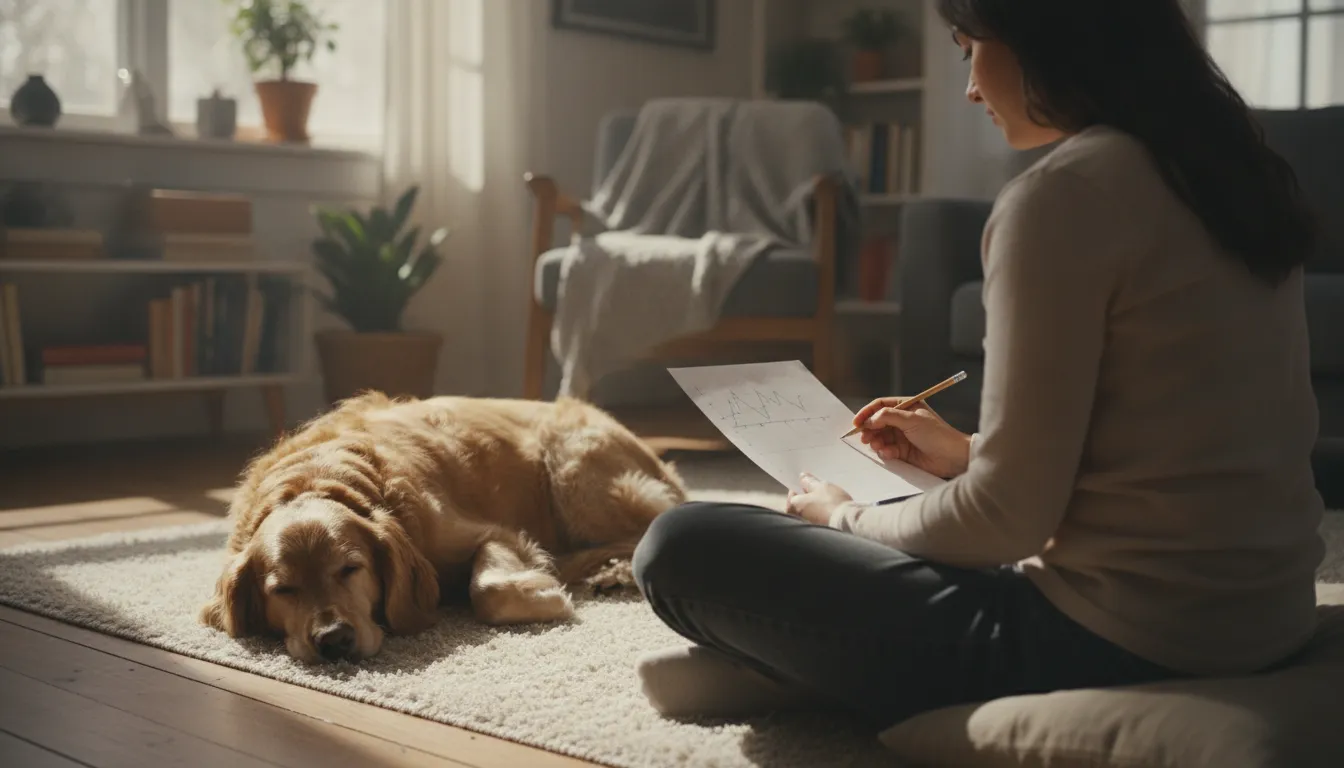
Take a clear photo when practical. If a clinic requests a sample, collect it in a clean, sealed container and ask the clinic how fresh it should be and how to store it.
Watch behavior and other symptoms
Track energy, interest in food, drinking, urination, vomiting, and signs of discomfort. A dog that becomes weak, unusually quiet, unable to settle, or unwilling to drink needs prompt veterinary guidance. Diarrhea and vomiting together can increase fluid loss quickly.
List food, medication, and exposure changes
Write down everything eaten during the previous 48 hours, including regular food, new treats, table scraps, and scavenged items. Include current medications and supplements. Check for missing toys, plants, chemicals, or food packaging, and call a veterinarian or poison-control service immediately if toxin or foreign-object exposure is possible.
What to track | Potentially mild pattern | Call a veterinarian promptly | Stool | One or two loose brown stools | Blood, black or tar-like stool, or repeated watery stool | Behavior | Alert and comfortable | Weak, collapsed, distressed, or unusually quiet | Eating and drinking | Normal interest and intake | Will not drink, cannot keep water down, or refuses food | Other symptoms | No vomiting or obvious pain | Repeated vomiting, pain, hard abdomen, or bloating | Duration | Improving within 24 to 48 hours | Persistent, worsening, or recurrent episode
Look for pain and dehydration
Restlessness, repeated stretching, crying, guarding the abdomen, or a firm, swollen belly can indicate pain and requires prompt care. Dry or tacky gums, weakness, or reduced urination may accompany dehydration. Home checks are imperfect, so contact a veterinarian if hydration is in doubt.
Do not delay care to complete a perfect log. Notes are useful only when they support timely decisions.
When is dog diarrhea an emergency?
Dog diarrhea is an emergency when it occurs with collapse, severe weakness, repeated vomiting, significant blood, or black or tar-like stool. Marked pain, a hard or bloated abdomen, and suspected toxin or foreign-object ingestion also require emergency care. Puppies, seniors, very small dogs, and dogs with existing illness can deteriorate faster and need earlier veterinary advice.
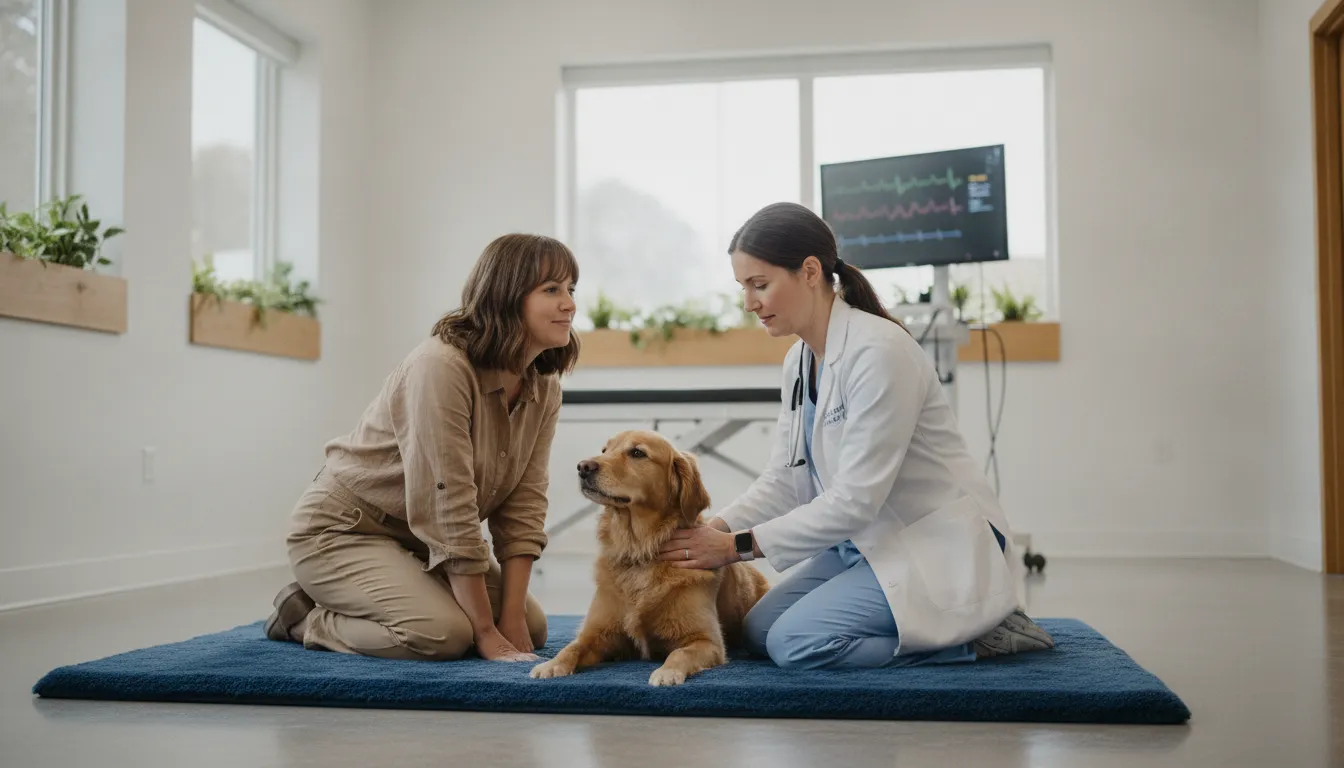
Urgent warning signs
Call a veterinarian or emergency clinic promptly for bright red blood, black stool, repeated vomiting, pale or tacky gums, or inability to drink. Collapse, breathing difficulty, severe discomfort, and rapidly worsening diarrhea also need prompt care. The Cornell Canine Health Center also advises veterinary care when diarrhea does not resolve within 48 to 72 hours.
Possible poisoning or obstruction should be treated as urgent. Do not wait for additional symptoms if the dog may have swallowed a toxin, medication, bone, toy, or other object.
Dogs with higher risk
Puppies, seniors, very small dogs, and dogs with kidney, heart, endocrine, immune, or other health conditions may have less reserve when losing fluid. Contact the dog's veterinarian early rather than relying on a general timeline. Learn more about potential triggers in Mylo's guide to why dogs develop diarrhea.
Emergency care versus a prompt appointment
Emergency care is appropriate when the dog cannot safely wait for a regular appointment. A prompt daytime appointment may suit a dog who remains stable but has persistent, worsening, or recurrent diarrhea. When uncertain, call a clinic, describe the signs and risk factors, and follow its triage advice.
What can you do at home while monitoring?
For a stable adult dog with a mild episode and no warning signs, provide fresh water, prevent scavenging, keep the dog clean, and record symptoms. Ask a veterinarian before changing food, withholding food, or giving supplements or medication. Home monitoring is temporary and should stop if diarrhea worsens, persists, or occurs with concerning signs.
Support hydration safely
Keep fresh water available and monitor whether the dog drinks and can keep water down. Do not force large amounts at once. If drinking stops, vomiting prevents water intake, or dehydration is suspected, contact a veterinarian promptly rather than relying on home remedies.
Ask before starting a bland diet
A veterinarian may recommend a short-term bland diet or a veterinary gastrointestinal diet for some dogs. The right approach depends on age, size, health history, and likely cause. Homemade chicken and rice is not nutritionally complete for long-term feeding and may be unsuitable for dogs with certain conditions or food sensitivities.
Safe monitoring steps
- Keep a concise log. Record stool, appetite, water intake, energy, vomiting, and pain.
- Prevent additional exposure. Use supervised leash walks and secure trash, food, plants, chemicals, medications, and small objects.
- Maintain hygiene. Clean soiled areas, wash hands, and keep other animals away from stool because some causes can spread.
- Avoid human medications. Do not give loperamide, bismuth products, pain relievers, or other human medicines unless a veterinarian specifically directs you to do so.
- Reassess frequently. Seek care promptly if any warning sign appears or the pattern worsens.
For additional context on safe monitoring, see Washington State University's overview of diarrhea in dogs.
How should you prepare for a veterinary visit?
Prepare a concise timeline of stool changes, frequency, appetite, drinking, energy, vomiting, pain, medications, diet changes, and possible exposures. Bring photos and a fresh stool sample if the clinic requests one. Share the dog's age, health conditions, and recent travel or contact with other animals so the veterinarian can assess risk efficiently.
Organize the history
Write down when symptoms started and whether they are improving, stable, or worsening. Include all foods, treats, supplements, and medications from the previous 48 hours. Mention access to trash, standing water, toxins, plants, wildlife, other dogs, and missing household objects.
Use the Mylo dog symptom checker to organize observations before the appointment, then rely on the veterinary team for diagnosis and treatment.
Bring useful evidence
Ask the clinic whether to bring a stool sample and how to store it. A photo can help show color and consistency if a sample is unavailable. Stool testing may identify parasites or other clues, while examination and additional testing can assess hydration and broader causes.
Ask focused questions
- What warning signs mean the dog needs emergency care?
- What should the dog eat and drink, and for how long?
- Are any medications or supplements appropriate?
- When should symptoms begin to improve?
- What testing is recommended if the diarrhea persists or returns?
What if the diarrhea keeps coming back?
Recurring or long-lasting diarrhea needs veterinary evaluation because repeated episodes can reflect dietary sensitivity, parasites, chronic enteropathy, medication effects, or another underlying condition. Record patterns rather than repeatedly treating symptoms at home. A veterinarian can review the history, examine the dog, and decide whether stool tests, bloodwork, diet trials, or other testing is appropriate.
Acute versus chronic patterns
An acute episode begins suddenly and is short-lived. Chronic diarrhea persists or repeatedly returns. Research on canine chronic enteropathy describes a group of long-term gastrointestinal conditions that require a structured veterinary assessment rather than assumptions based on stool appearance alone.
Track recurring triggers
Record food, treats, medications, stressors, stool quality, frequency, appetite, and weight over time. Patterns can help a veterinarian evaluate possible triggers and select appropriate next steps. Do not make repeated or restrictive diet changes without guidance because they can obscure patterns or create nutritional problems.
Know when to schedule an evaluation
Arrange a veterinary visit when diarrhea repeatedly returns, lasts beyond the timeframe your veterinarian recommends, or occurs with weight loss, appetite changes, reduced energy, vomiting, or other symptoms. Earlier assessment is appropriate for higher-risk dogs.
Frequently Asked Questions
Can I give my dog pumpkin for diarrhea?
Plain canned pumpkin may help some dogs because it contains fiber, but it is not appropriate for every case. Ask your veterinarian how much is suitable for your dog, and use only plain pumpkin, never sweetened or spiced pie filling. Seek veterinary advice if diarrhea continues or warning signs appear.
How long does dog diarrhea last?
A mild, uncomplicated episode may improve within 24 to 48 hours. Contact your veterinarian sooner if the dog is a puppy, senior, has another health condition. Or develops blood in the stool, repeated vomiting, weakness, pain, dehydration, or possible toxin or foreign-object exposure.
Why does my dog have diarrhea but still acts normal?
A dog may remain active during a mild digestive upset caused by a food change, scavenging, or stress. Normal behavior is reassuring but does not identify the cause. Track stool frequency, appetite, water intake, and new symptoms, then contact a veterinarian if the diarrhea persists or worsens.
Is white rice better than brown rice for a dog with diarrhea?
White rice is generally easier to digest than brown rice and is sometimes included in a short-term bland diet. A bland diet is not suitable for every dog or for long-term feeding. So ask your veterinarian what to offer, how much to feed, and when to resume regular food.
Get clearer context for your next step
Careful tracking can help you describe the episode clearly, but it does not replace veterinary diagnosis. If your dog has urgent warning signs, contact a veterinarian now. If the dog is stable, Mylo can help organize your observations and compare relevant experiences from owners of similar pets.
Join the Mylo waitlist for early access and clearer, outcome-matched pet advice.