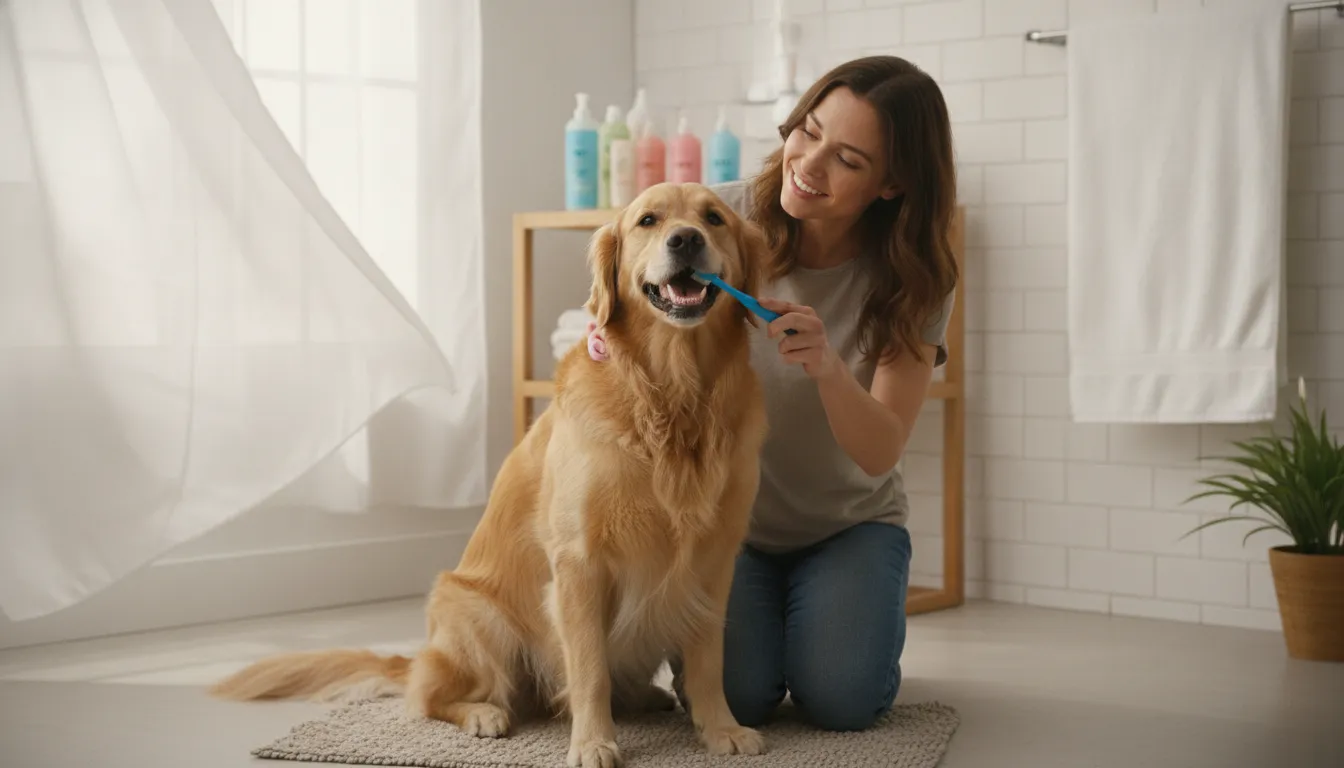
Your dog's breath can change before you notice anything else. Plaque is a sticky bacterial biofilm that forms on the teeth, and over time it can harden into tartar and irritate the gums. Because dental disease is often silent, a dog may continue eating and acting normally even while discomfort develops.
Dog dental care works best as a consistent routine: brush your dog's teeth daily with dog-safe toothpaste. Introduce the process gradually, and use veterinary-approved chews or diets as supplements rather than replacements for brushing. Never use human toothpaste, since ingredients such as xylitol and fluoride can harm dogs. If you notice persistent bad breath, loose teeth, bleeding, drooling, or reluctance to eat, contact your veterinarian.
Starting early makes prevention easier and gives you a better chance to spot changes before they become advanced. It also matters beyond a cleaner mouth, because ongoing periodontal disease can affect comfort and overall health. Here is why a few minutes of routine care can make a meaningful difference for your pet.
Why Dog Dental Care Matters for Your Pet's Health
Dental problems do not start with a dramatic broken tooth. They often begin when a sticky, complex layer of bacteria called dental plaque biofilm forms on the tooth surface. That biofilm triggers inflammation along the gums. Without consistent plaque removal, the inflammation can progress into periodontal disease, affecting the tissues that support the teeth. Research on canine periodontal disease describes plaque biofilm as the starting point for this process.
As disease advances, it can cause real pain and impair a dog's welfare. A dog may chew differently, avoid certain foods, or become less comfortable during normal handling. In more advanced cases, damage to the supporting structures can threaten the stability of the teeth. Dental disease is also not only a mouth problem. Chronic periodontitis has potential systemic effects on general health. Which is why veterinarians take oral inflammation seriously when considering a dog's broader health, including concerns involving organs such as the heart and kidneys. These possible effects are a reason to discuss persistent oral changes with your veterinarian rather than relying on home care alone.
Why dental disease can be easy to miss
Dogs often hide discomfort, and periodontal disease can remain "silent" until it is advanced. A dog that still eats, plays, and greets you normally may nevertheless have significant disease below the gumline. Waiting for obvious pain can allow a preventable problem to become harder to manage. A foul odor, bleeding gums, loose teeth, drooling, or reluctance to chew deserves attention, especially when the change persists.
Why daily brushing matters
Daily brushing is the gold standard because it physically removes plaque before it hardens and contributes to tartar buildup. It is a preventive habit, not a substitute for veterinary care when disease is already established. Start gently and build tolerance over time, using products made for dogs. To monitor your dog's oral health, record changes in breath, chewing, appetite, and gum appearance so you can share a clearer pattern with your veterinary team.
Common Signs of Dental Disease in Dogs
Bad breath is often the first noticeable sign that something is changing in your dog's mouth. A persistent or unusually strong odor can point to plaque and developing periodontal disease. Rather than ordinary "dog breath." Pay attention to it, especially when it appears alongside changes in eating or behavior. Severe bad breath is one of the most common signs reported with periodontal disease.
Watch for changes in the gums and teeth
Gingivitis is the earliest stage of periodontal disease. Look for red, swollen, or bleeding gums around the teeth. This stage is reversible with appropriate care, but it can progress to periodontitis when inflammation and damage extend into the supporting structures of the teeth. Advanced disease may cause loose teeth and, if untreated, tooth loss. These changes deserve a veterinary evaluation rather than an attempt to scrape tartar away at home.
Notice eating, drooling, and behavior changes
A dog with oral discomfort may become reluctant to eat or chew, drop food, chew on one side, or lose interest in harder treats. Excessive drooling, pawing at the mouth, or pulling away when the face is touched can also signal a problem. Dogs often hide pain, so a normal appetite does not rule out dental disease. The combination of symptoms matters more than any single sign.
Make brief oral exams part of your routine
Once or twice a week, gently lift your dog's lips in good light and check the gumline, tooth surfaces, and any areas that look swollen or discolored. Regular at-home oral exams can help you notice problems before they become severe. Keep a simple record of changes and use Mylo's pet symptom checker to monitor your dog's oral health. It can help you organize what you observe, but it cannot diagnose dental disease. Contact your veterinarian promptly for bleeding, loose teeth, marked drooling, refusal to eat, or persistent odor.
How to Clean Your Dog's Teeth at Home
Daily brushing is the gold standard for removing plaque and helping prevent tartar buildup. A calm, gradual routine is more useful than forcing a long session, so prioritize comfort and consistency as you build your dog's dental care habits.
- Choose safe supplies. Use toothpaste made specifically for dogs. Never use human toothpaste, because ingredients such as xylitol and fluoride can be toxic or harmful if swallowed. Choose a dog toothbrush designed for a pet's mouth when possible, but a finger brush, nylon glove, or microfiber cloth can also be practical alternatives. Research has found several manual and textile devices useful for active dental home care in dogs. Texas A&M Veterinary Medicine explains safe dog dental hygiene supplies.
- Let your dog investigate the tools. Place the toothbrush and dog toothpaste nearby and allow your dog to sniff them. Offer praise or a small reward for calm interest. Do not begin by opening the mouth or scrubbing the teeth. Gradual introduction can minimize stress and improve comfort with the routine.
- Introduce the toothpaste. Put a small amount of dog toothpaste on your finger and let your dog taste it. Once your dog accepts the flavor, gently rub a little toothpaste along the outside of the teeth and gums with your finger. Keep this first contact brief and stop while your dog is still relaxed.
- Add the brush or cloth. When finger contact is comfortable, lift the lip slightly and touch the outer surfaces of a few teeth with the dog toothbrush, finger brush, glove, or cloth. Focus first on the canine teeth and cheek-side surfaces, where plaque commonly accumulates. Use gentle pressure rather than trying to force the mouth open.
- Build up the session slowly. Brush a few teeth for several seconds, reward cooperation, and end the session. Over multiple days, gradually increase the number of teeth and the time spent cleaning. If your dog pulls away, pants, growls, or seems distressed, pause and return to an easier step at the next attempt.
- Work toward daily brushing. Aim for a brief, thorough session every day once your dog is comfortable. Daily brushing is the most effective home method for plaque removal, but the safest tool is the one you and your dog can use consistently. Tooth brushing can be combined with veterinarian-recommended oral products, dental diets, or chew toys as part of a broader home routine, but these additions do not replace brushing.
- Check the mouth regularly. Look for changes such as bleeding, swelling, loose teeth, severe bad breath, or reluctance to eat. Brushing cannot remove hardened tartar, and painful or advanced dental problems need veterinary assessment. Ask your veterinarian to demonstrate a comfortable technique if your dog cannot tolerate home care.
For the evidence behind gradual introduction and different cleaning devices, see this study of active dental home care tools in dogs.
Choosing the Right Dog Dental Care Products
The best dental product is the one you can use safely and consistently. Brushing remains the most effective way to remove plaque, but the right supporting tools can make a routine easier to maintain. Choose products based on your dog's comfort, chewing habits, size, and your ability to use them regularly.
Table: How common dog dental care products support plaque management
| Product type | How it works | Plaque-removal role | Replaces brushing? |
|---|---|---|---|
| Dog toothbrush and toothpaste | Mechanical cleaning from bristles, with dog-safe toothpaste supporting the routine | Strongest at-home option for actively removing plaque when used regularly | No, this is the foundation of home care |
| Dental chews | Mechanical cleaning as chewing creates contact with tooth surfaces | Helpful supplement, especially on accessible surfaces | No |
| Water additives | Chemical support added to drinking water | May support plaque-control efforts, but does not provide the same physical cleaning as brushing | No |
| Dental diets | Mechanical abrasion from chewing specially designed kibble | Can contribute to plaque reduction as part of a broader prevention plan | No |
| Dental wipes or cloths | Mechanical wiping along accessible tooth surfaces | Useful for owners and dogs who are not ready for a brush | No |
Make consistency the deciding factor
A dog toothbrush is designed to help you reach more areas of the mouth than a human toothbrush. But another safe method may be more realistic for your dog. Research supports adapting the tool to the owner and pet because consistency matters more than choosing one perfect product. Start slowly, reward cooperation, and build the routine your dog will tolerate.
Chews and dental diets can complement brushing through mechanical contact, while water additives offer chemical support. They are additions, not substitutes. Dental chews should supplement rather than replace daily brushing, and any product should be appropriate for your dog's size and chewing style. Ask your veterinarian to recommend safe options, particularly if your dog has painful gums, damaged teeth, or difficulty chewing. For product-specific evidence, see guidance from Texas A&M Veterinary Medicine and this review of canine periodontal care at PubMed Central.
When to Seek Professional Veterinary Dental Care
Home routines are the foundation of dog dental care, but they cannot reverse every change in your dog's mouth. If plaque has hardened into tartar, also called dental calculus, brushing alone will not remove it. At that point, a professional cleaning is the appropriate next step rather than brushing harder or trying to scrape the teeth at home. Tartar requires professional removal.
Why veterinary cleanings use anesthesia
Anesthesia is typically used because a thorough dental procedure needs to go beyond the surfaces you can see. It allows the veterinary team to examine the entire mouth and clean below the gumline. Where plaque can hide and where early problems may be difficult to identify during an awake examination. It also helps keep your dog still and comfortable while the team completes the cleaning safely. Your veterinarian can explain the recommended protocol and any preparation based on your dog's individual health.
What happens during a dental procedure
A veterinary dental visit generally includes a full oral examination followed by professional cleaning, including work below the gumline. The team evaluates the teeth and gums while removing accumulated plaque and tartar. Your veterinarian will then discuss the findings and explain any additional care your dog may need. This is routine preventive medicine, not a sign that you have failed at home care. Professional treatment and daily prevention serve different purposes.
How home care can reduce repeat cleanings
Once your veterinarian confirms that brushing is appropriate, consistent home care helps slow new plaque buildup between appointments. Daily brushing is the most effective routine for plaque removal, while veterinarian-recommended oral products, diets, or chews may provide additional support. Research-based guidance indicates that consistent at-home dental hygiene can reduce both the frequency and cost of professional procedures. Ask your veterinary team for practical instructions, since clear guidance can make it easier to maintain the routine. Think of professional cleanings and home care as partners: one addresses established tartar, while the other helps manage what accumulates next.
Frequently Asked Questions
What is the best way to care for your dog's teeth?
Use a consistent routine that combines daily brushing with regular mouth checks. Introduce the process gradually, starting with brief, calm sessions so your dog can adjust. Dental chews, appropriate diets, and other oral-care products can support plaque control, but they work best as additions to brushing rather than replacements. Daily brushing is considered the most effective home method for removing plaque and limiting tartar buildup (Texas A&M Veterinary Medicine).
How often should I clean my dog's teeth?
Aim to brush your dog's teeth every day when possible. Daily care helps interrupt plaque formation, while occasional brushing is still better than no routine. If daily brushing is not realistic at first, focus on building a schedule you can maintain consistently, then work toward daily care.
Can I use human toothpaste for my dog?
No. Use toothpaste formulated for dogs instead. Human toothpaste may contain fluoride or xylitol, which can be harmful or toxic if swallowed by a dog (Texas A&M Veterinary Medicine). Never force a brushing session if your dog is distressed, and ask your veterinarian which products are appropriate.
What removes plaque from a dog's teeth?
Brushing physically removes plaque from tooth surfaces. A dog toothbrush, microfiber finger cloth, or another safe dental-care device can work, so choose an option you can use comfortably and consistently. Dental chews and specific dental diets may provide additional mechanical cleaning, but they do not replace brushing.
Is a professional dental cleaning worth it for a dog?
It can be important when tartar has hardened or dental disease is suspected. Hardened tartar cannot be removed by brushing alone, and a veterinary cleaning typically uses anesthesia to examine and clean below the gumline (Texas A&M Veterinary Medicine). Contact your veterinarian if you notice severe bad breath, loose teeth, reluctance to eat or chew, excessive drooling, bleeding, or other persistent changes.
Ready to Track Your Dog's Dental Health?
Consistent home care is easier to maintain when you can keep an eye on your dog's dental health over time. Mylo can help you track prevention and organize observations as part of your pet's ongoing care. To track your dog's dental health outcomes with Mylo, get started with the pet symptom checker. If you notice persistent or advanced dental concerns, contact your veterinarian for guidance.