A cat symptom checker can help you assess urgency, not diagnose your pet. Watch for breathing trouble, collapse, inability to pass urine, toxin exposure, or a tense belly; these signs need immediate veterinary care. For milder changes, record timing and behavior, then call your vet if symptoms persist or worsen.
It is easy to feel lost when your cat acts differently or stops eating. Start by separating emergency warning signs from changes that may be safe to monitor briefly, and contact a vet whenever you are unsure.
Join the Mylo waitlist and ask Mylo about your cat's signs.
Cat symptom checker: start with urgency, not a diagnosis
When your cat starts acting strange, you want answers fast. You might use a cat symptom checker to find out what is wrong. Keep in mind that these tools are for triage, not for a final health answer. You know your pet best, and your gut feeling is a key tool. If you think your pet is in a crisis, you are likely right. The goal of a checker is to help you see the risks, not to name a disease.
Signs that need a vet now
Some signs are true red flags that need a vet visit right away. If your male cat cannot pass urine, this is a major crisis. Trouble breathing or a sudden collapse also mean you must go to a clinic. Other big signs include deep wounds or a belly that feels large and hard. When these things happen, you need to know when to consult a vet rather than waiting for more signs.
Toxin intake is one more big worry. If your cat eats a household cleaner or a human pill, call a vet at once. If you can, bring the box or bottle with you to the clinic. This helps the staff know how to help your pet. Quick action can save a life when a cat is hurt or sick.
Why naming a disease is hard
It is hard to find the cause of a pet's pain without tests. Many health issues share the same signs. For instance, cat throwing up is common but can link to a huge range of problems. It could be a small stomach bug or a much bigger issue. A checker helps you look at the whole pet, such as their age and breed, to see how fast you should act.
Online tools help you sort through the noise. Most owners spend two or more hours searching for help and find facts that do not agree. Instead of getting lost in a sea of data, a triage tool gives you a clear path. It looks at how long the sign has lasted and how many other signs are there. This helps you skip the guess work and focus on your cat.
Using real facts for your pet
A good tool does more than list facts. It shows you what has worked for other pet owners. Mylo uses facts from real cases to show you the best path. This group view helps you feel less alone when your cat is sick. You can see how many other owners found a certain step helpful. This makes it simple to talk to your vet and make a plan.
The goal is to give you the best path for your cat's own needs. This bridges the gap between a slow web search and a vet visit. By using a triage framework, you can keep your pet safe. It also helps you avoid the stress of not knowing what to do next.
Which cat symptoms need emergency care now?
You know your cat better than anyone. If you think your pet is having a health crisis, you are likely right. In these moments, your cat should be seen by a vet at once. Waiting can make a bad health state much worse. Some signs are clear red flags that need fast help.
Trouble breathing and heart signs
A cat that cannot breathe well is in a big crisis. Look for signs like gasping or heavy panting with an open mouth. You may also see gums that look blue, purple, or very pale. These signs mean your cat is not getting enough air. According to the VHC at the University of Missouri, breathing trouble is a major health crisis.
A cat symptom checker can help with small issues. But it is not for big health crises. Use such tools to learn about common traits or mild cases. If your pet is gasping, skip the web search and call a clinic. Staff can prepare for you to arrive while you are on the road.
Sudden weakness and trauma
Sudden weakness or a full collapse is a major sign of trouble. This can happen if a cat has a heart issue or a bad hurt. You should also watch for seizures. A seizure is a major state that needs a quick trip to the vet. Even one event is a reason to seek help fast. You should not wait to see if it happens again.
Big hurts also need fast care. This includes things like being hit by a car or deep bite wounds. Even if your cat looks fine on the outside, they may have a lot of harm inside. Fast action can save a life when every minute counts. You should not wait to see if the cat gets better on its own.
Toxins and urinary blocks
If you think your cat ate a toxin, do not wait for signs of sickness. Common items like cleaners or some plants can be deadly. If you can, bring the box or label of the toxin to the vet. This helps the team find the best way to help your pet. Do not give any human pain meds to your cat without a vet's okay.
For male cats, not being able to pee is a deadly crisis. This block can lead to organ failure in a very short time. Watch for your cat straining at the litter box without passing any fluid. If you see this, you must seek care right away. It is one of the most common and deadly signs in cats.
For less urgent cases, you can learn when to consult a vet about shifts in eating habits. Mylo helps owners find patterns in real cases to make smart choices. But when these big red flags appear, trust your gut and get help.
Mild signs versus urgent problems at a glance
Finding out if your cat needs a vet visit can be hard. Cats are very good at hiding pain or sickness. You might wonder if a small change in actions is just a phase. It could also be a sign of a real issue. Using a cat symptom checker can help you find patterns. But you still need to know when to act fast. Some signs are mild and just need a close eye. Other signs are a clear call for help. Knowing the signs can save your cat's life. It also helps you avoid the stress of a long night at the clinic.
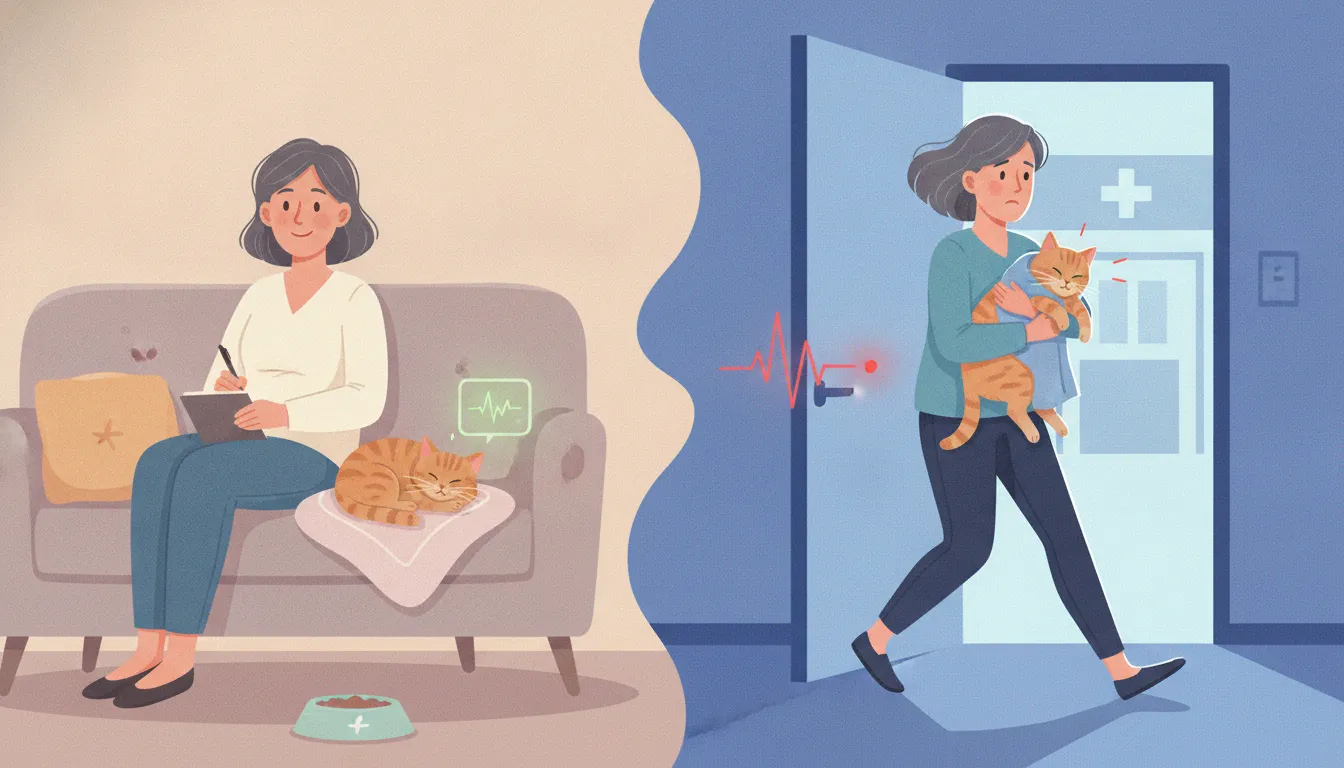
What counts as a cat health crisis?
Some signs mean you must go to a vet clinic right away. These include breathing trouble, sudden weakness, or a large, tense belly. If your cat cannot pass urine, this is a major crisis. This is true for male cats. Big trauma like a car hit also needs quick care at a medical emergency center. Sudden loss of use of the back legs is another sign to watch for. You know your pet best. Trust your gut if something feels wrong. If you think there is a crisis, you are likely right. Do not wait for things to get worse. Seek help fast.
Watching for small changes at home
Not every sign is a crisis. Some issues, like one bout of vomiting or a small drop in hunger, might just need a close eye for a day. But if these mild signs do not go away, talk to your vet. You should also call if they get worse. It is helpful to know when to talk to a vet if your cat stops eating or drinking. Look for changes in how they sleep or play. A cat that hides more than is normal might be in pain. Small changes can add up fast. Keep a log of what you see each day. This helps your vet find the cause.
This table helps you sort signs into three groups. It shows when to watch at home and when to go to a clinic.
Sign or Pattern | When It Is Worse | Next Step
Vomiting | Happens many times or has blood | Call vet same day
Hunger Loss | Lasts over 24 hours or has weight loss | Call vet same day
Trouble Breathing | Panting, wheezing, or open-mouth breaths | Emergency action
Lethargy | Cat will not move or is very weak | Emergency action
Litter Box Issues | Straining with no urine (mostly males) | Emergency action
Minor Limp | Pain when touched or leg is hot | Call vet same day
Most owners feel stress when their pet acts odd. You do not have to guess on your own. Peer tools can show you what helped for other pets in the same spot. These matched results help you see the road ahead. You can skip the panic of a blind search. Always call your vet if you are not sure. They can help you choose the best path. Your vet can also tell you if you should come in now or wait. It is always better to be safe when it comes to your cat's health.
How to check your cat safely at home
Checking your cat's health at home helps you decide if they need help. You know your pet better than any person. If you feel like your pet has a health crisis, you are likely right. Use a cat symptom checker to see how other owners handled signs like yours. This triage step gives you context while you watch for changes in the way your cat acts. Peer-led advice can show you what to expect before you reach the vet clinic.
Keep safety as your first goal
Cats often hide pain to stay safe from threats. They may also act out if they feel bad or scared. Before you touch your cat, watch them from a few feet away. Do not force them to move or stay still if they seem stressed. Keeping a calm tone helps your cat stay relaxed while you look for clues about their state. If your cat tries to bite or scratch, stop the check right away. Safety for both you and your pet is the most vital part of this home visit.
Follow a step-by-step check
A quick check at home can give vital facts for your vet. Follow these steps to watch your cat safely and note any changes in their health.
- Watch for breathing issues. Count how many breaths your cat takes in one minute while they are at rest. If you see them panting with an open mouth, this is a medical emergency that needs care now. High breath counts or gasping are signs that your cat is not getting enough air.
- Check their eating and drinking habits. Look at their food bowl to see if they have skipped meals. If your cat stops eating, you should learn when to consult a vet to avoid liver damage. Also check for a sudden rise in thirst, as this can point to kidney or sugar issues.
- Watch their litter box use. Ensure your cat can pass urine and stool without pain or crying. If they cannot pee, and this is very common in male cats, it is a big health risk. If your cat spends a lot of time in the box but stays empty, call your vet at once.
- Note how they move and where they hide. Watch for a limp or a sudden lack of balance. Sudden weakness or a collapse are clear signs that your cat needs help from a vet. Many cats will also hide in dark, quiet spots when they feel very ill.
- Look at their gum color if they are calm. Gently lift their lip to check for a healthy pink color. Gums that look pale, blue, or yellow mean your cat needs a checkup. Healthy gums should also feel moist to the touch, not dry or tacky.
- Track the timeline of all signs. Write down when the signs started and if they have gotten worse over time. Note if anything makes the signs better or worse. Having these facts ready will help your vet make a plan during your visit.
Do not wait if you think your cat has a big problem. It is a good idea to call your vet before you leave. This helps the staff prepare for your visit so your cat gets help faster. Never give human pain drugs, as these can be toxic to pets. Early action and clear notes are the best ways to help your cat feel better soon.
Ask Mylo and join the waitlist for outcome-matched pet owner guidance.
Why context changes what a symptom means
A single sign of illness rarely tells the whole story. While a cat symptom checker can help you spot issues, the context of your pet's life changes the urgency. You must look at the big picture to know if a behavior is a small quirk or a sign of a medical emergency.
Consider your cat's age and health
Age plays a huge role in how we judge health risks. For example, kittens that are not eating or drinking face a higher risk than a healthy adult cat. Young cats can get weak very fast when they lose fluid or skip meals.
Senior cats also need closer care. If your older cat has a chronic illness, a small change in their routine might mean a new problem is starting. You should also watch pets that just had surgery. A sign that seems minor in a young, fit cat might be a major red flag for a senior or a pet in recovery.
Watch for combinations and changes
One isolated symptom is often less vital than how many signs appear at once. Vomiting is a common complaint in cats and can link to many different health issues. But if your cat is vomiting and also seems weak or has a tense belly, the situation is much more serious.
You know your pet better than anyone else. If you notice a shift from their personal baseline, you are often right to seek help. Rapid changes, like a sudden collapse or common triggers for vomiting that did not bother them before, mean you should find answers. Use Mylo to see data from hundreds of real cases and find outcome-matched advice for pets with a similar breed and age.
Duration and risk factors
How long a symptom lasts is a key factor in your triage plan. A single loose stool might not be a crisis, but excessive, persistent diarrhea is a potential emergency. If a sign like lameness lasts for more than 24 hours, your pet needs a vet to look at them.
Risk factors like toxin exposure also change the math. If you think your cat ate a household cleaner or a human drug, do not wait for symptoms to start. Act fast and bring any packaging to the vet so they can find the best care. Knowing the context helps you move past generic search results and make a safe choice for your pet.
What should you record before calling the vet?
When you notice your pet is not acting right, you may feel rushed to act. Taking a few minutes to gather clear facts can help your vet give better care. Vets see many cases and need to know the details of what you are seeing at home. Before you pick up the phone, have your notes ready so you can share exact facts.
Observe habits and changes
Start by looking at your pet's daily routines. Record when you first saw the issue and how often it happens. Note if their appetite or thirst has changed. For example, if you see excessive thirst in cats, write down how many times they go to the bowl. Check their energy levels to see if they are slow or hiding more than usual. These small signs help the vet find the root cause.
You should also track their output. Look at the litter box for changes in how much they go or the color of their waste. Vets need to know if your pet can pass urine or stool at all. An inability to pass urine, especially in male cats, is a major emergency that needs fast help. Clear notes on these habits can lead to a quicker plan for your pet.
Log food and exposure
List everything your pet has eaten in the last day. Include their usual food, treats, and any human food they might have found. If you think they ate a toxin like a plant or cleaner, find the label. Vets recommend that you bring the toxin packaging to the clinic if you can. This lets the staff know exactly what they are dealing with and how to treat it.
Mention any drugs your pet takes now. This helps the vet avoid bad mix-ups with new treatments. It is also wise to record any strange events like a fall or a fight with another animal. These facts are key to knowing when to consult a vet for a full exam. Having this list ready keeps you calm and helps your vet work fast.
Capture video and call ahead
A video can show a vet more than a long talk. If your pet has a limp or a strange cough, use your phone to record it. It is hard to describe a gait or a sound in words, but a video shows it clearly. You should also record any shaking or odd behavior that comes and goes. This gives the vet a direct look at the issue as it happens in real life.
Once you have your notes and videos, call the clinic. Tell them what you saw and ask what you should bring with you. It is a good idea to call before you leave so the staff can get ready for you. If you are not sure if it is a crisis, a cat symptom checker can help you find similar cases from other owners. Using these tools helps you walk into the clinic with the right info to help your pet.
Where outcome-matched owner advice can help
Pet health worries often leave owners lost in a sea of mixed search results. While a cat symptom checker can point to options, real data from other owners adds a helpful layer of context. Mylo sorts these shared stories into outcome-matched advice. This helps you see what worked for pets of the same breed, age, and health state. By looking at many real cases, you can better see the paths ahead for your pet.
Finding similar health stories
Most pet owners spend over two hours searching for pet health advice online. Instead of reading random forum posts, you can use data to find pets like yours. Mylo uses traits like breed and age to show you outcome-matched stories. This way, you see real metrics, such as how many owners found a specific change helpful. It turns vague stories into clear facts that help you make better pet care choices.
For example, if you seek common triggers for vomiting, seeing how others with same-age cats handled the issue is useful. You might find that a food change helped many, while others needed a vet visit for big concerns. This peer-verified info lets you make smart choices without the stress of generic advice.
Improving vet visits with better questions
This advice is not a medical diagnosis and never replaces expert care. Instead, it serves as a triage tool to help you get ready for a vet visit. When you see what other owners faced, you can ask your vet better questions. This can lead to a faster visit and a better plan to help your pet feel well. You can also learn when to consult a vet based on the stories of people in similar spots.
Knowing when to seek urgent care
Peer stories are helpful for many issues, but some signs mean you must go to a clinic now. You need urgent help if your cat has a hard time breathing or eats a toxin. Other bad signs include a sudden collapse or being unable to pee. The University of Missouri says you are often the best judge of a pet emergency. If you think there is a crisis, stop the research and go to a vet right away.
Frequently Asked Questions
Is there a symptom checker for cats?
You can find several digital tools that act as a cat symptom checker. Most of these sites ask about your pet's age, breed, and signs of illness to help you decide on next steps. While these tools are great for triage, they do not replace a vet. According to the University of Missouri, you should seek care right away if you think your pet has an emergency.
How do I diagnose what's wrong with my cat?
Only a vet can give a real medical diagnosis after a physical exam and tests. However, you can use online tools to find common outcomes for similar cases. Mylo matches your cat's breed, age, and signs with data from hundreds of other pet owners. This helps you see what worked for others in your shoes. This peer-verified data bridges the gap between generic search results and expensive medical advice.
What are four signs your cat is suffering?
Common signs of distress include difficulty breathing, sudden weakness or collapse, and persistent vomiting. For male cats, the inability to pass urine is a life-threatening crisis that needs a vet immediately. Experts at Missouri Veterinary Health Center state that sudden belly bloating is also a major red flag. If your cat shows any of these signs, you should call an emergency clinic before you drive there.
Is online pet health advice reliable?
Many pet owners spend hours reading conflicting advice on web forums. This can be stressful and slow. Reliability depends on the source of the data. Peer-verified platforms like Mylo offer quantified results from real cases, which are often more useful than random opinions. Since 94% of vets say finances limit care, these tools help owners make better choices without the high cost of a telehealth visit.
What details should I enter into a cat symptom checker?
Record when the change began, how often it occurs, appetite and water intake, litter box use, energy, medications, age, and recent exposures. Include photos or video when safe. These details can improve triage context, but they cannot confirm a diagnosis. Call a vet if signs persist or worsen, and seek emergency care immediately for breathing trouble, collapse, toxin exposure, or inability to pass urine.
Ready to find the best health path for your sick cat?
Waiting too long when a cat is sick can lead to high vet bills, more stress, and a worse health state for your dear pet. Acting fast gives you peace of mind and shows you when to consult a vet by seeing what worked well for many other cats. Get the facts you need right now to make the best choice for your pet before small symptoms grow into big problems or costs rise.
Ready to get clearer context? Join the waitlist and ask Mylo a question, then contact a veterinarian for diagnosis or urgent concerns.