Few cat-care moments are as unsettling as hearing your cat retch and finding a damp clump on the floor. Hairballs are common, but they are not something to ignore automatically. Paying attention to how often they happen, whether your cat can bring one up. And how she acts afterward can help you tell routine grooming from a possible health concern.
Occasional hairballs are usually normal. Cornell Feline Health Center notes that some cats regurgitate one every week or two without cause for concern. However, repeated unproductive retching, vomiting, appetite changes, lethargy, or trouble passing stool warrants a call to your veterinarian. Understanding cat hairballs causes prevention when to worry starts with how swallowed fur moves through the digestive system.
That process explains why some cats are more prone to hairballs than others. Grooming, coat type, and seasonal shedding all matter. We will begin with what happens when a cat swallows loose fur during routine self-grooming. This information is educational and is not a substitute for professional veterinary advice or diagnosis.
What Causes Hairballs in Cats?
Hairballs begin with a normal part of feline life: grooming. When a cat licks its coat, it removes loose, dead hair and swallows some of it. Most swallowed hair moves through the digestive tract and leaves the body in the stool. However, some hair stays in the stomach and gradually gathers into a damp, matted clump. That clump is a hairball, also called a trichobezoar.Cornell Feline Health Center explains how this process develops.
A cat's tongue helps explain why swallowed hair is so common. Its surface is covered with tiny, backward-slanted projections called papillae. These hook-like structures remove loose fur, but they also direct the hair down the throat and into the stomach. Hair is made largely of keratin, a tough protein that cats cannot digest. Most of it still passes through normally, but hair that remains in the stomach can accumulate over time.Cornell's overview of hairball formationdescribes both the role of papillae and keratin's indigestibility.
The Role of Grooming in Hairball Formation
Thorough grooming means more loose hair enters the digestive system. This doesn't make grooming unhealthy. In fact, grooming is an important way cats keep their coats clean. The issue is the balance between how much hair a cat swallows and how efficiently that hair moves through the gut. During seasons when cats shed more of their coats, hairballs become more frequent. There is simply more loose fur available to ingest. A cat that spends much of its day licking its coat may also swallow more hair than a less fastidious groomer.
Which Cats Are More Prone to Hairballs?
Coat type is one important factor. Long-haired breeds, including Persians and Maine Coons, face a significantly higher hairball risk than short-haired cats because they carry and shed more fur. Age can matter, too. Kittens and young cats are generally less likely to develop hairballs, while older cats may groom more thoroughly and spend more of their waking hours licking their coats. Seasonal shedding can increase the risk for any cat, regardless of breed.
These factors help explain why one cat may produce hairballs occasionally while another rarely does. They don't diagnose a health problem by themselves. If hairballs become frequent or are accompanied by repeated unproductive retching, lethargy, or appetite changes, contact a veterinarian. Do not assume grooming is the only cause.
How Often Is Normal for a Cat to Have Hairballs?
For many healthy cats, an occasional hairball is a routine result of grooming. Cornell Feline Health Center notes that regurgitating a hairball once every week or two is not uncommon. By itself, this is generally nothing to worry about. That guidance can be reassuring if your cat otherwise acts normally, eats and drinks as usual, and passes stool normally.
There is not one perfect frequency for every cat. Some cats are naturally more fastidious groomers than others, so they swallow more loose hair and may produce hairballs more often. A cat's coat, shedding pattern, grooming habits, and age can also affect what is normal for that individual. The most useful comparison is often your cat's usual pattern rather than a universal number.
Keep a simple record if hairballs become more frequent. Note when they occur, whether your cat brings up an actual hairball, and whether you see changes in appetite, energy, stool, or bathroom habits. A one-time increase during heavier shedding may have a straightforward explanation, while a persistent change deserves closer attention. Frequent vomiting should not automatically be labeled a hairball, especially if nothing is produced.
Hairballs are usually passed through the digestive tract or brought back up without lasting trouble. They can become serious when a wad of matted hair grows too large to pass through the narrow openings between the esophagus, stomach, and intestinal tract. The mass can also become lodged in the small intestine. Cornell explains that an obstruction may require surgery and can be life-threatening without treatment.Read Cornell's guidance on hairball risksfor additional context.
In short, an occasional hairball can be normal, but frequency is only one part of the picture. The next step is to recognize the symptoms that suggest your cat needs veterinary care. This information is educational and does not replace advice from your veterinarian.
Cat Hairballs: Causes, Prevention, and When to Worry
Most cats occasionally bring up a hairball, but the pattern and what happens around it matter. The broader picture of cat hairballs causes prevention when to worry includes knowing when a familiar grooming problem may be something more serious.
Normal Hairball | Concerning Hairball Occurs once every 1-2 weeks | Occurs weekly or more often Cat eats, drinks, and plays normally | Lethargy, appetite loss, or hiding Cylindrical, moist, hair-filled | Repeated dry retching with no hairball produced Single episode, cat recovers quickly | Multiple retching episodes in 24 hours No blood in the expelled matter | Blood in vomit, diarrhea, or weight loss Cat passes stool normally | Constipation or straining in the litter box
Red Flag Symptoms That Require a Vet Visit
Contact your veterinarian without delay if your cat has repeated episodes of unproductive retching. This is especially true when no hairball or vomit follows. Cornell also recommends a veterinary consultation if a cat is lethargic or refuses food for more than a day. These signs can indicate that your cat is ill or that something is obstructing the digestive tract, rather than simply waiting to be coughed up.
Hair can sometimes form a dense mass that cannot pass through the narrow openings between the stomach and intestine. If it becomes lodged in the small intestine, the blockage can be life-threatening and may require surgery. Do not give laxatives or other home remedies for ongoing retching unless your veterinarian recommends them. You can also use Mylo'swhen a hairball becomes a medical concernsymptom checker to organize what you are observing, but it is not a substitute for veterinary care.
Pay attention to the sound and body position, too. Hairball hacking often includes gagging, retching, and an attempt to vomit. Repeated dry coughing, wheezing, or labored breathing may be respiratory coughing instead. Respiratory disease, including asthma, can look superficially similar. A veterinarian should assess persistent or recurrent coughing.
When Hairballs Signal an Underlying Condition
A hairball once a week or every two weeks is not automatically an emergency. But frequent episodes deserve a conversation with your vet, particularly if the pattern is new. Weekly hairballs may be associated with food allergies, environmental allergies (atopy), or inflammatory bowel disease. Frequent vomiting, weight loss, diarrhea, changes in grooming, or reduced energy make that checkup more important.
Keep a brief record of dates, appetite, stool, coughing or retching sounds, and whether an actual hairball was produced. That information can help your veterinarian distinguish ordinary hairball passage from gastrointestinal or respiratory disease. This article provides general information, not a diagnosis or a replacement for professional veterinary advice.
How to Prevent Hairballs in Cats
The most practical approach to prevention is to reduce how much loose hair your cat swallows, then support normal digestive movement. A consistent grooming routine is usually more useful than waiting until hairballs become frequent. This is especially true for cats with long coats.
The Importance of Regular Brushing
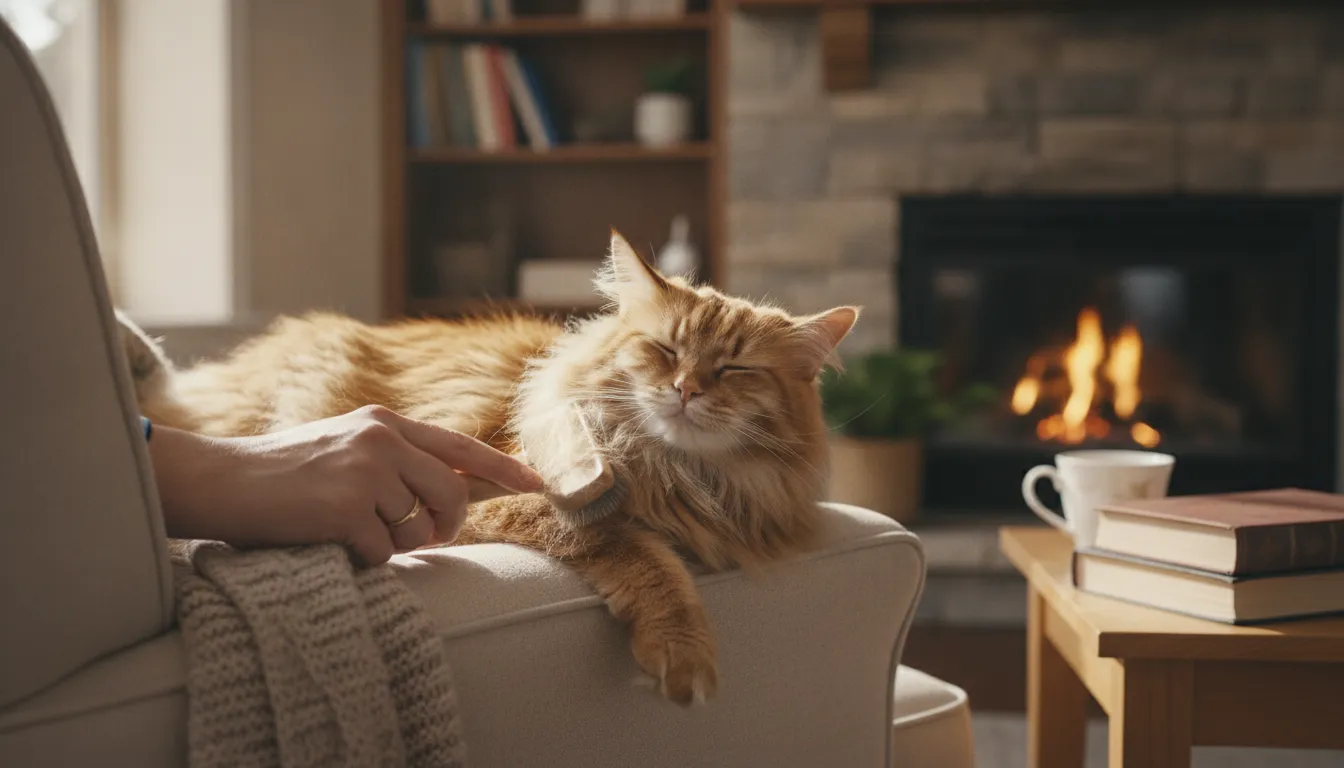
Daily brushing is one of the best ways to help prevent hairballs, particularly in long-haired cats. A comb or cat-safe brush lifts loose and shedding hair before your cat can remove it with her tongue. That matters because regular grooming reduces the amount of loose hair swallowed during self-grooming. This reduces the material available to form a hairball. The ASPCA recommends daily brushing as a key hairball-prevention measure, especially for long-haired cats:learn more about cat grooming from the ASPCA.
Choose a tool that matches your cat's coat. A wide-toothed comb can help work through longer fur and small tangles, while a soft brush may be more comfortable for finishing the coat or maintaining short fur. Brush gently in short sessions, and stop if your cat becomes distressed. Starting with a few calm strokes and gradually building the routine can make grooming easier for both of you.
Long-haired cats with mats, dense undercoats, or strong resistance to home grooming may benefit from a professional groomer. Ask your veterinarian or a trusted pet professional which tools and grooming schedule fit your cat's coat. Regular grooming is also part ofbasic cat health and maintenance, not just a hairball strategy.
Hydration and Digestive Health
Good hydration supports normal digestive function. This is important when your cat swallows small amounts of hair during routine grooming. Keep fresh water available in a quiet, easy-to-reach location and clean the bowl regularly. Some cats drink more readily from a fountain or prefer water placed away from their food, so observe what your cat uses consistently. Wet food can also contribute to daily fluid intake, but dietary changes should be introduced gradually.
Do not give laxatives, oils, supplements, or a hairball-control diet without veterinary guidance. Some specialized diets and supplements may help certain cats, but the right option depends on the individual cat's health and diet. Prevention is information, not a substitute for veterinary advice. Contact your veterinarian if hairballs become frequent or your cat shows appetite changes, lethargy, or repeated unproductive retching.
Can a Special Diet Help Reduce Cat Hairballs?
For some cats, a diet change can support hairball prevention, but it is not a complete solution. Hairball-control foods may include added fiber, which can help swallowed hair move through the digestive tract more effectively instead of collecting in the stomach. The ASPCA notes that specialized diets or supplements may be appropriate for cats prone to hairballs. But the right choice depends on your cat's overall health, age, and eating habits.
How Fiber and Hairball-Control Products May Help
Fiber is intended to support normal digestive movement, not to dissolve hair. A veterinarian may recommend a commercially prepared hairball-control diet or a carefully selected supplement when grooming alone is not enough. These products should complement a complete, balanced diet rather than replace one. Avoid making a sudden food switch. Abrupt changes can cause digestive upset and make it harder to tell whether the new plan is helping.
Some petroleum-based hairball lubricants and laxative products are also marketed to help hair pass through a cat's digestive tract. The general goal is to minimize swallowed hair and support passage through the digestive system. But these products are not automatically safe for every cat. Do not give a laxative or lubricant without veterinary guidance. This is especially important if your cat is retching without producing a hairball, vomiting repeatedly, eating less, or acting tired.
Why Diet Works Best With Grooming
Diet cannot prevent the hair from entering your cat's digestive system in the first place. Regular brushing removes loose coat before your cat can swallow it, making grooming an important partner to any dietary approach. This is especially useful for long-haired cats and during seasonal shedding. Keep fresh water available as well, and monitor appetite, stool, vomiting, and hairball frequency after any change.
Because frequent hairballs can sometimes reflect an underlying digestive problem, speak with your veterinarian before changing food or adding supplements. This article is for general information and is not a substitute for veterinary advice.
Frequently Asked Questions
Are cat hairballs normal?
Occasional hairballs are usually normal. Cats swallow loose hair while grooming, and most of that hair passes through the digestive tract in the stool. A hairball every week or two can fall within a typical range, but your cat's usual pattern matters.Cornell Feline Health Centernotes that frequency and accompanying symptoms deserve attention.
When should I worry about my cat's hairballs?
Contact your veterinarian if your cat has repeated unproductive retching, seems lethargic, or refuses food for more than a day. Vomiting without producing a hairball can also signal a problem. Seek prompt veterinary guidance for these signs, because a lodged hairball can obstruct the digestive tract.
What causes hairballs in cats?
Hairballs form when swallowed fur accumulates in the stomach instead of moving through the intestines. Cat tongues have backward-facing papillae that catch loose hair during grooming and guide it into the throat. Long-haired cats, heavy shedders, older cats, and especially thorough groomers may be more prone to them.
How can I prevent cat hairballs?
Brush your cat regularly, with daily brushing often especially helpful for long-haired cats. This removes loose fur before your cat can swallow it. Fresh water supports normal digestion, and a veterinarian may suggest a fiber-containing hairball diet or supplement for cats that need additional help.
Could frequent hairballs be a sign of illness?
Yes. A sudden increase or repeated episodes may reflect excessive grooming, digestive irritation, or an underlying condition such as inflammatory bowel disease. Keep a simple record of frequency, appetite, stool, energy, and retching, then share it with your veterinarian. This information is educational and not a substitute for veterinary advice.
Ready to Support Your Cat's Health?
Keeping track of grooming habits, hairballs, and changes in behavior can make it easier to notice when your cat needs extra attention.Download the Mylo appfor personalized, breed-specific pet health insights and advice tailored to your cat. Mylo can help you stay informed, but it isn't a substitute for veterinary advice. If your cat has persistent or concerning symptoms, contact your veterinarian.