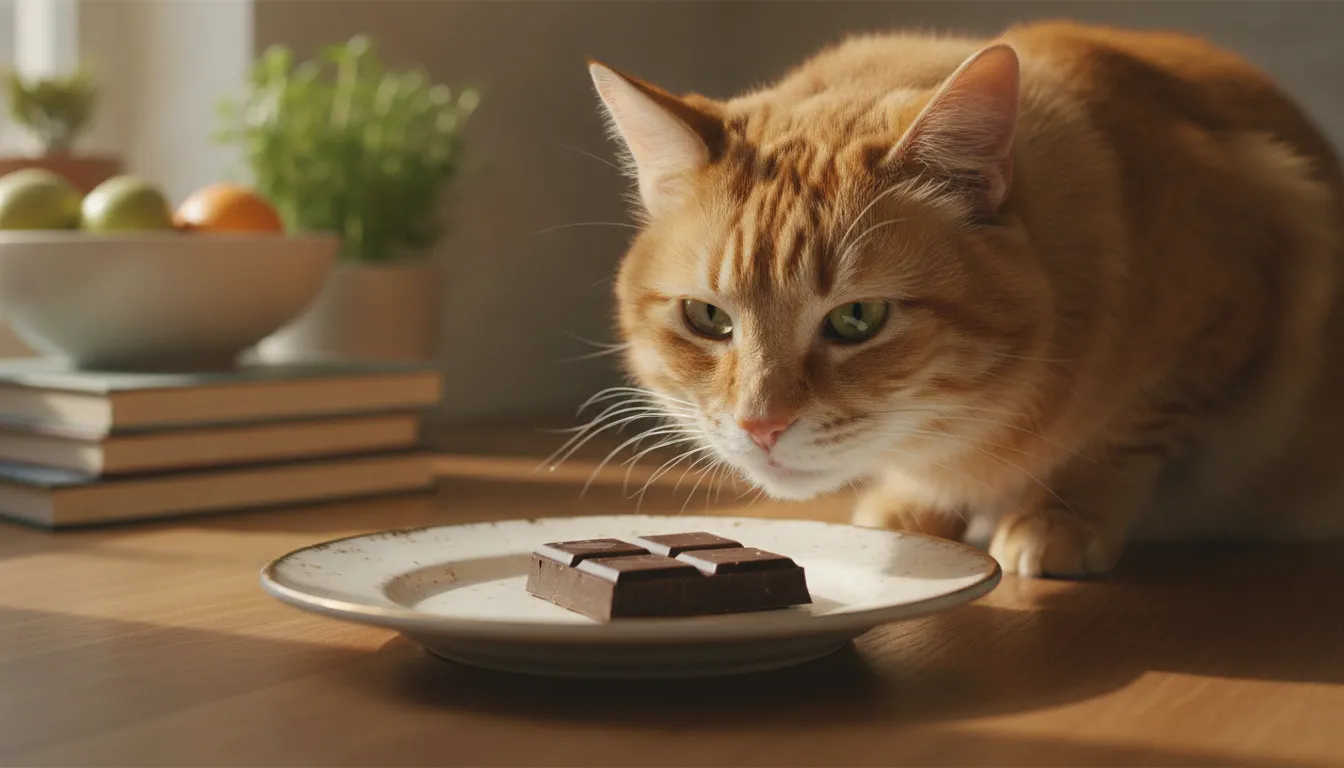
A small piece of dark chocolate can quickly turn a quiet afternoon into a trip to the emergency vet. While dogs are more famous for their sweet tooth, cats face even greater risks from the toxic compounds in cocoa. Keeping treats out of reach ensures your cat stays safe.
If your cat has eaten any amount of chocolate, call your veterinarian or the Pet Poison Helpline immediately — do not wait for symptoms to appear.
The short answer to can cats eat chocolate is a definite no because it contains toxic chemicals. According to PetMD, theobromine and caffeine are the two parts that make chocolate dangerous for felines. While dogs often seek out sweets, cats are also at risk from milk-based drinks or baking supplies. A cat's liver cannot process these toxins well, leading to a dangerous buildup in their system. Even a small amount of dark chocolate can trigger vomiting, a rapid heart rate, or tremors. You should always treat chocolate eating as a potential emergency and call your veterinarian immediately. Mylo provides outcome-matched advice to help you handle these situations by showing what worked for other owners with similar pets.
Knowing how these toxins impact your pet's body is the first step in keeping them safe. Understanding why chocolate is dangerous for cats helps you react quickly if an accident happens.
Why Chocolate Is Dangerous for Cats
Chocolate contains theobromine and caffeine, two methylxanthines that cats cannot metabolize effectively. These compounds act as stimulants that attack the digestive system, heart, and nervous system simultaneously. Even a small bite can cause a dangerous buildup in a cat's bloodstream.
The core reason can cats eat chocolate is a firm no comes down to chemistry. Chocolate has two compounds called methylxanthines. These are theobromine and caffeine. While people process these quickly, cats have a hard time with them. Their livers lack the tools to break these chemicals down. This leads to a toxic buildup in the cat's blood even after a small bite.
Toxic parts in every bar
Theobromine is the main threat to your cat's health. It is in all types of cocoa, but the amount varies by type. Baker's chocolate and dry cocoa powder have the most. White chocolate has the least. According to PetMD, these chemicals act as strong stimulants that hit many body systems at once. They trigger a fast heart rate and can overwork the brain and muscles.
Caffeine is the second danger. It works like theobromine to put stress on a cat's heart and lungs. Because cats are small, even a tiny dose can be fatal. If you see your pet acting strange, you can check your cat's symptoms to see if they match signs of poisoning. Most cats will show signs of distress within a few hours.
How toxins hit the body
When a cat eats chocolate, the toxins hit three main areas: the stomach, the heart, and the nerves. At first, the cat might have an upset stomach or feel restless. As the levels in the blood rise, the heart begins to beat too fast. This puts big pressure on the heart and can lead to internal harm. Early care is key to a good outcome for your pet.
The nervous system is also at risk. Research from GoodRx shows that a cat's liver breaks down these toxins very slowly. This slow process means the heart and brain stay under stress for a long time. Without quick help, the buildup can cause tremors or seizures. This slow pace is why cats are far more sensitive to chocolate than many other pets.
Why every bite counts
The danger depends on the type of chocolate and the weight of your cat. For a typical eight-pound cat, less than an ounce of dark chocolate can be toxic. Because cocoa beans are the source of the toxin, dark chocolate is always more lethal. A single square of a dark baking bar often has enough theobromine to cause an emergency for a small cat.
How Much Chocolate Is Toxic for Cats
The toxic dose of theobromine for cats is about 200 mg per kilogram of body weight. Baker's chocolate and cocoa powder are dangerous in fractions of an ounce, while milk chocolate requires a larger amount. A cat's slow metabolism of these toxins means symptoms can persist for days.
A cat's size and the type of chocolate determine the risk level. The toxic dose of theobromine for cats is about 200 mg per kilogram of body weight. Because cats are small, even a tiny bite of rich chocolate can reach this level quickly. You can check your cat's symptoms if you think they ate any amount of chocolate.
Toxic levels by chocolate type
Darker and more bitter chocolates are more dangerous because they have more theobromine. Baker's chocolate and dry cocoa powder are the biggest threats. According to Purina, just a fraction of an ounce of these can be toxic for an average cat. Milk chocolate has less of this compound but still poses a risk in larger amounts.
Chocolate Type | Toxic Amount (8lb Cat) | Risk Level Cocoa Powder | 0.07 oz | Highest Baker's Chocolate | 0.2 oz | Extreme Dark Chocolate | 0.5 oz | High Milk Chocolate | 1.14 oz | Moderate White Chocolate | Over 2 oz | Lowest
Dark chocolate bar pieces and cocoa powder on a kitchen surface near a curious cat, illustrating chocolate toxicity risk Different types of chocolate contain varying levels of theobromine. Dark chocolate and cocoa powder pose the highest risk to cats even in small amounts.
Risk of small amounts
Even if your cat eats less than the toxic dose, they can still get sick. Small amounts often cause stomach upset, vomiting, or diarrhea. The high fat and sugar content in many treats can also lead to issues like if your cat stops eating after a snack. Never wait for bad symptoms to appear before you seek help.
Cats process caffeine and theobromine very slowly. This means the toxins stay in their body for a long time. Veterinary experts at PetMD state that symptoms can last for days. Keeping all baking supplies and candy in sealed jars is the best way to prevent a crisis.
Symptoms of Chocolate Poisoning in Cats
Symptoms typically appear within two to four hours of ingestion and progress from vomiting and restlessness to rapid heart rate, tremors, and seizures. Cats with pre-existing health conditions or older cats may show severe symptoms faster and require urgent veterinary care.
Most cats show signs of chocolate poisoning within two to four hours after they eat it. These early signs are often mild but can lead to worse health issues if you do not act fast. Because can cats eat chocolate is a clear no, you must watch your pet closely for any changes in how they act.
Medical illustration showing cat chocolate poisoning symptom progression from mild vomiting and restlessness to severe tremors and seizures, labeled stages Chocolate poisoning symptoms in cats progress from mild digestive upset to severe neurological signs. Early veterinary intervention improves outcomes significantly.
Early signs and mild toxicity
The first signs usually involve the stomach and mood. You might see your cat vomit or have diarrhea shortly after they eat chocolate. They may also seem very restless or move around more than usual. Some cats will drink a lot more water and need to use the litter box more often during this time.
These signs can last for a few days. The Cornell Feline Health Center notes that poisons can affect cats very quickly. If you notice these changes, you should call your vet right away. You should also watch if your cat stops eating after eating chocolate as this can show their stomach is very upset.
Moderate to severe symptoms
As the body takes in more of the toxin, the symptoms will get worse. Moderate cases often cause a very fast heart rate or an odd heart rhythm. Your cat might seem too active or have a hard time staying still. These issues happen because the toxins in chocolate target the heart and brain.
In severe cases, your cat may have tremors or seizures. These dangerous signs can take up to 12 hours to appear. A cat may also collapse or fall into a coma if they ate a large amount of dark chocolate. These severe issues can last between 24 and 96 hours and require a vet to help the cat recover.
Other health risks
Some cats face a higher risk when they eat chocolate. Cats with health issues that already exist often have a harder time with the toxins. Older cats or those with heart problems may show severe signs much faster than healthy young cats. Their bodies cannot process the harmful parts of the chocolate as well.
The chocolate itself is not the only risk to your pet. If your cat ate the paper or foil wrapper, they might face a blockage in their gut. This adds a new risk on top of the poisoning. You should always tell your vet if you think your cat ate the wrapper along with the treat.
What to Do if Your Cat Eats Chocolate
If your cat eats chocolate, stay calm, identify the type and amount, and call your veterinarian or the Pet Poison Helpline immediately. Do not induce vomiting at home. Bring the chocolate packaging to the clinic and follow your vet's treatment plan for the best outcome.
If you find your cat has eaten chocolate, you must act fast. Do not wait for signs of illness to show up. Use our pet symptom checker to log any changes you see while you follow these steps. Most cats recover well if they get help right away.
Check the facts
Stay calm and look at what your cat ate. Find the wrapper to see the type of chocolate and the weight of the bar. Note how much is left and when they ate it. This data helps your vet know if the dose is toxic. Baker's chocolate and cocoa powder are much worse for cats than milk chocolate.
Call for help
Get expert help now. Call your vet or a pet clinic right away. You can also reach out to the Pet Poison Helpline for advice on what to do. They can tell you if your cat needs to go to the hospital based on the type and amount they ate.
- Keep your cat safe. Move any left chocolate out of reach. Check your cat for signs of stress or stomach pain. Do not try to make your cat vomit at home. There is no safe way to do this in cats without a vet, and it can cause more harm according to PetMD experts.
- Grab the package. Bring the chocolate wrapper or the box with you to the clinic. The list of contents helps the team find the exact amount of toxin your cat took in. This helps them plan the best care.
- Follow vet advice. At the clinic, the vet may give your cat meds to make them vomit if they ate the chocolate recently. They might also use fluids or heart meds to help your cat stay stable. Most cats have a good chance of a full recovery with quick care.
Next steps at the clinic
Once at the vet, your cat will get the care they need to stay safe. Vets often use active charcoal to stop the gut from taking in the toxins. They will watch your cat's heart and give fluids to help flush the toxin out of their system. Early care is the best way to prevent long term health issues for your cat.
How to Keep Your Cat Safe From Chocolate
Prevention is the best defense. Store all cocoa products in sealed containers inside closed cabinets, clean up baking messes immediately, and keep chocolate drinks and ice cream out of reach. Offer cat-safe treats like dried fish or catnip instead of human sweets.
Stopping a problem before it starts is the best way to keep your cat safe. Cats do not often hunt for sweets, but they are curious pets. They may find a bag of baking chips or lick a spilled drink. Even small bites of chocolate can cause heart racing or tremors. You must treat all chocolate as a risk and keep it out of reach at all times.
Safe Storage for Baking Goods
Most cats are great at climbing. They can jump onto counters and reach open shelves with ease. You should store cocoa powder and baker's chocolate in tight bins inside a shut pantry. These types of chocolate have the most toxins. A small lick of cocoa powder can be very dangerous for a small cat.
Check your counters for stray candy or baking goods after you cook. Cats may play with shiny wrappers or try to eat sweet crumbs. If you have dogs in the home, you should also learn about chocolate risks for dogs too. Keeping your kitchen clean and your cabinets locked will stop most accidents before they ever happen.
Risks in Milk-Based Drinks
Cats are less likely than dogs to eat a whole candy bar. Still, they are often drawn to drinks made with milk. Hot cocoa and chocolate milk can be very tempting for a cat. They like the fat and the cream in these drinks, but the chocolate inside is still toxic. Even a few sips can lead to a sick stomach or worse.
Chocolate ice cream is another hidden risk for your pet. It has dairy, which most cats cannot digest well. It also has theobromine from the chocolate bits. If you think your cat drank a chocolate drink, you can check your cat's symptoms to see if they need help. Always clear away your mugs and bowls as soon as you finish your treats.
Healthy Cat-Safe Snacks
You can still treat your cat without using human food. Give them safe snacks like dried fish or catnip instead of sweets. Many pet stores sell treats that have a crunch cats love. These choices give them the joy of a snack without the risk of poisoning. Making these safe swaps helps your pet stay happy and healthy for a long time.
Frequently Asked Questions About Cats and Chocolate
No. Even a small amount of chocolate can be toxic to cats. Felines cannot process the chemical stimulants found in chocolate, so any ingestion warrants immediate contact with your veterinarian or the Pet Poison Helpline.
The toxic dose of theobromine in cats is 200 milligrams per kilogram of body weight. For an average eight-pound cat, eating just 0.2 ounces of baker's chocolate or 1.14 ounces of milk chocolate can cause poisoning. Darker chocolates are dangerous in much smaller amounts.
Common symptoms include vomiting, diarrhea, restlessness, hyperactivity, increased thirst, and frequent urination. As the toxicity worsens, a cat may experience a rapid heart rate, muscle tremors, seizures, and collapse.
No. Chocolate ice cream contains toxic cocoa solids, caffeine, and dairy. Most cats are lactose intolerant and cannot digest dairy, so chocolate ice cream can cause severe digestive upset in addition to the risk of chocolate poisoning.
Contact your veterinarian or the Pet Poison Helpline immediately. Do not attempt to induce vomiting at home because there is no safe way to do this for cats. If possible, bring the chocolate packaging with you to the clinic to help determine the risk.
Get Outcome-Matched Answers With Mylo
When a pet emergency or health question arises, you need answers you can trust instead of scrolling through endless online forums. The Mylo app helps pet parents take a safer next step by comparing real outcomes from pets like yours. Instead of generic advice, Mylo matches your question to real-world data based on your cat's breed, age, and symptoms, showing you what actually worked for similar pets. Join the free Mylo waitlist today to stop guessing and start knowing.